Reply To:
Name - Reply Comment
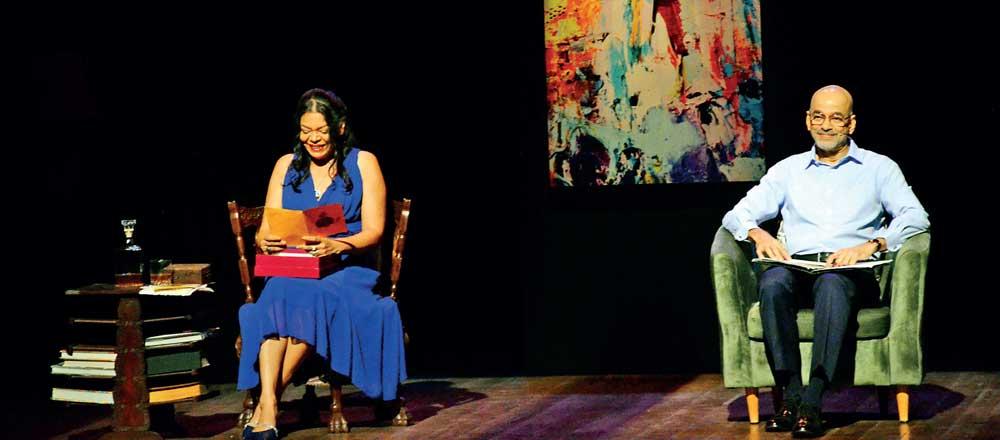
The two actors, Tracy Holsinger and Mohamed Adamaly, showed wonderful vocal control.
There is a pulse between the two different personalities which outlasts all their other connections, and there is an explosion of joy felt by the audience when they finally succeed in celebrating what they feel for each other.
 The performance of ‘Love Letters’ produced at The Lionel Wendt Theatre has just ended its run to a packed house every night.
It was superb, not only in the performances of the two actors, the setting, the lighting, and the evocation of a myriad of feelings but in the portrayal of the cumulative unfolding of the bond between the characters. There was a symmetry and a dance in the exchange of letters, and the eloquent silences and abrupt pauses in the flow between them.
It started slow, between the characters, in their childhood. With ignorance and awkwardness and an opaqueness which was frustrating to observe, their preference for each other begins to emerge. The boy showed signs of jealousy early on, and competitiveness when the girl was courted or even shown mild attention by other boys. They checked up on each other, via third parties.
The ebbs and flows create a magnetic momentum, as they blunder and apologise, marry other people, don’t wish to discuss what goes wrong, decline to attend each other’s weddings but send gifts, and encourage each other in their career paths. At times their feelings breach restraint, and they lash out at each other, but apologise, and make amends.
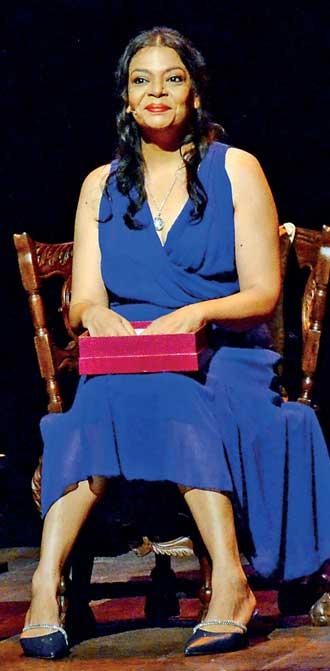
She is an artist and a painter, and he becomes a politician. There are demarcations between them which are palpable to us, listening in to the ongoing conversation. Tracy Holsinger was marvellous as the young woman, expressing her sass and her verve, but also her unresolved pain and her honest wish for the stable, loving home life which she had not had as a child. Her self-awareness underwrites her petty insults about her friend’s wife, saying the official picture of him with his wife and children looked like ‘The Holy Family’.
There is a pulse between the two different personalities which outlasts all their other connections, and there is an explosion of joy felt by the audience when they finally succeed in celebrating what they feel for each other. Their lives are largely lived in different countries, and they send each other messages from different lands. But it is clear that their attunement creates a home for them, as the world changes around them.
It’s a celebration of mature love, as well as young love. And an evocation of the definition of true love, the love that is eternal because it is unattainable. For the longing which is the measure of love to be strong, it must be the creation of separation, and distance. Love is the rope bridge that stretches across those divides.
The two actors, Tracy Holsinger playing Melissa Gardner and Mohamed Adamaly playing Andy Makepeace Ladd III, showed wonderful vocal control. Their subtle shifts of tone and timbre make the developing intensity between them thrilling. When the woman breaks her reserve and tells the man there is no one else in her life that she cares for, and who cares for her, it’s with an aching honesty that the audience respects her vulnerability and her agonised revelation in total silence. It is electrifying.
We can feel the arcs of each character’s development, their difference and their common ground, as the letters unfold. They look askance at each other’s choices at times and have to modify their criticisms out of mutual respect. Having parts of the letters written on pages which are held and read and put down and replaced by the next in a sequence shows the intimate unfolding of the story and the sharing of lives in a visual way.
When they speak out of turn, as the expression goes, the other party’s disapproval or hurt is registered in silence. They each at times ask: Did you receive my letter? Did I send it to the correct address? Why have you not replied for so long? What is interfering with this communication that means so much to me? To us both?
The setting of two counterpointed adjacent armchairs beautifully evokes how the two characters are continually in each other’s thoughts, and gradually internalising each other’s points of view. Amidst the catchy soundtrack of popular love songs from the 50s and 60s, they create a soundtrack of their own, seeking each other’s opinion and advice: ‘You should paint again’, he says. ‘It will make you happier’. And he is right. The man’s idiomatic expressiveness is less emotionally intense, but after her passing, his open avowal of what she has meant to him is 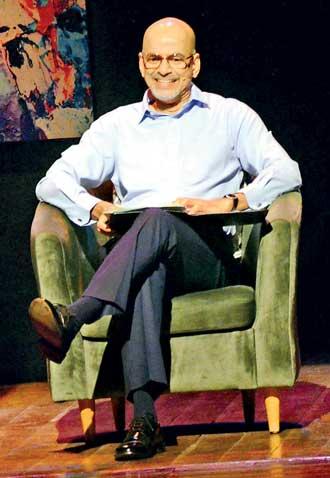 heartbreaking.
In the chaos and clamour of their changing circumstances, the threads they weave through their communication created a wondrous fabric, precious to them, and to us. The play is about the revelation of love and the way it reveals itself to us. And us, to ourselves and
each other.
Reviewed by Devika Brendon