Reply To:
Name - Reply Comment
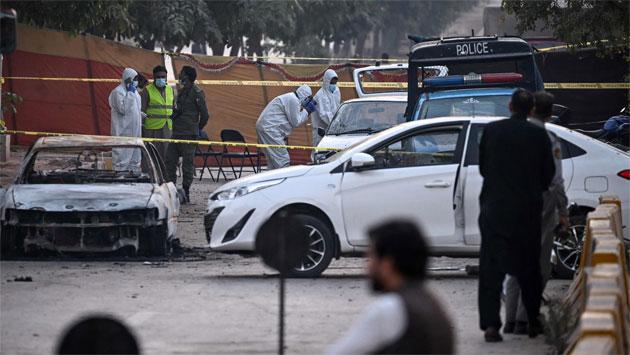 South Asia is facing a surge of violence that threatens to destabilise the region. In a matter of days, devastating bombings rocked the capitals of India and Pakistan, while Bangladesh was engulfed in arson and crude bomb attacks ahead of a politically charged court verdict. The deadly incidents highlight growing threats of terrorism and political unrest, revealing fragile security structures and escalating tensions between nuclear-armed neighbours and politically volatile states. As governments scramble to respond, questions loom over whether these attacks are isolated acts of extremism or harbingers of a wider regional crisis.
Explosions and arson incidents: A surge of violence across South Asia
The capitals of India and Pakistan were shaken by deadly bombings just a day apart. In New Delhi, a large explosion near the Red Fort on Monday, 11 November, killed at least 13 people and wounded over two dozen. The blast occurred near a busy market and the Mughal-era monument, a symbol of India’s political authority. It marked the deadliest attack in the city in more than a decade.
The following day, Islamabad suffered a suicide bombing outside a court building, killing at least 12 people and injuring 27. Many victims were passersby or individuals attending court proceedings. While the Jamaat-ul-Ahrar, a splinter faction of the Pakistani Taliban (TTP), claimed responsibility, conflicting statements from within the group have cast doubt over the claim.
Although there is no direct evidence linking the two attacks, their timing, scale, and targets highlight the simmering tensions between India and Pakistan. Both countries have a long history of conflict, particularly over Kashmir, and both frequently accuse each other of sponsoring terrorist activity. India points to Pakistan-based groups like Jaish-e-Muhammad (JeM) and Lashkar-e-Taiba (LeT), which have carried out deadly attacks in Indian-administered Kashmir. Pakistan, in turn, alleges India supports insurgent and separatist forces within Pakistan.
The recent violence in Bangladesh adds another dimension to the region’s security concerns. In the lead-up to the 17 November verdict against deposed Prime Minister Sheikh Hasina, Dhaka witnessed a surge in arson and bomb attacks. The city has been transformed into a security fortress, with police and Border Guard Bangladesh (BGB) deployed in large numbers. Checkpoints were established at city entry points, and public transport was closely monitored.
The unrest spread to other cities, including Gazipur and Brahmanbaria. Arson attacks targeted buses, a train coach, and a Grameen Bank branch, destroying property and documents. Bomb blasts were reported at least 17 locations, including near Dhaka University, injuring at least three people. Authorities have arrested dozens of Awami League members, banned from political activities, and recovered significant quantities of crude and petrol bombs. The attacks recall the deadly student-led protests of 2024, which claimed over 500 lives.
South Asia’s security environment is now highly volatile. India and Pakistan, both nuclear-armed, are caught in cycles of accusation and retaliation, while Bangladesh faces domestic unrest that could quickly escalate into a broader regional crisis.
While Pakistan and India trade accusations of state-sponsored terrorism, could this escalate into another war?
India and Pakistan have repeatedly accused each other of sponsoring terrorism, a cycle that has brought the region dangerously close to conflict several times in the past. India maintains that Pakistan provides sanctuary and logistical support to militant groups that carry out attacks on Indian soil, particularly in Kashmir. Pakistan, conversely, alleges that India supports separatist and insurgent forces targeting its territory.
The situation has become even more volatile with the Taliban’s return to power in Afghanistan. Pakistan claims Afghan Taliban elements are coordinating with India to stage attacks inside Pakistan, while India warns that militant networks in Pakistan continue to threaten its territory and citizens.
The backdrop of the May 2025 conflict between India and Pakistan underscores the danger. After an attack in Indian-administered Kashmir’s Pahalgam killed 25 tourists, India launched aerial strikes against Pakistani military bases, sparking a four-day confrontation that ended in a ceasefire. Prime Minister Narendra Modi had warned that future terrorist acts would be treated as acts of war, creating a low threshold for military retaliation.
The recent Delhi blast near the Red Fort has placed India in a delicate position. Formally labeling it as terrorism could trigger expectations for military action, while ignoring potential cross-border links could be perceived as weakness. Indian authorities traced connections to groups based in Indian-administered Kashmir linked to Pakistan-based JeM and Ansar Ghazwat-ul-Hind (AGuH). While Pakistan-based groups may have provided logistical support, the perpetrators were largely local and self-radicalized.
Pakistan quickly blamed India for the Islamabad blast, calling it an example of “state-sponsored terrorism.” Analysts warn that this mutual suspicion could easily escalate into military conflict, especially given the nuclear capabilities of both countries.
Experts stress the need for cautious and measured responses to recent incidents. Sheikh Showkat, a Kashmiri political analyst, said that avoiding a rush to blame allows Indian authorities to properly assess the situation. He added that premature accusations in the past have often escalated tensions and resulted in civilian suffering.
Michael Kugelman, a South Asia specialist, said that India’s post-Pahalgam approach limits its options. Formally labeling an attack as terrorism could require a military response, while failing to acknowledge possible cross-border connections carries the risk of political criticism.
The broader regional situation remains fragile. The presence of the Taliban in Afghanistan, ongoing disputes in Kashmir, and domestic unrest in Bangladesh create multiple, interconnected risks. Experts warn that hasty or aggressive responses could trigger a chain reaction, undermining regional stability and posing serious threats to civilian populations and local economies.
South Asia stands at a critical juncture. Governments must not only respond to immediate threats but also strengthen political stability, enhance cross-border cooperation, and develop robust counter-extremism strategies. Failure to do so could plunge the region into repeated cycles of violence, threatening millions of lives and undermining regional development and stability.