Reply To:
Name - Reply Comment
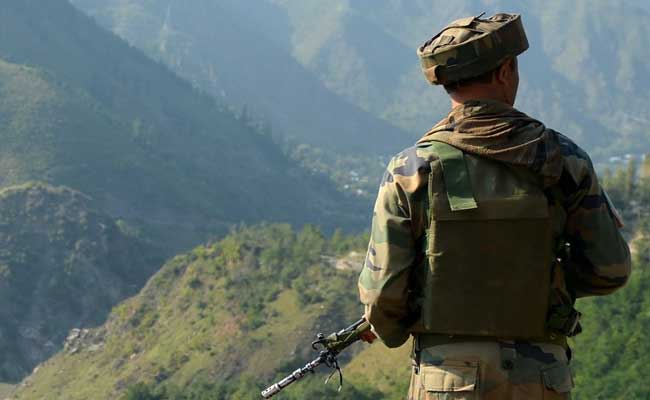 September 08 - Pakistan’s military and government have been eager to trumpet a narrative of strength and victory since the brief conflict with India in May 2025. After the ceasefire, Islamabad declared a ‘National Day’ honoring the armed forces, parades filled city streets, and officials proclaimed a fake victory over India.
The Pakistan Army basked in this wave of manufactured triumphalism. General Syed Asim Munir was even elevated to the rare rank of Field Marshal in recognition of his supposed “strategic brilliance.” The generals presented themselves as saviors of Pakistan, seizing the limelight and tightening their grip over the country’s politics.
This fake victory narrative, however, masks a darker reality. In the three months since May, Pakistan has faced worsening crises at home—security challenges, economic instability, human rights abuses, and environmental disasters. Instead of addressing these issues, the military establishment has used its “victory” narrative to silence dissent, marginalize civilian institutions, and deflect attention from structural failures. The contrast between Pakistan’s outward posturing and internal decay has become sharper than ever.
The security situation has grown particularly dire. Militant groups have intensified attacks in Khyber Pakhtunkhwa and Balochistan, inflicting heavy casualties on Pakistani security forces. The Tehreek-e-Taliban Pakistan (TTP) and Islamic State offshoots have increased their presence in the border areas of Khyber Pakhtunkhwa province despite the military’s claims of winning the war on terrorism.
In Balochistan, separatist groups remain active, targeting Pakistani troops and infrastructure tied to Chinese projects under the China-Pakistan Economic Corridor. Far from being quelled, the local insurgency has intensified in the province. However, instead of seeking political reconciliation, the Pakistan Army has launched more military operations, fueling resentment among the local population, mostly Pashtuns and Baloch.
Human rights groups warn that abuses by Pakistani security forces, such as enforced disappearances, torture, and extrajudicial killings, have increased in recent months and will only deepen alienation, strengthening separatist narratives rather than weakening them.
Pakistan’s economy has also continued to decline further since May. The military conflict with India exacerbated an already fragile situation, spooking investors and prompting increased defense expenditures. Pakistan narrowly avoided default earlier this year after receiving emergency loans from China, Saudi Arabia, and the IMF. Islamabad recently touted an increase in foreign reserves to around $20 billion, but these gains are based on borrowed funds and temporary rollovers rather than sustainable growth. Structural weaknesses remain: unsustainable debt, high inflation, and stagnant development.
For most Pakistanis, the military’s so-called “victory” has delivered no relief, only more cuts to health, education, and social services while the defense budget swells. Pakistan’s long-term trajectory remains bleak due to decades of mismanagement and military dominance over policymaking.
On the political side, Pakistan has slid deeper into authoritarianism. Since May, the army has capitalized on its popular standing to further marginalize democratic institutions. Opposition politicians, journalists, and activists have been relentlessly targeted. In July, authorities ordered YouTube to block more than two dozen opposition and journalist-run channels, branding them “anti-state.”
Amnesty International and digital rights groups decried the systematic silencing of dissent. International voices have also grown alarmed: in August, U.S. Senator Chris Van Hollen publicly criticized Pakistan’s escalating human rights abuses, warning that arbitrary arrests and enforced disappearances threaten U.S.-Pakistan relations. The European Union’s ambassador in Islamabad similarly noted a “clear degradation” of rights, cautioning that trade privileges could be suspended if Pakistan does not improve its record. These rebukes highlight how Pakistan’s authoritarian slide, accelerated since the conflict, is damaging both its domestic political fabric and its international reputation.
In Balochistan, long-standing grievances over missing persons and economic marginalization have sparked protests and violent crackdowns. Known activist Dr. Mahrang Baloch and others remain imprisoned under draconian public order laws despite repeated court challenges. Amnesty International has described the crackdown as a “systematic attack” on Baloch rights. Anger has spilled into broader society: in July, even the head of Jamaat-e-Islami in Balochistan announced a Long March to Islamabad to protest the federal government’s injustices, citing thousands of missing persons and exclusion from CPEC projects.
Pashtun communities in Khyber Pakhtunkhwa likewise feel trapped between militants and state violence. Since March, a series of drone strikes by Pakistani forces in tribal districts have killed several civilians, including children. Pashtun activists who raise their voices are themselves targeted by the military establishment. Far from fostering unity, Islamabad’s heavy-handed approach has worsened ethnic and provincial divides.
As if these man-made crises were not enough, Pakistan has also been battered by environmental disasters. The summer monsoon brought exceptionally heavy rains, triggering floods that have killed more than 800 people since June and displaced over 150,000, especially in Khyber Pakhtunkhwa and Pakistan-occupied Jammu and Kashmir. Once again, Pakistan’s disaster response has proven inadequate, neglected, with chaotic evacuations and overwhelmed relief operations. Environmental experts warn that climate change is driving increasingly destructive weather, but Islamabad’s focus on military spending has left climate adaptation and infrastructure projects grossly underfunded.
The EU envoy noted pointedly that her tenure in Pakistan began with the 2022 floods and ended with yet another devastating flood, underlining the state’s failure to address systemic vulnerabilities. As climate crises intensify, Pakistan remains dangerously unprepared.
Pakistan’s attempt to project strength after the May 2025 conflict with India is dangerously misleading. The military has significantly consolidated power, basking in adulation and parades, but the underlying crises of security, economy, governance, human rights, and environment have only worsened. Far from strengthening the nation, the war has emboldened the army to tighten its grip on power while ordinary Pakistanis bear the brunt of inflation, violence, repression, and natural calamities.
The supposed “victory” has delivered no real gains; instead, it has deepened the country’s malaise. Unless Pakistan’s rulers confront its internal storms, such as provincial alienation, economic collapse, human rights abuses, and climate disasters, the country faces a grim future of instability and decline. The reality is that the most dangerous battles Pakistan faces today are not with India, but within its own borders.