Reply To:
Name - Reply Comment
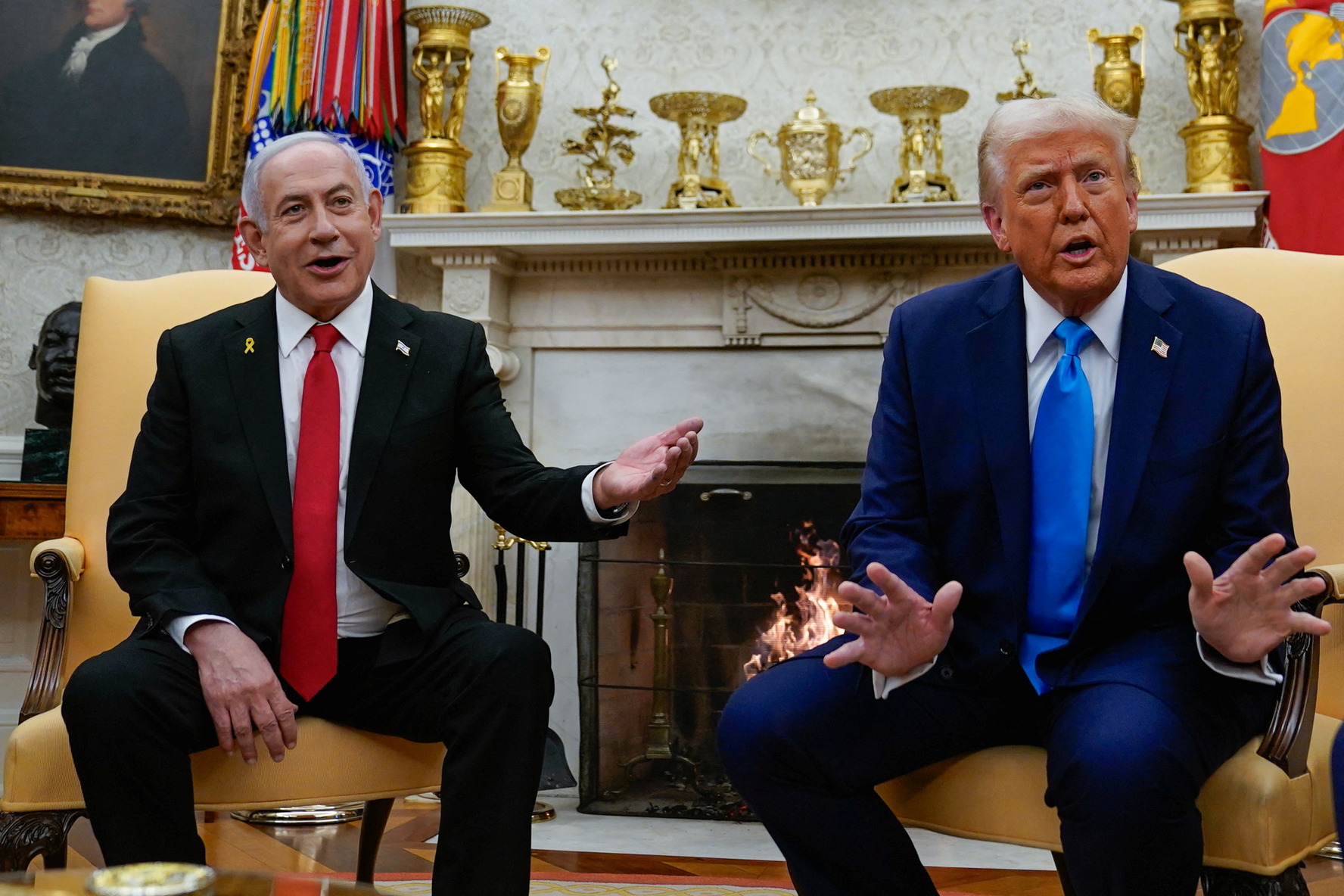 The war in Gaza, now approaching its second year, has escalated into a campaign of total domination. What began as Israel’s military response to the October 2023 Hamas-led attacks has evolved into a sweeping operation aimed not only at dismantling Hamas, but also at fundamentally reshaping the political and territorial landscape of the Gaza Strip.
Yet, this is no longer Israel’s war alone. The United States—through sustained military aid, diplomatic backing, and political endorsement—has played a central role in enabling the occupation. Under both Presidents Joe Biden and Donald Trump, Washington has consistently prioritized its strategic alliance with Israel over international law, humanitarian obligations, and mounting domestic and global opposition. As the civilian death toll rises and the prospects for peace grow increasingly remote, American complicity has become more than just a policy concern—it is now a defining feature of the conflict.
Israel’s current offensive, named Operation Gideon’s Chariots II, is its most ambitious military campaign since the war began. Approved by Israeli Defense Minister Israel Katz in August 2025, the operation includes the mobilization of 60,000 reservists, bringing the total Israeli troop presence in Gaza to over 130,000. Forces have already surrounded Gaza City, initiating major combat operations in preparation for a full-scale occupation.
Structured as a phased campaign expected to last four to five months, the operation begins with mass evacuations. Up to one million Palestinians—roughly half of Gaza’s population—have been ordered to leave Gaza City and relocate to so-called “humanitarian zones” in the south, including Al-Mawasi.
Israel’s stated strategy follows a five-step framework: dismantling Hamas, securing the release of all Israeli hostages, destroying all terror-related infrastructure, establishing a buffer zone, and installing a new civilian administration aligned with Israeli security objectives. While pledging to expand humanitarian assistance—targeting over 1,200 aid trucks per day—Israel has also begun constructing centralized aid distribution hubs, though critics argue these remain insufficient and deeply politicized.
Militarily, Israel has divided Gaza into operational sectors using fortified corridors to control movement and supply lines. The Morag Corridor, established earlier this year to isolate Rafah, now joins the Philadelphi and Netzarim Corridors, further fragmenting the territory and enabling tighter Israeli control.
The campaign’s first phase began with extensive aerial bombardments across densely populated neighborhoods in Gaza City, including Shejaiya, al-Sabra, Zeitoun, Rimal, and Tuffah. At the same time, Israeli ground forces advanced from both the north and south—specifically, the 162nd Division from Jabalia and the 99th Brigade from Zeitoun—encircling the city. According to Israeli officials, the goals are to eliminate Hamas’s final strongholds, secure the release of hostages, and implement a new post-Hamas administration.
This operation builds on nearly two years of continuous conflict, sparked by the October 7, 2023 Hamas assault that killed more than 1,100 people in southern Israel and resulted in the capture of over 250 hostages. In retaliation, Israel launched a full-scale war involving relentless airstrikes, ground incursions, and a near-total blockade of Gaza. By mid-2025, Israeli forces had already devastated Rafah, Khan Yunis, and northern Gaza—leaving the territory shattered and its civilian infrastructure largely destroyed.
The humanitarian toll has been catastrophic. More than 62,000 Palestinians have been killed, with over 156,000 injured. Nearly the entire population of Gaza—estimated at 2.3 million—has been displaced. Homes, hospitals, schools, and cultural heritage sites lie in ruins. The healthcare system has collapsed, and famine is spreading rapidly. International aid agencies have described the crisis as one of the worst humanitarian disasters in recent memory, with children suffering the most from starvation, preventable diseases, and long-term trauma.
Despite rising international condemnation, Israel has refused ceasefire proposals—including a recent 60-day truce offered by Hamas in exchange for a hostage-prisoner deal. Prime Minister Benjamin Netanyahu has insisted that the war will not end until Hamas is eradicated and full Israeli control over Gaza is established. Western allies, including France and the UK, have warned that Israel’s continued military escalation without a credible political solution could push them to formally recognize Palestinian statehood.
International legal and diplomatic scrutiny is intensifying. Both the International Criminal Court and the International Court of Justice are investigating allegations of war crimes and potential genocide by all parties to the conflict. Arrest warrants have been requested for senior Israeli and Hamas officials. Legal observers point to Israel’s targeting of civilian infrastructure, the blockade of humanitarian aid, and the use of starvation tactics as potential violations of international law.
While Israel executes its military and administrative plans, questions about governance in Gaza remain unanswered. By excluding both Hamas and the Palestinian Authority, Israel risks creating a political vacuum with no credible alternative. Analysts warn that such a vacuum could fuel insurgency, power struggles, or long-term instability. Without a legitimate, accepted governing authority, peace and recovery remain distant prospects.
At the center of this evolving crisis is the United States, whose unwavering support for Israel has drawn increasing scrutiny. Since the start of the war, Washington has provided Israel with billions of dollars in military aid—including precision-guided munitions, artillery shells, bunker-busting bombs, and aircraft. Many of these weapons have been used in strikes that resulted in mass civilian casualties and widespread destruction.
Even after credible reports emerged indicating that U.S.-supplied arms were involved in potential war crimes, both the Biden and Trump administrations continued to approve military support. Under President Biden, the U.S. adopted a posture of unconditional support for Israel’s right to self-defense, repeatedly vetoing ceasefire resolutions at the United Nations and accelerating arms transfers. As civilian deaths and displacement mounted, Biden faced criticism from within his own party but made little effort to change course, despite internal assessments warning of legal and ethical risks.
When Donald Trump returned to the presidency in January 2025, he inherited an ongoing war—and the political consequences of prior U.S. policy. Instead of shifting direction, Trump intensified American backing for Israel. He approved further arms deals, blocked additional ceasefire resolutions, and publicly echoed Netanyahu’s narrative that the war could only end with Hamas’s total destruction. His administration also implemented policies that restricted humanitarian access, including visa bans on injured Palestinians seeking medical treatment in the U.S.
Legal accountability has become a growing concern. Human rights organizations have filed lawsuits against U.S. officials, including Biden, Secretary of State Antony Blinken, and Secretary of Defense Lloyd Austin, alleging complicity in war crimes and genocide. These lawsuits argue that U.S. weapons and diplomatic cover facilitated acts that may constitute violations of both domestic and international law. Critics contend that the U.S. is no longer a passive bystander but an active enabler of Israel’s occupation and military campaign.
Domestically, political and public pressure is building. Several U.S. officials have resigned in protest, citing the administration’s handling of humanitarian concerns. Protests have erupted across major cities and university campuses, demanding an end to military support for Israel. While congressional efforts to block arms sales have so far failed, a majority of Senate Democrats recently voted in favor of halting weapons transfers—a symbolic but unprecedented shift in American political alignment on the issue.
Public opinion is rapidly changing. Polls show increasing support for Palestinian statehood and a growing belief among Americans that Israel’s military response has been disproportionate. Many now favor reallocating military aid to humanitarian relief and pressuring Israel to pursue a political settlement. Yet these demands have not translated into meaningful policy change.
On the battlefield, conditions in Gaza are dire. Nearly one million Palestinians are at risk of further displacement. Access to food, water, and medical care is collapsing. Reports of white phosphorus use, the bombing of refugee shelters, and the targeting of health facilities continue to emerge. Israel's expanded operation in Gaza City threatens to worsen an already catastrophic situation.
Meanwhile, President Trump’s leadership has drawn sharp criticism. Though credited with facilitating an early hostage deal during the transition from the Biden administration, Trump has since failed to pursue diplomatic solutions. His proposal to redevelop Gaza as a "Riviera of the Middle East" emboldened far-right Israeli leaders advocating full reoccupation and annexation. He raised no objections when Israel cut off international aid shipments in March, triggering a famine crisis, nor did he seize opportunities following Israeli and U.S. strikes on Iran to pivot toward de-escalation.
Instead, Trump has publicly endorsed Israel’s military strategy, stating, “We will only see the return of the remaining hostages when Hamas is confronted and destroyed.” This endorsement has emboldened Israeli hardliners and signaled Washington’s continued tolerance of aggressive, legally dubious military operations.
As Netanyahu prepares for further escalation in Gaza, Israel is increasingly isolated on the world stage. Mass protests in Tel Aviv and elsewhere reveal deep divisions within Israeli society, with hundreds of thousands demanding a ceasefire and hostage release deal. At the same time, Arab states are retreating from diplomatic initiatives, wary of being seen as complicit in Israel’s actions. Prospects for regional integration and normalization, once central to U.S. foreign policy, are slipping away.
The United States remains uniquely positioned to influence Israeli decisions—but has failed to leverage that power meaningfully. Key questions for the Trump administration remain unresolved: Is it in the U.S. interest to support a long-term occupation of Gaza? To continue providing arms to a country under international investigation for war crimes? To alienate regional partners and democratic allies? With each passing day, the cost of inaction—and complicity—grows.
Gaza’s destruction is not just a tragedy. It is a test of international law, human conscience, and the United States’ claim to moral leadership in global affairs. As Israeli tanks roll deeper into Gaza City, and as families bury their dead under rubble, the world must confront a harsh reality: the occupation is being enabled not only by Israeli policy but by the silence, approval, and material support of its most powerful ally.