Reply To:
Name - Reply Comment
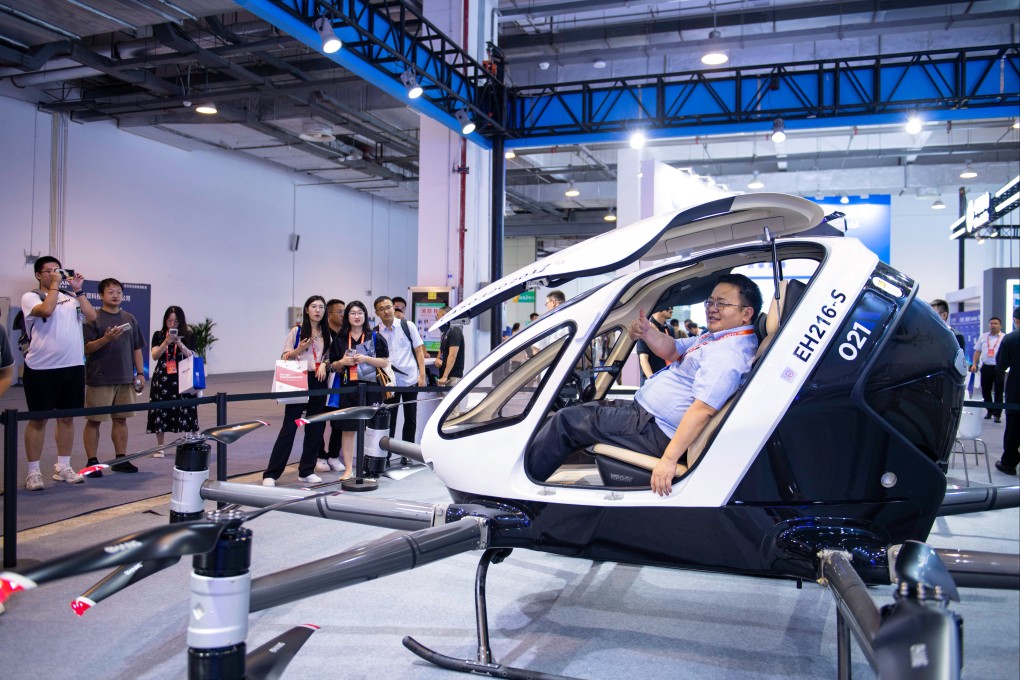 The rapid growth of China’s low-altitude flying economy marks a significant shift in the aviation sector, integrating emerging technologies such as drones, electric vertical take-off and landing (eVTOL) aircraft, and autonomous air mobility into commercial and logistical operations. Unlike traditional aviation, which is governed by state-controlled airspace and longstanding international regulations, the low-altitude economy introduces a disruptive model that blurs the lines between civilian, commercial, and state security interests. As China begins to deregulate its airspace and incentivize the development of low-altitude aviation, the implications extend beyond economic benefits to include geopolitical and security concerns, particularly in border regions where airspace control and surveillance are critical. This article argues that China’s low-altitude economy is not merely a technological revolution but a strategic maneuver designed to enhance state capacity while reshaping regional security dynamics.
The nexus of technological innovation and economic expansion
China’s push for a low-altitude economy is driven by a combination of policy reforms, state-backed industrial strategies, and private sector innovation. This reflects an intentional shift toward integrating aerial mobility into broader economic development goals. The Civil Aviation Administration of China (CAAC) has gradually relaxed restrictions on low-altitude airspace, creating an environment conducive to commercial ventures such as drone-based logistics, urban air mobility, and smart aviation technologies. Companies like DJI, EHang, and Xpeng AeroHT have emerged as industry leaders, positioning China at the forefront of global urban air mobility and drone logistics. In contrast to Western regulatory approaches, which prioritize safety and gradual integration, China has accelerated commercialization by leveraging strong state-capital linkages, effectively making low-altitude aviation a domain of both economic ambition and strategic necessity.
Government initiatives like the "14th Five-Year Plan for General Aviation" emphasize the creation of digital airspace management systems and specialized air traffic control infrastructure for low-altitude operations. This approach has facilitated large-scale pilot projects in cities like Shenzhen and Guangzhou, where eVTOL taxis and drone delivery systems are already being tested. With the sector projected to reach over $1.5 trillion by 2040, it is poised to become a major economic driver. However, this rapid development raises concerns about the centralization of aerial data, increased surveillance, and the monopolization of airspace by state-backed enterprises, reinforcing the argument that China’s low-altitude economy is about more than just economic growth; it is also a tool for strategic governance.
Borderland implications: Surveillance, security, and economic integration
The expansion of China’s low-altitude economy also carries significant implications for its border regions, particularly sensitive areas like Tibet, Xinjiang, and the South China Sea, where control of airspace and mobility has long been a contentious issue. The use of advanced UAVs for logistics, security, and surveillance is not just a technological advancement, but a recalibration of state power in peripheral regions. Drones are increasingly deployed for medical deliveries, infrastructure projects, and emergency responses in remote areas, improving the state’s logistical reach in difficult terrains. At the same time, UAVs are used for border surveillance and reconnaissance, enabling real-time monitoring of cross-border activities, potential incursions, and illegal trade. While this enhances state efficiency, it also raises concerns about sovereignty and privacy, as neighboring countries view these capabilities as part of China’s broader strategy for regional influence.
The economic impact of low-altitude aviation in border regions is equally important. By integrating drone-based logistics into trade networks, China is transforming the movement of goods along corridors like the China-ASEAN Economic Corridor. Faster transportation via UAVs makes supply chains more efficient, deepening economic interdependence between China and its trade partners. However, this technological integration also enhances Beijing’s economic leverage, reinforcing its dominance in regional trade while raising concerns among neighboring states about over-reliance on China and potential airspace encroachments. The increasing presence of drones in contested areas such as the South China Sea highlights the intersection of economic development and geopolitical strategy, making China’s low-altitude economy a tool for both growth and power projection.
China’s low-altitude flying economy is thus not just a domestic economic initiative but a key element of its broader strategic ambitions. The Belt and Road Initiative (BRI) has already incorporated drone-based logistics and infrastructure surveillance, allowing China to extend its technological influence across partner countries. This expansion is particularly significant in regions where aerial mobility can bypass traditional infrastructure bottlenecks, further consolidating China’s ability to shape economic and security landscapes beyond its borders. Chinese UAV manufacturers have also become global leaders in drone exports, raising concerns about supply chain dependencies and security vulnerabilities in countries relying on Chinese technology.
The future of low-altitude mobility and its global implications
The rise of China’s low-altitude flying economy marks a transformative moment in aviation, driven by rapid technological innovation and state-led commercialization. While the sector presents substantial opportunities for economic growth, urban mobility, and logistics, its expansion into border regions introduces complex security and geopolitical challenges. As China leads in UAV and eVTOL adoption, global stakeholders must anticipate the implications of this disruptive shift in the aviation landscape. The future of low-altitude mobility will depend on the interaction between regulatory frameworks, international competition, and evolving security concerns, underscoring the need for a comprehensive understanding of how aerial mobility is reshaping the geopolitical order of the 21st century.