 CHATURANGA PRADEEP SAMARAWICKRAMA
 Reply To:
Name - Reply Comment
Sri Lanka’s reintroduced National Fuel Pass QR code system has sparked widespread outrage, leaving thousands of motorists stranded and igniting a storm of criticism against authorities.
The Ceylon Petroleum Corporation (CPC) claims that technical glitches affecting nearly 600,000 fuel QR codes have largely been resolved. CPC Managing Director Mayura Neththikumara said a new system including nine nationwide WhatsApp numbers has been set up to help motorists update registered mobile numbers and verify vehicle ownership. Yet, the so-called “solution” has done little to ease public frustration.
Authorities have warned of a strict crackdown on motorists attempting to bypass the system. “Recent inspections by CPC officials and the police revealed that many individuals had already registered and obtained QR codes,” Neththikumara said, adding that officers now have the authority to verify eligibility on-site. Meanwhile, the Fuel Station Owners’ Association (FSOA) has urged motorists to avoid visiting fuel stations until their QR issues are resolved, warning that fuel will not be dispensed under any circumstances without a valid QR code. FSOA President Kumar Rajapaksa added, “Even in emergencies, we cannot issue fuel. Motorists will have to use another vehicle.” Concessions temporarily granted yesterday to ease technical difficulties have now ended, leaving motorists stranded—even those with previously registered QR codes. Reports of long queues, frantic calls, and emergency trips denied have flooded social media, highlighting the chaotic rollout of the system.
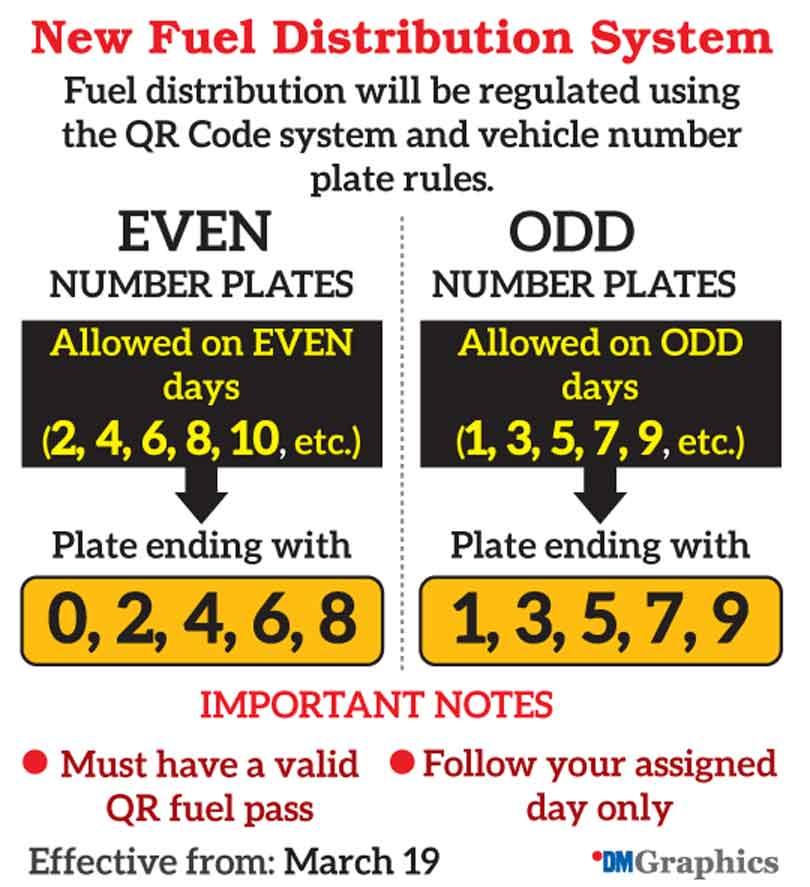
From March 19, fuel distribution will be further regulated by the last digit of vehicle number plates, alongside the QR system. Vehicles with plates ending in 0, 2, 4, 6, and 8 can fuel on even-numbered days, while plates ending in 1, 3, 5, 7, and 9 are allowed on odd-numbered days.
Critics argue that the combined QR and number-plate system is overly complex and poorly communicated, forcing ordinary citizens to navigate bureaucratic hurdles while fuel shortages loom. “It’s a cruel system that punishes law-abiding citizens while leaving loopholes for manipulation,” one frustrated motorist said.
As the government defends the QR crackdown as a necessary step to manage limited fuel stocks, public anger is mounting, with many calling for immediate fixes, transparent guidelines, and accountability for the chaos.
The QR-based system, intended to ensure fair distribution, is rapidly turning into a flashpoint of public fury, exposing gaps in planning, communication, and enforcement that threaten to worsen Sri Lanka’s ongoing fuel crisis.