Reply To:
Name - Reply Comment
By Darshana Sanjeewa Balasuriya
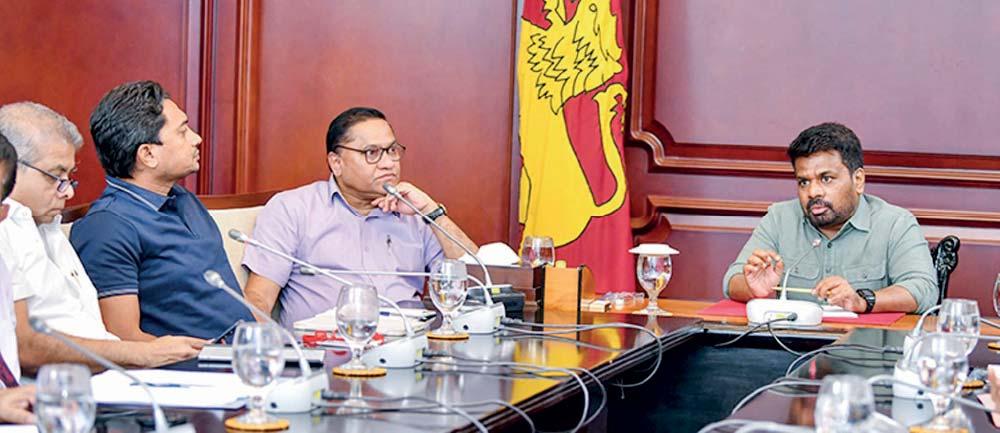
In an effort to promote fuel conservation in the face of the current conflicts in the Middle East, President Anura Kumara Dissanayake instructed authorities yesterday to study the possibility of implementing “work from home” arrangements for public and private sector employees.
Officials have also been asked to submit a detailed report on the feasibility and practicalities of remote work as a measure to encounter issues that might crop up during this crisis period.
President Dissanayake issued these instructions at a high-level discussion held yesterday with Ministry Secretaries and Heads of Institutions to address the challenges in maintaining essential services following the escalating conflict in the Middle East.
The meeting reportedly focused on mitigating the impact of global instability on domestic supply chains and ensuring the uninterrupted functioning of critical sectors.
The President also stressed the need to formalize and streamline the digital QR system for fuel distribution, particularly to support the agriculture, fisheries, and industrial sectors. Securing a steady fuel supply for these sectors is considered essential to prevent broader economic fallout.
The President also emphasized the urgent need to formalize and streamline the digital QR system for fuel distribution to support the agriculture, fisheries, and industrial sectors.
Education was another topic of discussion, with officials evaluating strategies to sustain schooling amid the ongoing global situation.
1. Sri Lanka
Introduction of a QR code system to manage fuel distribution and prevent hoarding.
The President has also discussed the possibility of introducing work-from-home arrangements.
2. Bangladesh
Universities closed temporarily.
Fuel rationing system introduced to control fuel usage.
3. Pakistan
Four-day working week for all government offices (Monday to Thursday).
All schools and colleges closed for two weeks, while institutions under the Higher Education Commission (HEC) continue classes online.
Public and private sector institutions required to allow 50% of employees to work from home.
Government and official vehicles receive 50% less fuel for the next two months.
60% of government vehicles will not be used during the same period.
4. Vietnam
Government urging companies to allow employees to work from home.
Encouraging reduced private vehicle use and carpooling.
5. Myanmar
Digital fuel rationing system introduced using vehicle barcodes/QR-type scanning to enforce fuel quotas.
6. South Korea
Considering expanding energy vouchers for vulnerable households.
Plans to boost domestic power generation to reduce energy pressure.