Reply To:
Name - Reply Comment
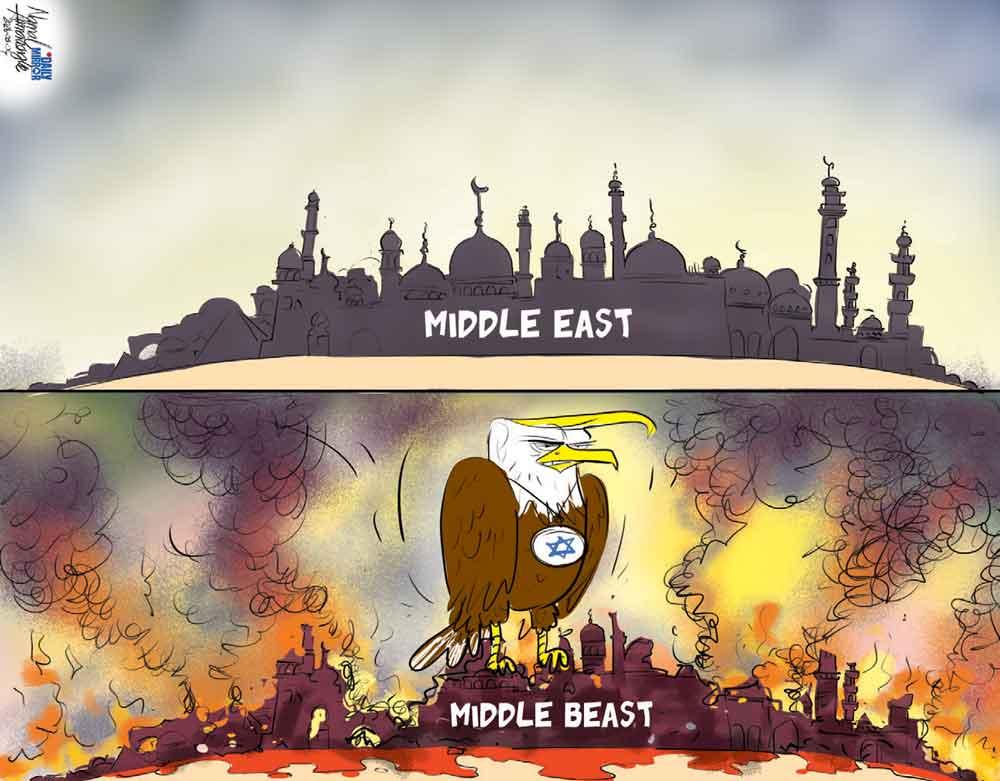
The cartoon is divided into two panels that contrast a region before and after turmoil. In the top panel, a calm skyline of domes and minarets labeled “Middle East” stretches across the horizon, representing the region’s cultural and religious landscape. The scene is quiet and still. In the lower panel, the same skyline appears engulfed in flames and thick smoke, with destruction spreading across the area. The label beneath it has changed to “Middle Beast,” altering the original phrase through a single letter shift.
At the center of the burning scene stands a large eagle bearing a symbol associated with Israel, dominating the ruined landscape. The eagle’s imposing stance and scale emphasize power and presence within the devastated environment. The transformation of the region’s label from “East” to “Beast” visually suggests a perceived shift from stability to chaos, with the eagle positioned as the central actor within that transformation.
Different viewers may interpret the cartoon in various ways. Some may see it as a sharp critique of military involvement and its destructive consequences in the Middle East, while others may view it as a provocative political statement reflecting anger or frustration toward particular actors in the conflict. The imagery uses exaggerated symbolism to express a perspective on geopolitical violence, inviting reflection on how power, warfare, and regional identity intersect in times of crisis.