Reply To:
Name - Reply Comment
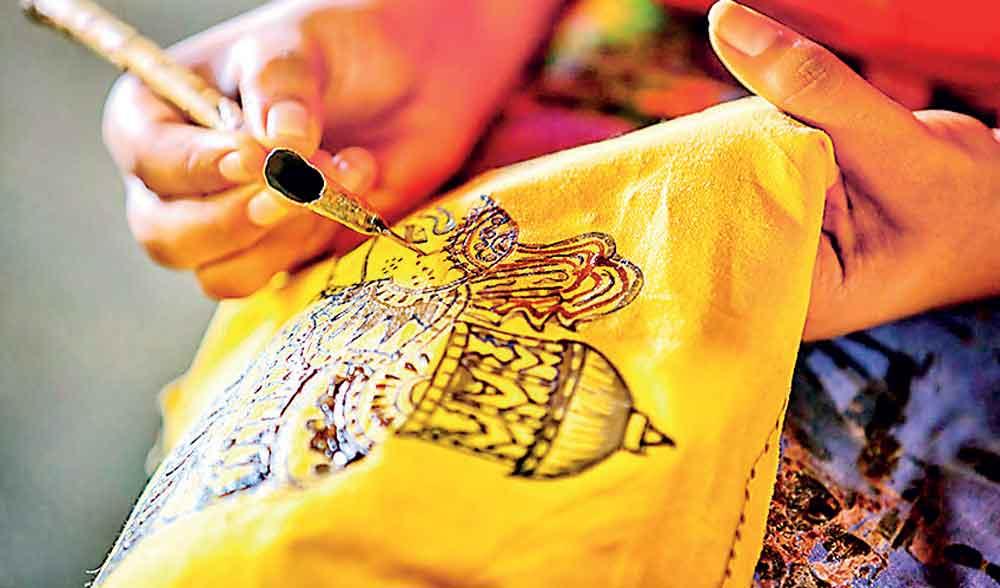

 The micro, small and medium enterprises (MSMEs) are the backbone of the Sri Lanka’s economy, contributing to approximately 52 percent to the nation’s GDP, while employing roughly 45 percent of the workforce. This segment plays a pivotal role in enhancing economic growth, driving innovation, fostering entrepreneurship and facilitating regional development, providing employment away from the traditional sectors. This remains central as Sri Lanka targets for greater digitalisation, increased exports and sustainability by 2030.
The MSMEs face major obstacles including limited access to credit and banking and persistent shortages or high prices of raw materials, exacerbated by the recent economic crises. The women-owned MSMEs (WMSMEs), which account for about 25 percent of the sector, are additionally confronted by gender discrimination, cultural biases about women’s roles and household responsibilities that limit their mobility and participation in higher-value activities.
As a result, many remain small and informal at the lower end of the value chains, constrained by weak networks, limited information and training, scepticism from financial institutions, lack of collateral and exclusion from formal economic opportunities and decision-making, which slows their growth and transition to formal enterprises.
Nonetheless, Sri Lankan banks have expanded the WMSME entrepreneurs’ access to credit through targeted loan schemes and sector-wide policies, including products such as Commercial Bank’s Anagi Business Loans, Sampath Bank’s Sampath Saviya and BOC’s Mithuru and Ranliya loans. Donor-backed programmes and national policies further promote women’s entrepreneurship with collateral-free lending and blended grant loan products that reach even rural microenterprises.
Access to finance is no longer the main barrier for WMSMEs in Sri Lanka. Instead, complex regulations, limited digital skills and restricted market access are now more pressing. Cumbersome registration, licensing and compliance procedures affect women with caregiving duties or home-based businesses. Although digital banking has expanded, low digital literacy and weak e-commerce capabilities, especially in rural areas, limit the use of digital marketing and supply chains for growth. Ongoing mentorship and training in digital tools and efficient business practices would help women entrepreneurs compete more effectively.
Introduction of a digital platform
The Chilean government, through its flagship 2013 initiative ‘Tu Empresa en un Día’ (‘Your Company in One Day’), allows the entrepreneurs to create a company within a day through a fully online platform, eliminating the need for expensive lawyers and notaries and reducing bureaucratic hurdles and costs.
This initiative particularly benefits women entrepreneurs because the digital platform is simple and provides a low-cost route to formalisation by easily granting legal status for those engaged in informal and home-based activities, helping them navigate previous bureaucratic systems.
The success of the Chilean experience rests on the fact that this incremental reform removed costly, time‑intensive bureaucratic processes and facilitated the MSMEs’ access to markets, finance and public procurement. Designing reforms that go beyond streamlined business entry covering local licensing, municipal practices, data‑driven impact monitoring and active awareness campaigns with strong upskilling for entrepreneurs and local administrators would support inclusive growth and greater participation of marginalised groups.
Incubator programme for WMSMEs
Moreover, the Business Incubator for African Women Entrepreneurs (BIAWE) model is a comprehensive initiative developed under the Common Market for Eastern and Southern Africa (COMESA) and its women’s business council (COMFWB), with the support of the NEPAD Spanish Fund for African Women Empowerment. The objective is to nurture the survival and facilitate the growth rate of the WMSMEs through a network of specialised incubators targeting sectors such as agro-processing, ICT and handcrafts, including textiles.
Given that the model addresses sectoral and market needs, it allows women entrepreneurs to choose viable business options with strong capacity building and structured market-linkage support, enabling effective packaging, branding and certification. Nurturing women-led entrepreneurs in their vulnerable start-up phase by hand-holding the entrepreneurs in business management and value-enhancing skills, enables the WMSMEs to move from informal business activities to scalable and market-ready enterprises.
Sri Lanka can draw lessons from both the Chilean and African models by spreading business skills beyond direct beneficiaries, helping entrepreneurs standardise products, gain certifications and develop competitive packaging and branding to access local and global markets, create jobs and open new income streams. It should institutionalise incubators and hubs for the WMSMEs in underserved areas and home-based businesses that provide ongoing, hands-on training, mentoring, affordable finance, business development support, market access and aftercare tailored to women’s time constraints, care duties and business growth stages.
Digitised, gender-sensitive regulatory reform is needed to modernise the outdated frameworks, strengthen business recovery, reduce informality and enable technology adoption and meaningful female participation. A collaborative, multidisciplinary approach linking government, international funders, the private sector, research institutes and NGOs with strong oversight, data systems, accountability and feedback loops will improve transparency, limit resource misuse, support adaptation and reduce fragmentation, so Sri Lanka can escape a low productivity trap and advance its 2030 development goals.
(Yolanthika Ellepola is a Senior Analyst with experience in research, consulting and digital transformation, specialising in data-driven insights and stakeholder engagement across multiple sectors. The views expressed in this article are her own and do not necessarily reflect those of the organisation she is writing for)