Reply To:
Name - Reply Comment
By Nishel Fernando
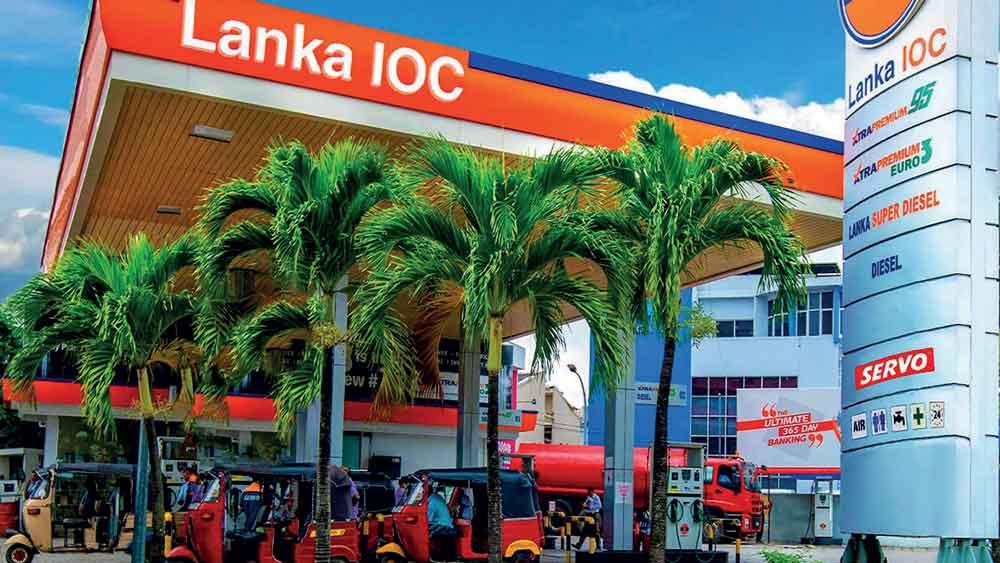
Lanka IOC PLC is moving toward a sustainable mobility ecosystem by finalising an ambitious plan to deploy electric vehicle (EV) charging facilities across all 273 of its company-owned and franchise-operated retail outlets over the next two years.
The initiative, highlighted in the company’s integrated annual report for 2025-26, is backed by a strategic memorandum of understanding signed with Ishara Trading, a subsidiary of the financial conglomerate LOLC. This partnership will see the infrastructure installation systematically rolled out across its entire widespread network of fuel stations across the island, marking one of the largest synchronised green energy transformations in Sri Lanka’s downstream petroleum landscape.
The strategic shift comes as the company, which is ultimately owned by Fortune 500 energy major Indian Oil Corporation Limited, with a 75.12 percent controlling stake, positions itself against an increasingly competitive market. As the biggest private-sector oil company operating in Sri Lanka, Lanka IOC’s auto fuel network remains a primary driver of domestic mobility, though the company notes that expanding its operational parameters is essential.
“Whilst the auto fuel business remains the cornerstone of the operations and continues to account for the 76 percent of group revenue, our diversification strategy has become an increasingly important contributor to earnings resilience and long-term value creation,” stated Lanka IOC Managing Director K. Raghu.
This view is closely mirrored by the top leadership, who emphasises that long-term survival in a shifting energy landscape requires a rapid departure from structural reliance on conventional fossil fuels alone. Lanka IOC Chairman Anuj Jain underscored this financial philosophy in his message to the stakeholders, highlighting the volatile regulatory and geopolitical environment.
“Sustainable profitability cannot rely solely on traditional fuel retailing. It has to be built on portfolio breadth, capital discipline and operational agility,” Jain observed, reinforcing the company’s aggressive push into higher-margin non-fuel lines and green alternatives.
The retail network expansion is structurally organised into a phased, data-driven deployment model to manage capital expenditure effectively while the feasibility studies continue across various regional corridors. The initial rollout timeline aims to establish fast-charging hubs at the primary urban networks before connecting the rural stations to completely eliminate the provincial range anxiety for EV drivers.
“The aim is to roll out EV charging at about 75 outlets within next six months and to have this facility at about 175 retail outlets in next one and half years,” the company revealed, detailing the underlying mechanics of the project blueprint.
An industry analysis reveals that Sri Lanka’s retail fuel sector has entered a highly intense phase of competitive rivalry, following deregulation and the entry of new multinational oil marketing brands. This influx has compressed standard fuel retailing margins, making customer experience, forecourt automation and alternative energy provisions the primary fields of competitive differentiation.
Operating as the leading private sector fuel operator across its 273-station network, Lanka IOC relies heavily on this infrastructure modernisation to anchor its long-term financial resilience.
Net sales revenue for the year under review rose 2 percent to Rs.280.65 billion, while net profit stood at a robust Rs.10.56 billion, heavily supported by efficient working capital adjustments and an expanded equity capital base of Rs.92.04 billion.