Reply To:
Name - Reply Comment
By Nishel Fernando
The Ceylon Federation of MSME (CFMSME) has alleged that “Revival Units” mandated by the Central Bank to rescue struggling businesses have been a spectacular failure, restructuring only 0.03 percent of the sector’s distressed loans.
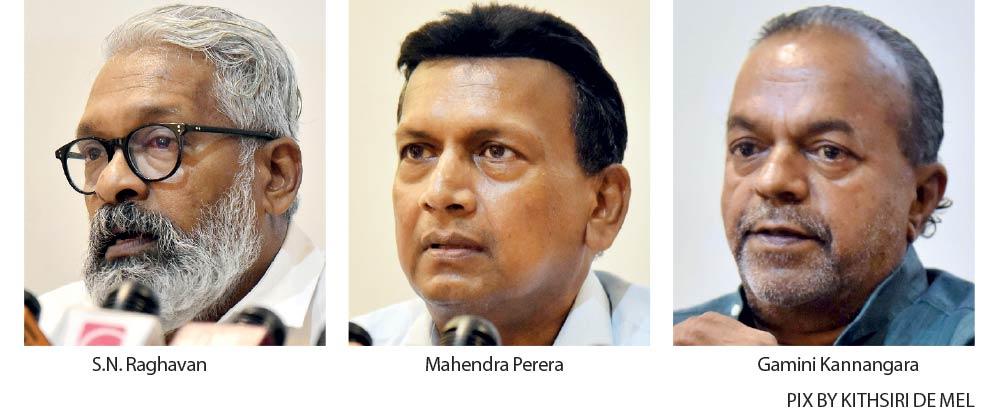
Following a hearing with the Committee on Public Finance (COPF), CFMSME Vice President S.N. Raghavan revealed at a media briefing held in Colombo yesterday that despite the banking sector’s proclaimed efforts to support economic recovery, data presented to Parliament indicates an unwillingness by financial institutions to genuinely support Micro, Small, and Medium Enterprises (MSMEs).
Raghavan stated that the 0.03 percent revival rate was not due to a lack of demand but rather a systemic preference by banks for “recovery” over “revival”.
He argued that banks are profit-centered and view foreclosure and asset seizure—facilitated by Parate execution laws—as more lucrative than restructuring loans for struggling entrepreneurs.
“The banks are all profit centered. Revival they don’t like. Recovery only they like, because the recovery brings them more profitability,” Raghavan said, emphasizing the structural disincentive for banks to help struggling businesses.
He further alleged a notable lack of enthusiasm from regulators, questioning why the sector, which acts as the biggest component of the economy, is not given due process.
The Business Revival Units (BRUs) were originally established by the Central Bank of Sri Lanka (CBSL) as a specialised mechanism to assist performing and non-performing borrowers who showed potential for turnaround.
Following intense lobbying by industry bodies who were the first to raise the issue with the IMF, the units were intended to offer “non-debt assistance” and restructuring plans, serving as a critical safety net to prevent viable businesses from facing Parate execution or foreclosure.
However, the Federation alleges that instead of functioning as a lifeline, these units have largely remained inactive or ineffective, failing to curb the aggressive recovery tactics employed by financial institutions.
The crisis facing the sector has been exacerbated by what the chamber describes as a “Moratorium Trap”. According to the Federation, relief measures introduced during the Covid pandemic and the subsequent economic crisis morphed into a burden due to the capitalisation of interest.
Raghavan explained that entrepreneurs who originally took loans at manageable interest rates of around 10 percent suddenly found themselves facing rates as high as 30 percent after the policy rate hikes in April 2022. The compound interest accumulated during the moratorium period has effectively doubled or tripled the debt burden for many businesses, making repayment impossible under standard terms.
“This is man-made. I think it is man-made and there is data to prove that,” Raghavan asserted, describing the financial distress as a direct result of policy decisions rather than business negligence.
The Federation also drew a sharp contrast between the fortunes of the banking sector and the real economy. Citing financial data, the chamber pointed out that while MSMEs faced mass closures and CRIB blacklisting, the banking sector recorded historic profits. “Revival they don’t like. Recovery only they like. Because with recovery, they have more profitability,” Raghavan said. According to the data presented, the banking sector posted a Profit Before Tax of approximately Rs. 762 billion during the 2023/2024 period. The government treasury also benefited, collecting Rs. 295 billion in taxes from this surge. The chamber argues that this “windfall” proves that sufficient liquidity exists within the system to provide non-debt assistance to the struggling sector, yet the funds remain locked in bank balance sheets and treasury accounts.
In light of these revelations, the Ceylon Federation of MSME has outlined a roadmap for economic justice, which they presented to the COPF Chair, Dr. Harsha de Silva. A primary demand is the appointment of a special probe to investigate the causes of financial distress and the massive profit disparity between the financial sector and the productive economy during the crisis period.
The chamber is also calling for the establishment of a dedicated policy coordinating body for the MSME sector. Raghavan noted that while strategic projects like the Port City and BOI have dedicated authorities and tax benefits, the MSME sector which acts as the country’s economic nerve center, lacks a unified voice in policy formulation.
Regarding financial relief, the group demands the refund of excess interest collected between May 2022 and November 2024, arguing that banks should issue these refunds as credits offset against future taxes.
They are also pushing for an immediate halt to Parate actions and a revision of CRIB reporting standards, which currently act as a “death sentence” for entrepreneurs seeking to restart their businesses.
Facing a lack of resolution from the executive and legislative branches, the Federation announced it has filed a Fundamental Rights petition in the Supreme Court as a final resort to seek economic justice for the sector.