Business
IMF agrees on US$ 1.3 bn, 4-year aid package for Jordan
01 Feb 2020
 0
0
284
Jordanian officials reached an agreement with the International Monetary Fund on a US$ 1.3 billion, four-year aid program to help authorities stabilize the economy, the IMF announced Thursday.

Bangladesh capital awash with plastic-coated posters
01 Feb 2020
0
205
Dhaka is awash with millions of plastic-laminated campaign posters ahead of elections in the Bangladeshi capital, and environmentalists are up in arms.

Markets struggle despite WHO virus declaration
01 Feb 2020
0
345
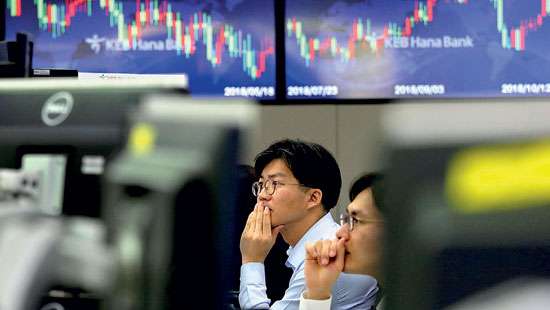
Markets struggled to find their footing in Asia yesterday after the World Health Organization declared a global health emergency over the deadly new virus sweeping China.
Pakistan Lifestyle Exhibition
01 Feb 2020
0
453
The second exhibition on the lifestyle in Pakistan was inaugurated by Small and Medium Business and Enterprise Development Minister Wimal Weerawansa at the Bandaranaike Memorial International Conference Hall yesterday.

EPF new banking sector investments unlikely as exposure already high
31 Jan 2020
0
263
The Employees Provident Fund (EPF), the largest pension fund in the country representing private sector workers, may not buy banking sector shares further, as its exposure is already too high. But any investment decision is purely up to the investment committee overseeing the management of EPF funds, according to the Central Bank.

CB targets over 4% growth with surprise rate cut
31 Jan 2020
0
546
In an unexpected move, the Central Bank (CB) yesterday slashed policy rates by 50 basis points to facilitate faster decrease in interest rates with the aim of boosting subdued economic growth to over 4 percent this year despite concerns over recent uptick in inflation.
Hotel industry braces to tackle coronavirus threat
31 Jan 2020
0
328
The Hotels Association of Sri Lanka (THASL) met yesterday to discuss in depth the current situation with regard to the coronavirus outbreak and the measures to be adopted.

MAS Holdings enters 2020 with first non-family CEO
31 Jan 2020
3
6584
MAS Holdings has appointed Suren Fernando as Chief Executive Officer with effect from January 1, 2020, the first non-family CEO to lead South Asia’s largest apparel manufacturer.
Govt. eyes US$ 18.5bn export earnings this year; to support NES implementation
31 Jan 2020
0
320
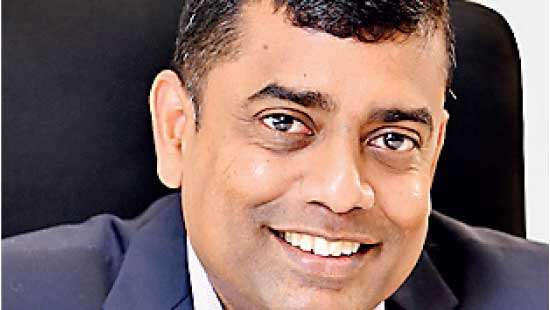
Sri Lanka’s export sector has been given an ambitious revenue target of US$ 18.5 billion this year, where merchandise exports are expected to contribute US$ 13.5 billion and services US$ 5 billion.
SME loan moratorium deadline extended to Feb. 10
31 Jan 2020
0
267
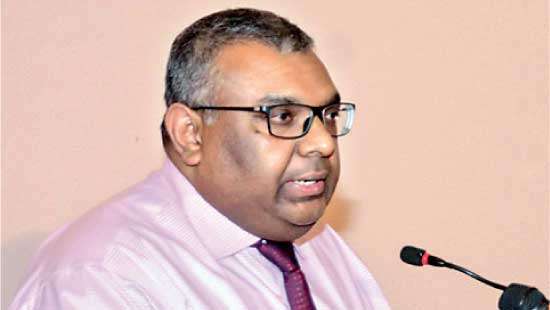
The Central Bank (CB) has decided to extend the deadline for SME credit support programme which includes a loan moratorium, up to February 10 while expecting around Rs.300 billion SME loans to be rescheduled under the loan moratorium.

CB says submitted 5 complete forensic audit reports to P’ment
31 Jan 2020
0
197
The Central Bank (CB) has submitted five complete forensic audit reports on the past bond transactions along with annexures and exhibits to Parliament following the Speaker’s request, a top CB official said.

Manjula to take over from Dhara as Ceylon Chamber CEO
31 Jan 2020
0
266
Manjula de Silva will assume duties as the Secretary General and CEO of the Ceylon Chamber of Commerce, from February 1.
Cloud Adjacency: Reliability of on-premises and elasticity of cloud driving digital transformation
31 Jan 2020
0
276
Data is growing at an unprecedented rate. In fact, 90 percent of the world’s data today were created within the last two years alone, which is mind-blowing.

SL advised to further strategise trade policy to boost exports
30 Jan 2020
0
494
Sri Lanka must further strategise its trade policy pursuing trade openness, as the country’s trade reaches uncharted territory amid the scheduled expiration of the GSP Plus concession in 2023, Brexit and intensifying competition from other trading nations, which could hinder the access to key export markets, the country’s largest trading partner, the European Union (EU), advised.

JKH shows resilience in 3Q; only leisure remains weak spot
30 Jan 2020
0
289
Premier blue chip John Keells Holdings PLC (JKH) showed resilience in its key business segments during the quarter ended December 31, 2019 (3Q20), with only the leisure segment being a laggard after the Easter attacks erased the earnings and some properties remained offline for refurbishment.

Act amendment hinders powers to deal with errant foreign employment agencies
30 Jan 2020
0
391
The apex body of Sri Lanka’s foreign employment agencies, the Association of Licensed Foreign Employment Agencies (ALFEA), says it is powerless to act against the errant foreign employment agencies, which are exploiting the country’s migrant workers, due to an amendment introduced to the Sri Lanka Bureau of Foreign Employment (SLBFE) Act, in 2009.

Credit support scheme to keep banks’ asset quality weak, prolong unwinding of NPLs: Fitch
30 Jan 2020
0
323
Fitch Ratings yesterday said the loan moratorium for the small and medium-sized enterprises (SMEs) and the broader credit support scheme announced by the government will keep Sri Lankan banks’ asset quality weak and result in prolonged unwinding of non-performing loans (NPLs).

UK updates travel advice on SL following coronavirus detection
30 Jan 2020
0
343
The United Kingdom has updated its travel advice on Sri Lanka following the confirmation by the Sri Lankan Health Ministry that a patient has tested positive for coronavirus.

Private sector wants govt. to play facilitator to fully harness BRI potential
29 Jan 2020
0
612
The majority of Sri Lanka’s private sector wants the government to play a supportive role in facilitating and promoting joint ventures between Chinese and local firms to fully harness China’s benefits of the Belt and Road Initiative (BRI).

Domestic sales boost Piramal Glass 3Q earnings
29 Jan 2020
0
276
Piramal Glass Ceylon PLC, Sri Lanka’s only glass bottle manufacturer, saw its December quarter (3Q20) earnings surging amid higher domestic sales, stoked by festive season.

WHO says China virus evacuations not needed
29 Jan 2020
0
289
Evacuating foreign nationals from the epicentre of China’s deadly virus outbreak is unnecessary, the World Health Organisation said on Tuesday according to state media.
Small hydro developers seeks presidential intervention to iron out issues with CEB
29 Jan 2020
0
249
The Small Hydro Power Developers Association (SHPDA) seeks President Gotabaya Rajapaksa’s intervention to sort out issues in the mini hydro sector, which has been stagnant since 2016 due to the Ceylon Electricity Board (CEB) halting the implementation of new mini hydropower projects.

Ceylon Cold Stores 3Q signals improving consumer demand
29 Jan 2020
0
229
Ceylon Cold Stores PLC delivered robust performance for the quarter ended December 31, 2019, as the country’s largest consumer food company by revenue managed to sustain its top line growth.

Ravi Wijeratne-MTD Walkers deal off
29 Jan 2020
0
375
Businessman Ravi Wijeratne’s offer to purchase MTD Walkers PLC from its parent has expired as there had been no positive development or progress on the intended transaction.

NCC chief highlights importance of web-based platforms for businesses
29 Jan 2020
0
392
Following is the speech delivered by the President of National Chamber of Commerce of Sri Lanka Asela de Livera at the 61st Annual General Meeting held on January 21st at Hotel Kingsbury.
Lessons I’ve learned from 30 years at the World Bank
29 Jan 2020
0
473
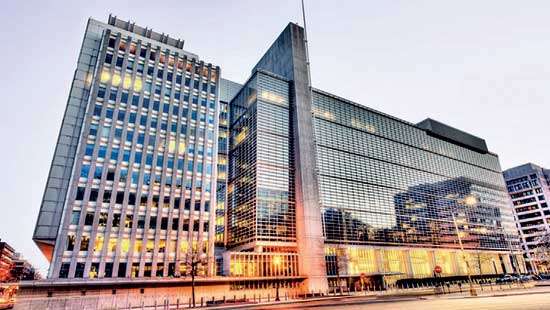
When I look at old pictures from my childhood in Germany, I see with fresh eyes how my grandmother and my mother went about their day on our farm, milking cows, working hard, and contributing to our family’s livelihood. They were strong independent women with bank accounts and land.
Depreciation of rupee and tea prices
29 Jan 2020
0
850
The value of a currency depends on a number of factors that affect the economy of a country, such as balance of payment, government debt, foreign exchange reserves, foreign investment, trade deficit, economic growth rate, inflation, macroeconomic policies, etc. The general belief is that a strong currency would make imports cheaper and exports uncompetitive while a weak currency could make imports expensive and exports more competitive.

LB Finance introduces CIM mobile wallet
29 Jan 2020
1
1442
LB Finance launched its mobile wallet, ‘LB Cash-In-Mobile’ (CIM) with the aim of revolutionising the traditional cash payment habit among the Sri Lankans. CIM is essentially a smartphone app that functions as a digital wallet. In fact, it is a savings account, which sits inside your phone and functions as your wallet/purse. The company intends to make the CIM digital wallet an alternative for cash/currencies used for day-to-day low-value transac

Govt. urged to rethink duty structure on vehicle imports
28 Jan 2020
0
3190
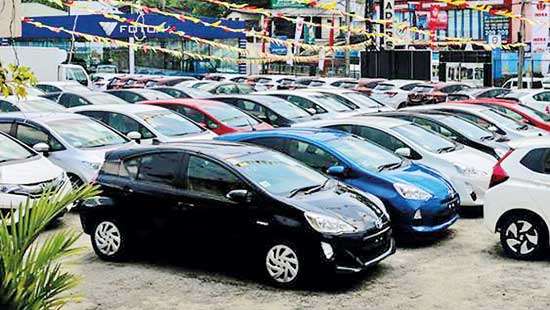
The government has been told to rethink the current tax duty structure on vehicle imports and Luxury Tax, as they have effectively put a lid on vehicle imports in excess of 1,600cc engine capacity.
Equities and oil tank as deadly coronavirus triggers panic
28 Jan 2020
0
474
World stock markets and oil prices plunged yesterday, as panicking investors bolted for safer assets after China warned that the spread of a deadly coronavirus was accelerating.