 SHABIYA ALI AHLAM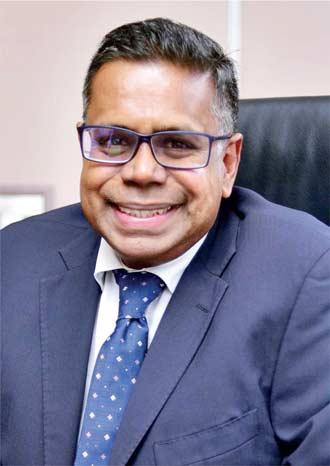
Reply To:
Name - Reply Comment

|
Dilshan Rodrigo |
Sri Lanka’s banking sector has emerged from one of its darkest periods, scarred but standing. The near-collapse that once loomed large has given way to a fragile recovery, yet the industry now finds itself at a defining juncture. Debt restructuring may have bought breathing space, but with political shifts, easing restrictions, and digital disruption reshaping the landscape, banks no longer have the luxury of complacency. For Union Bank’s Director and CEO Dilshan Rodrigo, this is a warning and a window of opportunity. Rodrigo recently sat down with Mirror Business to share his perspective on how the sector clawed back from crisis, why Sri Lanka’s next growth cycle must be anchored in a production-driven economy, and how Union Bank, under the wings of the CG Group, is positioning itself as a digital-first contender in a market primed for transformation.
Following are excerpts of the interview:
Q: How would you assess the current state of Sri Lanka’s banking industry?
We went through a very difficult period. From 2019 to 2024, growth in the banking sector was minimal, and there were real concerns about sustainability. At one point, people genuinely feared that banks could fail.
We’ve come a long way since then, largely because of the efforts by both the Central Bank and the banks themselves to support customers and revive businesses. Business revival was critical, if businesses collapsed, banks would have gone down with them. During the worst of it, nearly 40 percent of bank loan books were not being serviced. That alone could have brought down the sector.
 IMF’s involvement was pivotal. The restructuring of loans, along with agreements on international sovereign bonds, allowed banks to write back significant provisions that had been made for bad debt, both from customers and the government. That relief, which was never anticipated, gave the larger banks a major earnings boost. But that was a one-off.
Today, we see a reset of sorts, including changes in the political order. Liberalisation is taking place, restrictions on imports and foreign exchange are gradually easing, and the recent relaxation of vehicle imports is encouraging. Still, the bigger challenge for Sri Lanka is to build a production economy. We need to strengthen manufacturing, assembly, import substitution industries, and value-added exports both in Agri and Manufacturing, while also attracting foreign direct investment and making the Port City viable.
If we succeed, we can enter the next wave of growth. If not, the situation could turn difficult again, especially by 2028, when the country faces much larger debt repayments. Without a stronger economy by then, we will struggle to sustain the progress made.
Q:What measures are needed to make the sector more dynamic and resilient?
We need to learn from what happened during the crisis. It was unprecedented and shook everyone, businesses and banks alike.
At the bank level, resilience means improving credit quality and underwriting standards. But at the country level, sustainability is key. That’s why building a robust production economy is so critical —supporting businesses to recover, attracting foreign investment, and creating an entrepreneurial culture with clear, timely approvals for new ventures. This allows sector-specific growth and a move toward value-added industries rather than just commodity exports.
Prosperous businesses, reporting proper financials, validated by good credit ratings, pay taxes, and service banks without an issue. When this confidence builds banks will lower interest rates and reduce collateral requirements while the government will have the confidence to reduce tax rates as tax collection ratio improves. This creates a virtuous cycle where both businesses and banks thrive.
We also need stronger legal frameworks. Bodies representing SMEs are pushing to avoid excessive liquidation, banks resort to the much maligned parate actions as the last option. Faster issue resolution, more accountability, and digitalization of legal processes are essential to create discipline and accountability. The Credit Information Bureau also has a role to play in improving the credit culture. Developing a credit score for every individual encompassing obligations to banks, utility and insurance companies will go along way in building the requisite culture.
Compliance culture is another priority. Sri Lanka faces grey-list risks, so anti-money laundering (AML), know-your-customer (KYC), and cyber risk systems must be strengthened. The new Banking Act emphasizes corporate governance, but these operational and regulatory areas also require attention.
Finally, digital transformation is crucial. Many banks still operate with antiquated systems—paper forms, long queues, slow processes. Without digitalization, non-bank players like Apple Pay and Google Pay could take significant market share. Banks must modernize operations to remain efficient and relevant. Without this, brick-and-mortar banks risk becoming like dinosaurs.
Q: There’s been a lot of talk about digitalisation. How actively is it being pushed, and are we moving fast enough?
We are not moving fast enough. Ten years ago, all the top banks globally were conventional banks. Today, at least four or five digital-only banks are among the top 100 in the world. Places like China and India have seen digital-only banks emerge rapidly.
These digital-only banks operate almost like IT companies doing banking. For example, if you want a personal loan, they can evaluate your social media and digital footprint, assess your earning patterns, and offer a loan within minutes. Money can be credited instantly. By contrast, in a conventional bank, approving and disbursing a loan can take weeks or months.
If conventional banks don’t adapt, customers will move to digital-only banks. The future lies in hybrid models, offering both digital services and traditional banking. That requires rethinking the entire banking model: the role of branches, the role of staff, and the role of central operations.
In fact, recently at a management committee meeting, I emphasised that unit leaders must be capable of changing the bank whilst their deputies should be ready to run the bank. Running the same old infrastructure is unsustainable; it’s expensive and inefficient. Digitalization allows us to streamline operations and reduce costs while remaining competitive.
Q: What is your medium- to long-term outlook on the local banking sector, and how does Union Bank plan to generate sustainable income amid shrinking interest margins?
The banking sector today faces unprecedented volatility and uncertainty, making it extremely difficult to predict developments in interest rates, exchange rates, and inflation. To survive and grow, banks must reinvent operations, run tighter and more efficient organisations, and embrace technology. I expect fewer but larger banks in Sri Lanka over time, as consolidation becomes inevitable. Smaller banks that fail to adapt risk being absorbed by bigger institutions.
Technology will be central to the future of banking, with investment shifting from physical branches to digital platforms that enhance customer relationships. Income generation is also evolving. Traditionally, banks relied heavily on net interest income from loans and deposits, but shrinking margins mean fee-based services, investment banking, custodial services, and other value-added offerings will become increasingly important. Liberalization will bring more competition from overseas players, so adaptation is crucial.
At Union Bank, we are proactively responding to these trends. We are shifting focus toward fee-based income and value-added services, including investment banking, custodial solutions, specialized financial products, and advisory services for retail and SME clients. We are designing products that complement our existing offerings, like TurboDraft for leasing and loans against gold for pawning, to target price-sensitive segments while improving yields. Enhanced digital services and streamlined app-based transactions also help generate fee income while improving convenience for customers.
Our goal is a resilient, diversified revenue model that is less reliant on traditional interest income, better able to withstand economic volatility, and positioned for sustainable long-term growth.
Q: How is Union Bank responding to these industry trends, and what strategies are you implementing to drive growth and sustainability?
At Union Bank, we’ve completely rebranded our outlook. With the CG Group taking over, they’ve signalled huge ambitions for this bank, aiming to be one of the top five banks in the country within five years.
Since the acquisition, we’ve been the fastest-growing bank in the country for the last 18 months, growing at 30–40 percent compared to the industry’s 6–8 percent, albeit from a smaller base. Our focus is on retail and SME segments. Previously, we were mainly a corporate bank with low margins, dealing with a few large multinational companies. Now, we serve the mass affluent retail segment with a full suite of products, including leasing and pawning, and cover top SME clients in each branch’s territory.
Sustainability is key. We carefully select customers and provide exceptional service, with a more proactive lending approach. The parent group brings additional value, including board-level guidance and synergies from Nabil Bank in Nepal, which is highly digital and profitable. We aim to leverage these best practices to drive digital innovation across Union Bank, particularly in the retail segment.
Q: Are you looking to replicate a similar digital-only model at Union Bank as your parent bank has in Nepal?
Not exactly. The cultures and markets are different, so we won’t replicate it wholesale. But we can share learnings and adopt best practices, particularly in digital banking. The systems they’ve developed over the past five to ten years are tested, and we can harness those insights and tested vendors to improve our offerings here.
Our approach has to be two-pronged. First, we need fast organic growth to build critical mass. With 60 branches and over a thousand staff, we need scale to absorb overhead costs. At the same time, we must manage asset quality, run the bank efficiently, and minimize unnecessary expenditure.
Sustainability is key. Growth must be responsive, nimble, and customer-centric. Essentially, the entire banking model needs to evolve to support the digital journey we are pursuing.
Q:Are you making progress in building a digital and innovative culture at Union Bank?
Yes, we are getting there. We have a very young team—the average age is below 30, nearly a decade younger than some conventional banks. This brings higher energy, motivation, and willingness to embrace change, which we harness to offer customers experiences they haven’t seen before.
Innovation is central to our culture. We constantly experiment with new ways of doing things, making work engaging and refreshing for our team. Capacity building is a major focus. We run outbound training, collaboration exercises, quizzes, and e-learning programs via our learning hub, allowing continuous development. A chatbot-based knowledge repository also helps employees access information conveniently.
Incentive-based pay is another tool. Beyond fixed salaries, we reward effort and outcomes. High performers can progress faster here than in larger banks.
That said, retaining talent remains a challenge. Attrition is high, partly due to overseas opportunities and remote work options. Our role is to make Union Bank an exciting, engaging place where people want to stay, develop, and grow their careers.
Q: You mentioned digital transformation. Does Union Bank offer opportunities for remote work?
Remote work is possible, though it’s challenging due to compliance and confidentiality requirements. During COVID, all banks had to adopt it. Even now, certain functions are allowed to work from home, but most employees report to the office, which helps maintain focus.
What’s most important is ensuring employees are aligned with two priorities: transforming the bank’s operations and ensuring smooth conventional banking activities. We balance both by creating dedicated teams to drive change and efficiency across all functions.
Q: Can you give us a snapshot of Union Bank’s progress, both year-on-year and quarter-on-quarter?
Our balance sheet growth has been very encouraging, we’ve been the fastest-growing bank recently. This growth has also translated into the bottom line. Last year, our top line grew over 8 percent compared to the previous quarter, and by June, the top line had grown another 8 percent quarter-on-quarter. The bottom line improved almost 250 percent over last year.
This performance reflects an all-round effort across the bank, supported by a dynamic HR team. Ultimately, it’s about people stepping out of their comfort zones and delivering results. There’s tremendous potential ahead, which motivates our teams to bring their best version of themselves every day.
We’ve also shifted from a narrow corporate banking focus to a broader strategy encompassing retail and SME sectors. This has worked well, helping us grow yields and profitability.
Digital initiatives are equally important. They reduce costs associated with traditional banking and improve productivity. UBGO and BizDirect our retail and corporate digital offerings are evolving continuously to align with our customers increasingly digital lifestyles.
Q: What opportunities does Union Bank see in Sri Lanka’s evolving banking landscape?
Union Bank is part of a larger group, NAMAL a fund management company, and UB Finance, a leasing company. This gives us multiple avenues to grow. Through this we can support investment banking transactions and leverage the capital markets more effectively. UB Finance can capitalize on leasing opportunities, especially as controls over vehicle imports are being relaxed and industrial and agri sectors also beginning to take off.
Q: What is Union Bank’s medium- to long-term outlook?
Our focus is first on organic growth, followed by strategic inorganic growth. We aim to transform the banking landscape in Sri Lanka by differentiating ourselves as a digital-first bank.
In the context of ongoing industry consolidation, we hope to emerge as one of the larger, stronger banks. Our goal is to build a robust business model that not only supports sustainable growth but also positions us as a strong contender for future mergers and acquisitions. Being smaller and more agile than traditional banks allows us to move quickly and respond faster to market opportunities. This flexibility positions us well to expand our footprint in Sri Lanka’s financial services sector.