Reply To:
Name - Reply Comment
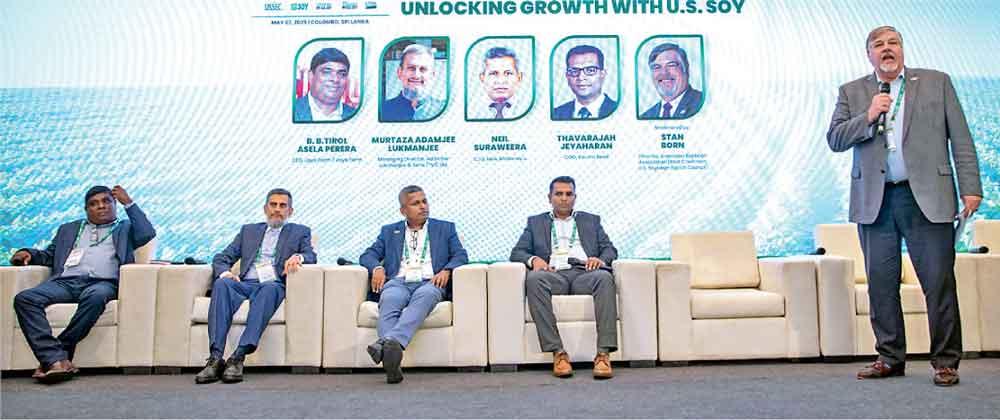
Panel discussion featuring Sri Lanka’s key poultry producers who have signed on to use the ‘Sustainable US Soy’ label on their packaging in a panel discussion moderated by Stan Born, Director, ASA
Progressive leaders from across South Asia and U.S. Soy farmers gathered in Colombo for the SUSTAIN A SUMMIT conference this week, hosted by the U.S. Soybean Export Council (USSEC).
Under the theme of ‘Now More Than Ever’, the conference served as a call to action, catalyzing South Asians to integrate sustainability into their businesses with a focus on responsible sourcing.
Sustainability is not just good for the environment; it also benefits the bottom line. According to PwC’s Voice of Consumer survey, customers are willing to pay 9.7 percent more for sustainable or sustainably sourced goods. This market shift proves that sustainability is here to stay, and corporations that adapt will increase market share, mitigate risks and continue to build brand preference.
“Sustainably verified U.S. Soy can play an integral role in meeting customers’evolving needs for sustainable sourcing, from livestock and aquafeed to soy foods,” added Jim Sutter, USSEC CEO.
“By choosing U.S. Soy, our customers gain a competitive advantage while continuing to build trustin the market.”
While sustainability has recently become a trend, U.S. Soy farmers have been implementing sustainable practices for decades. Methods such as precision agriculture, crop rotation, and water management have decreased soil erosion and improved soil quality.
“We are always striving for continuous improvement,”added Joey Boudreaux, U.S. Soybean farmer and Director at the United Soybean Board. “The actions that we take today will shape the world of tomorrow. When customers choose U.S. Soy, they recognize the value that sustainably grownsoy from our farms brings to their table.”
As sustainability drives purchasing decisions, the ‘Sustainable U.S. Soy’ label gives companies a competitive advantage. Customers sourcing at least 60 percent of their soy from the U.S. forfood and animal feed products qualify to use the‘Fed with Sustainable U.S. Soy’ label on their packaging. Whole soybean products must contain 90 percent verified sustainable soy to qualify for the‘Sustainable U.S. Soy’ label.
Reflecting on the label’s positive impacton his business, Neil Suraweera, CEO of New Anthoney’s, added, “Consumers prefer companies that supply products made in a sustainable way. With the help of the ‘Fed with Sustainable U.S. Soy’ label, we are increasing our market share faster than market growth.”
For almost three decades, U.S. Soy has been working in South Asia, fostering relationships, driving innovation, and elevating the industry’s skills.