Reply To:
Name - Reply Comment
By Chaturanga Pradeep Samarawickrama
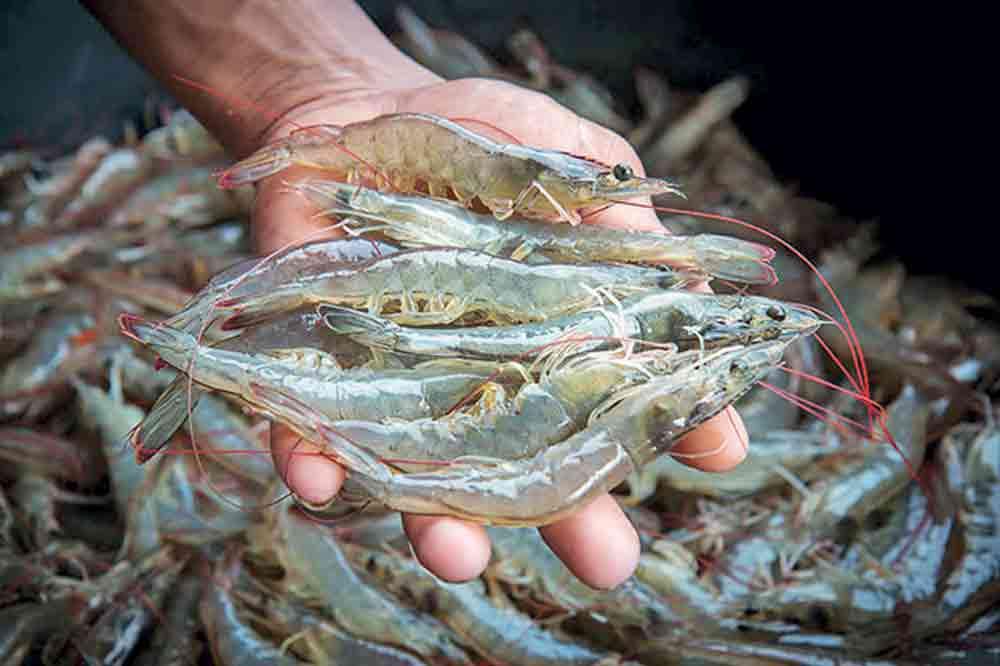
Sri Lanka yesterday launched its first-ever integrated digital platform for the aquaculture sector, the Shrimp Industry Information System (SIIS), marking a major leap forward in the country’s drive toward digital transformation and sustainability in seafood production.
Developed by the Food and Agriculture Organisation of the United Nations (FAO), in collaboration with the Fisheries, Aquatic and Ocean Resources Ministry and National Aquaculture Development Authority, the platform was introduced under the FAO-led project ‘Smart and Sustainable Aquaculture through Effective Biosecurity and Digital Technology’, funded by the Oceans and Fisheries Ministry of the Republic of Korea.
Designed to modernise Sri Lanka’s shrimp value chain, the SIIS creates a unified digital ecosystem connecting the farmers, laboratories, regulators and policymakers through big data, internet of things, artificial intelligence and early-warning systems. The platform enables real-time data collection, predictive analytics and automated alerts to improve productivity, strengthen disease control and ensure traceability across the supply chain.
“This platform represents a transformative step in our efforts to modernise Sri Lanka’s aquaculture industry,” said Fisheries, Aquatic and Ocean Resources Minister Ramalingam Chandrasekar.
“By adopting digital and biosecure practices, our farmers can minimise losses, increase productivity and compete more effectively in international markets.”
Chandrasekar highlighted that Sri Lanka’s shrimp sector currently produces between 3,000 and 8,000 metric tonnes annually, generating over 40,000 direct and indirect jobs. However, the industry has faced major challenges, including slow responses to disease outbreaks such as the White Spot Syndrome, which caused millions of rupees in losses, due to the delays in data collection and reporting.
“Previously, data was collected manually and there was no efficient system to monitor the water quality, record disease outbreaks or evaluate farm performance,” Chandrasekar explained.
“The farmers often received advice too late, reducing productivity by nearly 30 percent in some years and leading to financial strain. Government agencies also struggled to make timely, data-driven decisions. The SIIS changes all of that.”
Accessible via both mobile and web applications, the SIIS allows the farmers to track water quality, report diseases and receive automated advisories in real time. It also introduces digital licensing, GIS-based mapping and centralised visibility of aquaculture activities, enabling the regulators to make faster, evidence-based policy decisions.
Ambassador of the Republic of Korea to Sri Lanka Miyon Lee explained the partnership’s strategic value.
“Through the Smart Aquaculture Project, we aim to share Korea’s experience in digital transformation to strengthen sustainable aquaculture and rural livelihoods. The SIIS demonstrates how technology can deliver tangible economic and social impact.”
FAO Representative Vimlendra Sharan described the system as “an ecosystem that connects people, data and innovation”. He added that it would “boost productivity, reduce disease risks and strengthen the livelihoods of coastal communities dependent on shrimp farming”.
The initiative also includes capacity-building and training programmes for farmers, researchers and government officers, to ensure effective adoption of digital tools and biosecure farming practices.
The launch of the SIIS will allow Sri Lanka to position itself as a regional frontrunner in smart aquaculture, harnessing digital technology to enhance export competitiveness, improve food security and build a resilient blue economy.