Reply To:
Name - Reply Comment
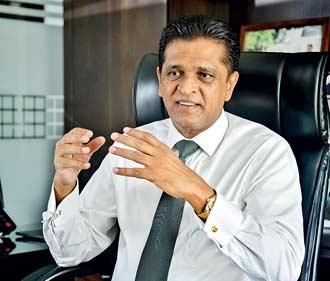
 Since its founding in 1957, S-lon has been a pioneer in Sri Lanka’s thermoplastic plumbing industry, evolving into a trusted household name. Guided by resilience, innovation, and a deep sense of responsibility, the company has weathered industry shifts, championed sustainability, and placed both customer trust and employee wellbeing at the heart of its growth. In an interview with Mirror Business, S-lon Group COO and Group Director S.C. Weerasekera shares insights into the company’s journey, its commitment to quality, contributions to the national economy, and its efforts to nurture a more sustainable and skilled future for Sri Lanka. Below are the excerpts:

 How has S-lon grown over the years since its establishment?
S-lon was established in 1957, pioneering the thermos plastic plumbing industry in Sri Lanka. Since then, we have evolved through decades of transformation guided by resilience, purpose and commitment to progress. From adapting to majority changes like transition to JIS to ISO (quality checking standards). That had been a huge impact to business since you had to make another huge investment in changing the machines and etc. That was a turning point for the brand. Brand has suffered sometime. The newcomers did not investment that much because they had go to for some new practice. Therefore, that was a huge challenge for S-lon once. The best part was innovating. Lot of offering to the local industry and to avoid undue imports, our team had made machine locally during the Covid-19 time.
|
S.C. Weerasekera |
We had a huge issue with the currency, the foreign exchange. When we had a challenge of bringing on all the machinery, our team got together and made a machine, locally. Not only providing us with an opportunity to save foreign exchange, but also that leads to reduce the recurrent cost, because that machine.
Started manufacturing certain parts that we have been importing throughout. Those parts now we can locally produce, so that huge amount of foreign exchange be saved due to that reason. That machine had a double impact to the economy.
They have trusted presence in the lives of millions of Sri Lankans. Our legacy is built not just on products, but on enduring relationship, integrity and deep dedication to serving our communities. Why I am saying this now, when it comes to businesses their primary objective is to making profit, put their money in, and see if they have a Return on Investment.
What makes it stand out from its competitors?
At S-lon, we don’t sell products, we sell peace of mind and happiness. In life, we buy X number of products and dump at our home that has become no peace of mind. Also, because, we are doing the consumerism, that has become a huge challenge today because of the marketing part.
People just buy products, even without having a purpose in it. Now, see, we keep on buying a new model of mobile phone, but how much of that features we know, or we use rather. But we like to change the model, because we want to show off sometimes to the others that you know, I have the latest model of the phone. So over consumerism and therefore it is very vital to have the peace of mind in consumers life. What I would say is that our guiding principle has always been simple. Would I install this product in my parents house? We don’t just sell products. We have a peace of mind. My guiding principle has always been simple. Then only I give it to consumer. There’s nothing that I could give it to my family members, my close circle of people, I would not give to my customer.

Everyone likes to buy something made in other countries, but we don’t like to see if it is made in Sri Lanka. We feel it’s a cheaper product. We have that mentality. We have that attitude.
That’s more than a standard of quality assurance, because when you market with the level of personal accountability, quality assurance goes beyond process. It becomes a personal responsibility. This culture has been inculcated in our organization, throughout all our products that we make, the profit comes second, the product quality comes first. That is why you ask the question, what make S-lon stand out from the competition? No competitors think in this way. They think differently.
Why we stand out from the competitors is also because we don’t treat customers as kings anymore, instead treat them as God.
In addition, the first consumer is my employee. If my employee is not happy, how do you create happiness in your customers? Since at the end of the day, it is the consumer who interacts with my front liners? And front liners are my employees. I am sitting at the very extreme end of the day, and if they are not happy, no customer is going to be happy. So the fundamental truth is that your employees, your home, your stakeholders, all must be very happy people.
Then the consumers will be happy. Now, majority of the time we get complaints from our consumers. We have a system where any complaint is attended within 24 hours. However, we at least talk to them. Somebody will meet them. We have a system across the country. So many people are employed to do sales, at least one sales guy will visit initially. If the complaint that he or she cannot handle, then we will arrange someone technically qualified to attend it. In the process, what is happening? The majority of the time, the complaints that we receive I would say 99 percent of the time are for our competitor products. Now what do you do? We have sent our technical team. They have reached, let’s say we have a complaint in Jaffna. Now my team has already gone to Jaffna, and when they go, because customers don’t know. It’s a grey colour pipe. When it’s come to S-lon, it’s very difficult to say that, because everything is similar in colour. They don’t look at the branding. They think they are S-lon. But eventually, when you go and see it’s a competitive brand. So what do you say? Generally, what happens with other companies? They would blame the customer, who might get charged for the cost of transport to other cost incurred. But my advice to our team is, now that you have reached the customer, cost is already incurred. Customer trusted our brand, that is why they called us. What are we going to lose by repairing it? Hardly, anything. Repair it free- of- charge. After all, we are human beings. We need to help others. Can this difference be made by another company? That’s why we are standing out of the rest.
What is its contribution to the national economy?
As I originally said that we save a lot of foreign exchange. This country needs a lot of foreign exchange. We have gone through enough crisis and difficulties. You know, we could not even fund the basics needs of our life. Everyone in this country should look at how they could contribute to generate foreign exchange for this country, because our traditional exports, even for that matter, government or industry, may not be able to support the country’s GDP any longer. So therefore, it is everyone’s responsibility to create some the value driven products that could generate foreign exchange.
We are creating thousands and thousands of jobs and also down the line, look at this chain. How many people getting fed out of these activities? All these economic activities have a huge change. The millions of people are directly and indirectly connected to all what we do.
So one must change this if we are to change the country or take the country to a better place. When S-lon started as S-lon Lanka Private Limited, we had a very diversified range of products.
We have not only export products, but export substitute products have been made inside our organizations. That’s something that most of the people don’t think. Everyone likes to buy something made in other countries, but we don’t like to see if it is made in Sri Lanka. We feel it’s a cheaper product. We have that mentality. We have that attitude. Under the Kevilton Pvt Ltd, coming under the industrial hub, which under my purview. All these companies have been supporting the economy directly, indirectly, by providing employment opportunity, and also we are providing support, education and other various environmental requirements. It’s not just a business, as everyone see.
How seriously does S-lon take sustainability?
We take it very seriously. We believe sustainability is not just a trend, it is a responsibility at S-lon. We have embraced green manufacturing practices reduce our carbon footprint and actively engage in environmental initiatives, like to thuru kepakaru (S-lon’s green initiatives) is one of our key programmes. We have also aligned our operations to reduce plastic waste and focus on long term environmentally accountability and also sustainability is not a check box for us. It is embedded in how we design produce and serve because to be truly sustainable, you must be better inside, as I always say. Now, see recycling. We are the only company in Sri Lanka who produces entire range of thermoplastic. But everything is recycled. Nothing is released to the environment. But lots of people lobby against plastic. Lots of people talking bad about plastic and the environmental hassle created through plastics. But is the plastic creating the environmental hassle? All this top-end people who talks and lobbying and shouting about it do not answer the question.
As you touch a paper, you are touching millions of trees. You are not only cutting trees and disturbing the ecology, but also you are killing millions of species. The whole ecosystem will get disturbed. So therefore you are not just cutting trees. So that is out, then glass, how much of heat you need for that, how much carbon that you how much you have to emission, how much of carbon you have to emit to produce glass iron.
Give us a brief snapshot of Thuru Kepakaru?
‘Thuru’ meaning trees, ‘Kepakaru’ foster guardian or somebody looking after the trees. What we do here is, we select students from schools and we plant a tree with them jointly. And then we allocate that tree to the child, having planted that tree and he or she should look after that until they leave it. They’re the foster guardian of the trees, handed with that responsibility.
Then what we do is, interact with them. We’ve hung a QR code on the tree, so anybody can scan the QR code and understand what the tree is all about – scientific name of the tree, the historical value, the cultural things, all attached to it. Here, again, the kid can record all those in every tree. We to monitor the situation from our end, and if there is progress, at the end we motivate them with school stationary’s. Now, there is an interaction on, between the student and the sapling. Every time, there is a fruit, flower or leaf, they report.
We believe sustainability is not just a trend, it is a responsibility at S-lon. We have embraced green manufacturing practices reduce our carbon footprint and actively engage in environmental initiatives, like to thuru kepakaru (S-lon’s green initiatives) is one of our key programmes
Therefore, this is more than a tree planting campaign, it is uplift the value system of the society, especially the future kids. The core requirement of this is to inculcate affection, love for the nature. Also to bring them out of their gadgets and four walls, hence there is interaction with the outer world.
Today, we have planted 21, 800 trees. I don’t want to go for millions of trees, what I want to make sure is kids are changing.
In the increasingly congested concrete jungle, how much of a challenge is it to keep delivering your green initiative
Obviously, you can see construction is on. The first thing designers do is, they wipe off the land. Construction is one. When you say construction, it’s the beginning of the disaster. They want to destroy the environment.
The challenge is – the dedication, determination and drive.
What inspired you to venture into this?
I went to couple of schools. I have been doing a programme called – Students Circle. I also went into urban and semi-urban. I did not find children knowing the value about nature, environment, species and trees. I asked do the trees have life, they said no. They thought it’s like a desk, chair or a mobile. They didn’t know trees have a life and breathe. There’s this leaf that automatically opens and closes for a touch. Some of these children did not know. With this I realised I must do something. I’ve also seen so much politically motivated tree-planting campaigns. Nothing left behind. Again, I thought I must do something differently. In this world, nobody has done this. A unique concept, part of the campaign. This is the only brand with such concepts.
What is S-lon’s take on SL’s construction sector?
As I originally said we have contributed a lot by bringing new technologies, new products into industries and import substitutes. S-lon will continue to promote skill development, product innovation and sustainable practices. Construction is not just about building; it’s about building better lives. We’re building. But why are we? It is to provide better lives.
It is. At the moment, the government has made effort but more can be done.
They need more long-term policy consistencies. Time-to-time policy changes. Once they say apartment builders have no vat, suddenly they reverse it. All these things cannot be changed overnight. If your encouraging Foreign Direct Investment there should be a very clear policy at least for some period. Therefore, long-term policy are very, very key for the success of this industries and also, the more Public-Private-Partnerships and vocational training has suffered a lot.
What efforts are needed to make the construction sector a front runner
Truly, if we are to elevate Sri Lankan construction sector, we need to get the infrastructure. We need inspiration, skill, and alignment across the entire eco-system. Now, one key truth often overlooked is having a world class product does not mean anything to us, unless you have trained skilled task men to fix them
Therefore, it is very vital to have a trained professional, because majority of the building products.
Look at what happened after this earthquake recently in Myanmar. No skyscrapers collapse in Thailand. Why? It is the quality of the construction.
What we have to do, collectively, is the government and the private sector, training the task men. Now, in our case, S-lon Private Limited we train plumbers, carpenters. Then we train welders and fabricators, meaning, aluminum fabricators, etc. When we come to electrical range, we train electricians. So not only training, but we also make them qualified people. We get them to qualify with certain certifications, with that, they can read a blueprint. They can understand engineering part. They understand little bit of theory. They understand what is right and what is wrong.