Reply To:
Name - Reply Comment
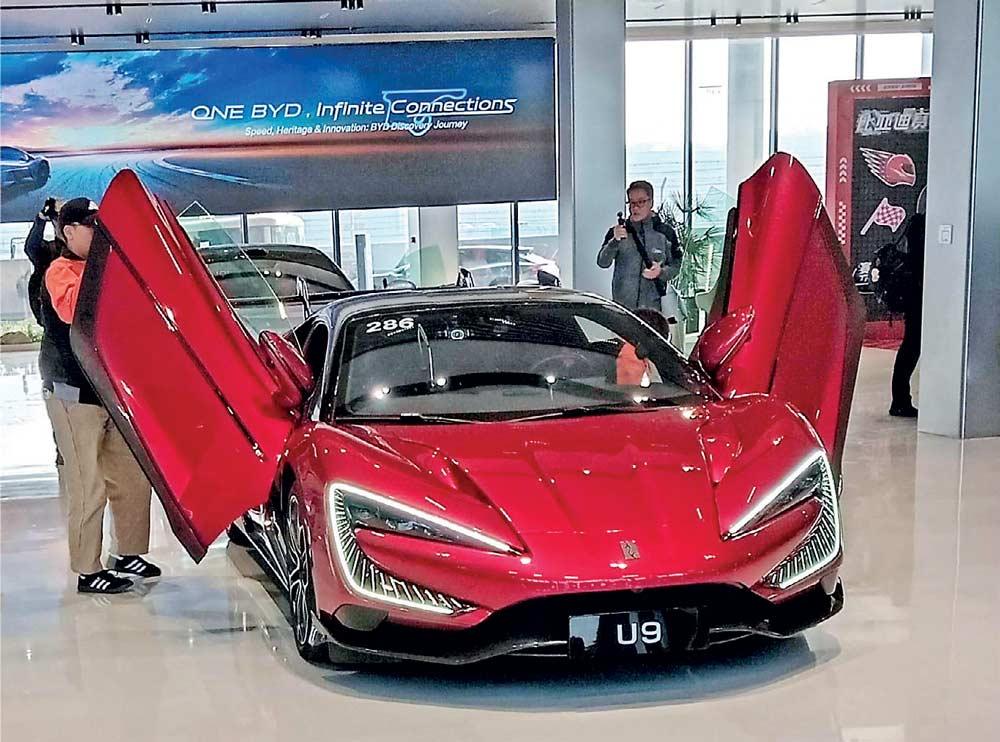
Yang Wang U9 Extreme has set the world record for the fastest production car, reaching 496.22 km/h
BY Ishan Sheriffdeen
As the global auto industry accelerates towards an electric future, China’s BYD is most certainly redefining the race. On a visit to the company’s vast global headquarters in Shenzhen, Mirror Business sat down with BYD Asia Pacific Auto Sales Division General Manager Liu Xueliang, who offered candid insights into the automaker’s rapid regional expansion, its push into Sri Lanka, the next wave of EV technologies and the vision steering one of the world’s most influential electric-mobility giants.
Following are excerpts of the interview:
 QCould you give a brief description about the BYD Company?
BYD - which stands for “Build Your Dreams,” is a global high-tech company devoted to technological innovations, and is today the world’s largest Electric Vehicle (EV) producer. It was founded in 1994, and after 30 years of fast growth, the company has established over 30 industrial parks worldwide and has played a significant role in industries related to electronics, automobiles, new energy and rail transit.
The company is listed on the Hong Kong and Shenzhen Stock Exchanges, with revenue and market capitalisation each exceeding RMB 100 billion. It now operates in 117 countries, with passenger vehicles present in 111.More than 900,000 employees support BYD’s four major industries.
|
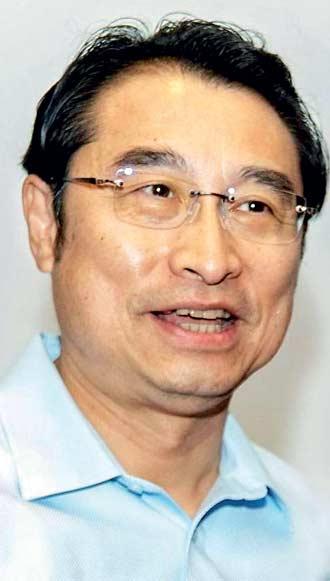
Liu Xueliang |
QTell me about BYD’s entry into the automobile sector and some of the key milestones?
BYD entered the automobile industry in 2003, and the first BYD branded car, the ‘F3’ was launched in 2005. Entering into the new energy sector, it launched the world’s first mass-produced plug-in hybrid (F3DM) in 2008.
In 2009, BYD entered the new energy bus and coach industry, and the first BYD pure electric bus model – K9 rolled off the production line the following year (2010). In 2010, we also saw the birth of ‘Denza’ (EV) through a joint venture between BYD and Daimler. Reshaping China’s luxury MPV market, Denza D9 was launched in 2022.
QWhat are the main vehicle brands coming under the ‘BYD’ umbrella?
BYD, Fang Cheng Bao, Denza and Yang Wang.
QHow has the company excelled in automotive innovations?
Innovation is the key to BYD’s success. BYD is the first automaker in the world to possess full expertise and intellectual property in the three core technologies of EVs – batteries, electric motors and electronic controls.
Among the latest innovations, the ultra-fast five minute charging for 400 km range is making headlines, and it directly addresses one of consumers’ biggest barriers to EV adoption: lengthy charging times.
This latest advancement in fast-charging technology has put BYD ahead of competition. The new charging system allows EVs to be powered up in almost the same time it takes to fill a gasoline car. This breakthrough has encouraged more people to switch from traditional cars to EVs.
With many countries now pushing for stricter emissions regulations and phasing out gasoline cars, advancements like this could accelerate the transition to electric transportation. Other automakers will likely try to catch up, leading to further innovations in battery technology.
QWhat’s BYD’s take on building a zero-emission ecosystem?
BYD is not just a car manufacturer. We’re a technology company focused on creating a cleaner, smarter future. Our automobiles, new energy and rail transit segments each have their own strategy to create a zero-emission energy ecosystem.
As a global pioneer in New Energy Solutions, BYD is dedicated to building a zero-emission ecosystem harnessing latest technologies. It was in 2008, BYD entered the new energy industry, providing a zero energy emission energy eco system with its solar panels, energy storage systems and electric vehicles. The company’s mission is to change the world by creating a complete, clean-energy ecosystem that reduces the world’s reliance on fossil fuels. Our new-energy vehicle portfolio powers sustainable mobility accessible to all types of users.
QTell me about BYD’s SkyShuttle and SkyRail projects that have caught world attention?
Both SkyShuttle and SkyRail are designed to provide an all-round solution to green mobility, easing air pollution and regulating traffic congestion.
BYD put into operation the SkyRail Line of Yinchuan Flower Exposition Park in 2017, marking the debut of its rail transportation product. In 2021, the world’s first unmanned SkyShuttle demonstration line was put into operation in Bishan, Chongqing. Thereafter, the much talked about world’s first tourism-oriented SkyShuttle line was put into operation in Dawangshan in Hunan.
Both SkyShuttle and SkyRail are making progress in the countries in the Americas, Asia and Africa.
QWhat new technologies has BYD unveiled recently?
In the first half of this year, BYD unveiled a lineup of technologies – most notably the “God’s Eye” advanced driver-assistance systems (ADAS), the Super e-Platform with Megawatt Flash Charging, and the Lingyuan intelligent vehicle-mounted drone system.
The “God’s Eye” advanced self-driving system is a shift toward autonomous and smart vehicles in the global market. ADAS are no longer luxury features but essential tools much like safety belts and airbags. Those are typically found only on high-end EVs at the moment, and BYD will make this facility available on the entire BYD vehicle line-up in the future.
These innovations will be carefully integrated with local regulations, government policies, and international standards.
QTell me about BYD’s entry into the Sri Lankan market and the response received?
We officially launched BYD in Sri Lanka last year. Before the brand making its presence in a big way, we took a few important steps to set the stage.
Firstly, we wanted to cultivate the Sri Lankan technical engineers attached to BYD local agent’s after-sales departments. Before the brand’s debut, we provided them a thorough training on our latest technologies.
Secondly, we focused on the showrooms and the network, which are very important. What was most important were the service centres. After working on strengthening these areas, we received great feedback from Sri Lankan customers, which we believe is critical to achieve a win-win situation for both BYD and the local market. This resulted in BYD delivering thousands of vehicles to Sri Lanka. Over the past half a year, we have successfully delivered over 7000 units to Sri Lankan customers, and there were more awaiting delivery.This reflects the growing consumer confidence in BYD vehicles.
I was in Sri Lanka in July this year when BYD introduced the first PHEV, the ‘Shark’, equipped with a DMO system. We selected a location in Colombo and set up several off-road scenarios and invited automobile enthusiasts, prospective buyers, influencers and the media to experience the vehicle firsthand. After the test drives, many expressed their excitement and contentment to us, and that we consider a great appreciation of our technology.
QWhy did BYD’s launch in Sri Lanka get delayed?
My first visit to Sri Lanka happened ten years ago. Since then BYD has been very actively thinking of ways to make an impressive entry and contribute to Sri Lanka’s economic growth.
For the EV market to develop, it requires a few key factors. Back in 2013, we introduced the ‘e6’ to Sri Lanka as a trial. The ‘e6’ was very expensive; there was no charging infrastructure and supportive policies in Sri Lanka at that time. It was very hard to achieve success in such an environment. However, we never gave-up on Sri Lanka. We were constantly checking the developments to launch BYD at the right time.
QWhat influenced BYD to introduce its premium luxury brand ‘Denza’ to Sri Lanka?
We received so much support from the local market, following the introduction of several BYD models. This motivated us to introduce one of ourpremium, luxury sub-brands ‘Denza’ to the country.
Denza, established in 2010 jointly by BYD and Mercedes-Benz, combines European design with advanced NEV platforms, and the vehicles are very attractive. The brand delivers one of the most sophisticated premium NEV experiences available anywhere in the world today.
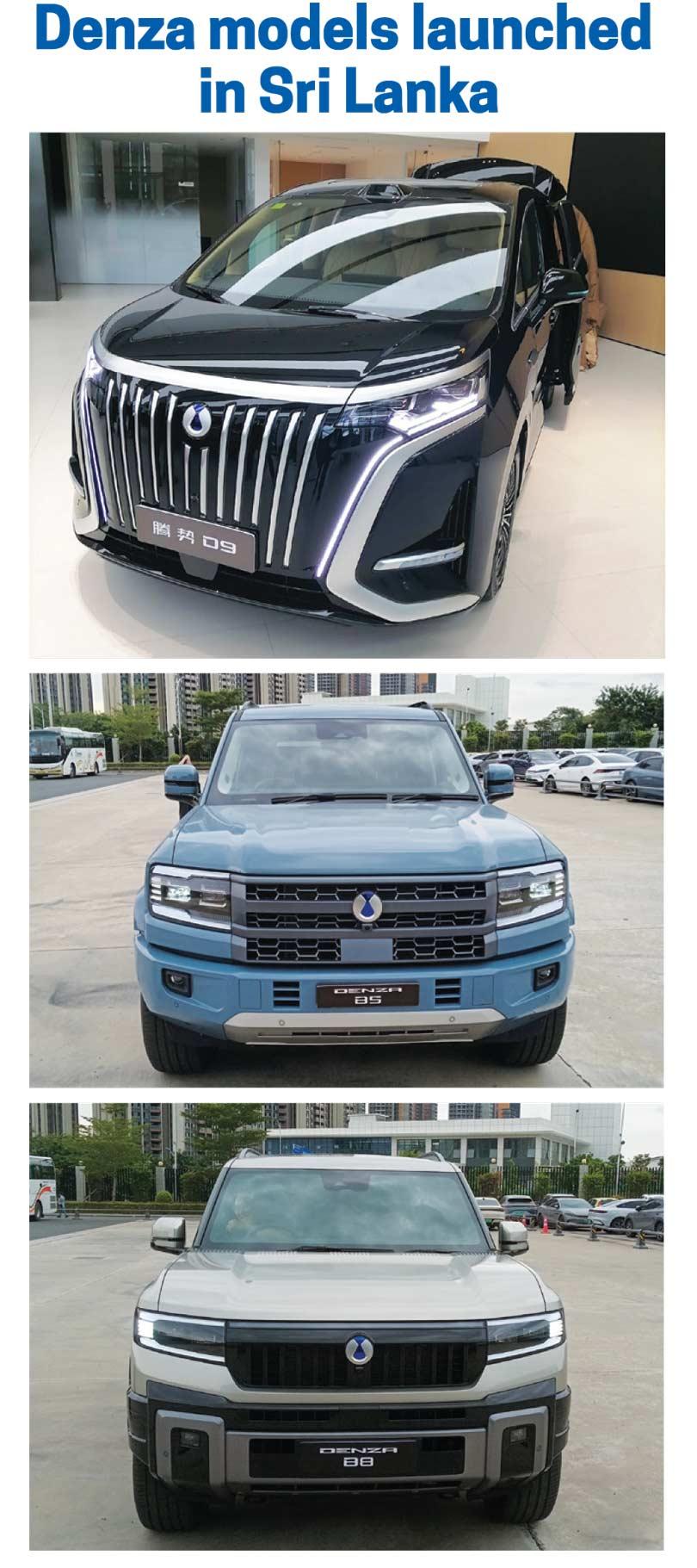
Sri Lanka joins a select group of international markets including Singapore, the UK, and Hong Kong in offering Denza. The launch of Denza D9, B8 and B5 in Sri Lanka marks the first South Asian entry for the brand.
QWill the ‘BYD’ brand presence overshadow Denza?
I don’t think so. Denza is a separate, independent brand, though it’s part of the BYD Group. Denza’s customer base is very different.
QYour views on Sri Lanka’s transition towards electric mobility and her acceptance of BYD EVs?
Sri Lanka has been moving towards electric vehicles gradually, and this provides a national opportunity for the country to align clean energy, economic resilience and technological advancements. Embracing electric mobility with renewable integration could redefine Sri Lanka as a South Asian leader in sustainable transport, cleaner roads, cleaner skies and stronger economy powered by innovation.
I am astonished to witness what Sri Lanka has achieved during the past half a year through its passion and excitement shown to BYD’s electric cars. I have observed the reaction of many Sri Lankan customers subsequent to their first-hand experience with our EVs. In the meantime, Sri Lanka has also received global attention for its desire towards embracing electric vehicles. Sri Lanka is a very important market for us in the Asian region, and we take it very seriously.
Joining hands with the local distributor and strategic partner John Keells CG Auto, we have been very actively discussing as to how BYD could bring its best technologies to the country within the shortest period of time. Our goal is to make sustainable mobility both accessible and exciting for Sri Lankan buyers.
QWhen it comes to Asia, what are the factors that have influenced BYD’s rapid growth in Singapore?
Singapore is facilitating a smooth transition towards full electrification.
The governmental backing and proactive policies designed to encourage green technology adoption is really admirable.
We have been engaging closely with various Singaporean departments, aligned by a common vision. That is to utilise advanced technology to foster environmental sustainability.
In addition, the role played by BYD’s Singapore dealer partnershas also significantly boosted consumer engagement. Singapore has set a good example for other countries to follow.
QWhat’s China’s positioning in the global automotive industry, and how has BYD excelled?
Mainland China’s automotive industry has rapidly evolved from a domestic powerhouse to a global leader in manufacturing, exports, and innovation, especially in electric vehicles and battery technology. The sector faces challenges of overcapacity and market saturation at home, driving aggressive expansion abroad.
“China Speed” is reshaping global product development, while policy changes aim to manage exports and maintain quality. Both domestic and international brands are leveraging China’s manufacturing strength, and Chinese companies are increasingly investing in overseas production, solidifying China’s role as a dominant force in the industry.
In 2024, China produced nearly 30 percent of the world’s vehicles, making it the largest automotive manufacturer, more than double the output of the USA. China is also the world’s largest exporter of vehicles. However, Chinese companies are not just exporting; they are building manufacturing plants in Europe, Southeast Asia, and South America, marking a shift from a national to a truly global industry. This expansion will further increase China’s market power in the coming years. I am very glad to say that BYD has become China’s top-selling auto brand and the world’s leading NEV manufacturer.
QWhat is BYD’s strategy of balancing affordability and sustainability?
From design and engineering to production of products, all core components are developed internally. This extensive vertical integration allows BYD to achieve greater economies of scale, directly benefiting consumers through more competitively priced vehicles without compromising on innovation or quality.
The company being able to produce components at very large volumes has been able to significantly reduce costs, enabling more affordable, sustainable mobility for a broader spectrum of consumers. We believe in using innovation to continuously deliver the best solutions to society. Technology, for us, is always meant to benefit everyone, not just a privileged few.
QWhat advice do you have for individuals still hesitant about transitioning to electric vehicles?
There’s no need to hesitate. The transition will enable entirely new lifestyle experiences. EVs require less maintenance, and reduce operational costs for individuals and businesses, and the fleets will become financially viable in less than five years.