Reply To:
Name - Reply Comment
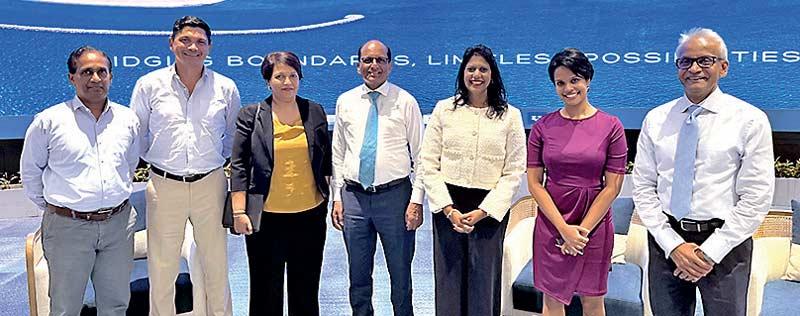
The 30th session of the Audit Committee Forum (ACF), titled ‘A View from the Board: Managing Emerging Risks in Audit Committees’, organised by the Sri Lanka Institute of Directors (SLID) with KPMG Sri Lanka as the Knowledge Partner, was held recently at Port City Colombo.
The event, held to share best practices and elevate the standard of corporate governance in the Sri Lankan business community, brought together industry leaders and experts to discuss the evolving landscape of risk management.
The session was inaugurated by SLID President Aroshi Nanayakkara welcoming the audience. This was followed by a brief introduction by Forum Chairman and moderator and KPMG Sri Lanka and Maldives Partner and Chief Operating Officer Suren Rajakarier. He took the opportunity to celebrate the conclusion of 10 years of service by the ACF.
The panel of experts and Independent Non-Executive Directors included Yohan Perera, Saktha Amaratunga, Jeevan William, Thusitha Perera and Hayleys General Manager Group ESG Prashani Illangasekera. The discussion revolved around key areas such as how boards can adjust to evolving risks in a fast-changing environment, gain insights into the ESG landscape and its effects on global supply chains, understand how audit committees can prepare for new reporting requirements and interact with industry leaders and experts to develop strategies for navigating emerging risks.
Illangasekera delivered a practical insight to emerging risks at board level with real-life examples and highlighted the ESG landscape, including the manifestation of interconnected risks, impact of rainfall, emerging ESG regulations and customer expectations regarding ESG.
The panel discussion led by Rajakarier discussed key questions around emerging risks and the board’s view for managing them by an audit committee.
William approached the topic from a broader risk management perspective, asserting that risks and rewards are two sides of the same coin, inherently linked and that risks can serve as a source of competitive advantage.
Yohan Perera highlighted the importance of proactive risk identification, where the audit committees should work closely with the management to continuously identify and assess the emerging risks; this involves staying updated on industry trends, regulatory changes and technological advancements that could impact the organisation.
Thusitha Perera, commenting on holistic risk management, emphasised on using advanced analytics and big data to offer deeper insights into risk patterns, enabling a predictive approach to managing emerging risks, allowing the organisation to be more resilient and proactive.
Amaratunga mentioned talent and fraud risks emerging as key concerns, especially in Sri Lanka, due to the shortage of human resources, resulting from the brain drain during the recent past.