Reply To:
Name - Reply Comment
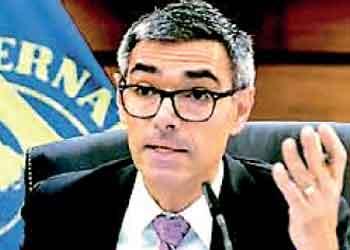 |
| Evan Papageorgiou |
Sri Lanka’s post-cyclone recovery needs to be carefully calibrated to avoid undermining fiscal and debt sustainability gains secured under its International Monetary Fund (IMF) programme, the IMF said, following a high-level mission to Colombo.
An IMF team, led by Evan Papageorgiou, visited Sri Lanka from January 22 to 28, to assess the economic and social impact of Cyclone Ditwah, focusing on the infrastructure damage, livelihood losses and the policy response required to support recovery.
“As Sri Lanka starts rebuilding, the authorities are committed to safeguard the gains that were achieved on fiscal and debt sustainability,” said Papageorgiou.
He stressed the need to strengthen public investment management through project reprioritisation and disciplined implementation.
The IMF said discussions with the authorities also examined the implications of the cyclone for monetary policy and financial sector stability, as well as the government’s financing needs in the context of the Extended Fund Facility (EFF) arrangement.
A key emphasis of the talks was on ensuring that disaster-related spending is executed transparently and in compliance with the Public Financial Management Act, while maintaining a strong focus on protecting the vulnerable groups.
The IMF noted the authorities’ determination to continue strengthening social safety nets, given that the poorest households are typically the most exposed to climate-related shocks.
The IMF team met President and Finance Minister Anura Kumara Dissanayake yesterday, who noted that the disaster had most severely affected the poor rural communities, with the rural infrastructure and livelihoods suffering extensive damage. He stated that, accordingly, Rs.500 billion had been allocated to protect the rural livelihoods and restore income-generating activities.
Dissanayake further emphasised that this measure does not signify a departure from proper financial management or fiscal responsibility.
He stated that the government’s objective is to ensure that the gains reflected in macroeconomic indicators genuinely reach the ordinary citizens and that priority is being given to rebuilding the lives of people who have endured prolonged hardship, due to events such as the Easter Sunday attacks and the recent economic collapse. Dissanayake added that all future government programmes have been planned in line with this direction and that Sri Lanka expects the continued support of the IMF in this regard.
According to the President’s Office, both parties also agreed to continue implementing the EFF programme without making any changes to the existing agreement.