
Reply To:
Name - Reply Comment
|
Anisha Gooneratne
|
|
Sujit Christy
|
Employers’ Symposium 2025, organised by the Employers’ Federation of Ceylon (EFC), which is a much looked forward to event among the EFC’s member companies and other business stakeholders, will take place on February 28, at Monarch Imperial.
This year’s edition will unfold under the banner ‘Traversing turbulence - Fuelling enterprises for success’. The esteemed panellists drawn from diverse business sectors will deliberate on key issues pertaining to this theme under three broad segments.
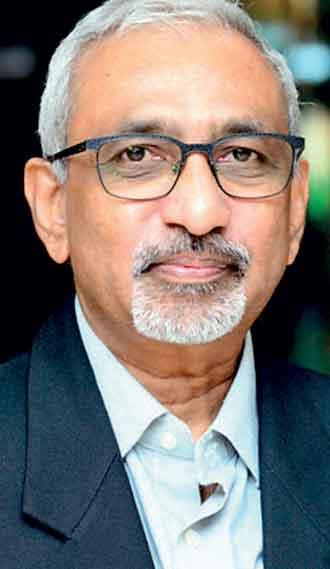
Sujit Christy, Chief Information Security Officer and Cybersecurity Advisor for several public quoted and private sector organisations and a panellist for the session on ‘Technological Environment: Fostering a Technologically Savvy Workforce’, will present on the importance of cybersecurity.
Commenting on the relevance of this topic in the light of EFC Symposium 2025, Christy remarked, “Our growing digital dependence means more critical systems and personal data are at risk, with breaches potentially causing widespread damage. Additionally, the interconnected nature of modern systems means a single breach can have cascading effects across networks, making cybersecurity a constant shared responsibility.”
Underlining the importance of empowering the human resource within organisations to give more muscle to their technological controls in terms of assuring cybersecurity, the senior professional averred, “Users represent both the first line of defence and a potential vulnerability. Through comprehensive training and continuous awareness programmes, users become active participants in securing the organisation’s critical assets, better equipped to identify threats, understand compliance requirements and respond to incidents. This human-centric approach creates a security-conscious culture where the users understand their role in maintaining cyber safety, ultimately complementing and enhancing technological security measures.”
The COVID pandemic drove the banking and financial services to go through a dramatic digital transformation, which required strong cybersecurity. This includes adopting a risk-based zero trust model, focusing on protecting identities, monitoring in near real-time and educating users. Focused educational initiatives, as Christy noted, are essential to enhance public cyber literacy. Clear communication interventions about online banking safety, improved customer support with 24/7 fraud reporting and collaborations with educational institutions and global cybersecurity professional organisations such as ISC2 and ISACA and community outreach are cited as examples.
Centre for a Smart Future Research Associate Anisha Gooneratne, who will be a panellist delving into ‘Platform Economy and its Impact on Business Operations and People Management’, said that this year’s chosen theme for the symposium is timely, given that the country is now increasingly seeing more workers register on digital labour platforms. Whilst the increasing demand of platform work can be attributed to the need for a secondary source of income for locals, a sizeable number is operating full time on these platforms as well, pointed out Gooneratne.
“A survey conducted by the Centre for a Smart Future in 2022 found that over 50 percent of interviewed gig-workers relied on platform work as their sole form of income and often worked on it full time.”
According to the Census and Statistics Department, as of 2023, Sri Lanka’s computer literacy had increased to 39.5 percent, digital literacy rate was 63.8 percent and 80.3 percent of households owned a smartphone.
“Whilst the definition and measure for digital literacy is still quite simplistic and will be changed in the upcoming surveys to reflect the updated definition, these statistics are a positive indicator of our growing potential to participate in the platform economy,” she added.
“Internationally, we are seeing more legal safeguards in platform mediated work. For example, the EU Platform Workers Directive advocates for more algorithmic transparency and human intervention in platform work. In Spain, the Riders Law makes it mandatory for digital platforms to be transparent with their workers on how it impacts working conditions. Despite being well positioned to partake in the platform economy, Sri Lanka still has a long way to go in terms of social protection and safeguards for workers operating on these platforms,” maintained Gooneratne.