Reply To:
Name - Reply Comment
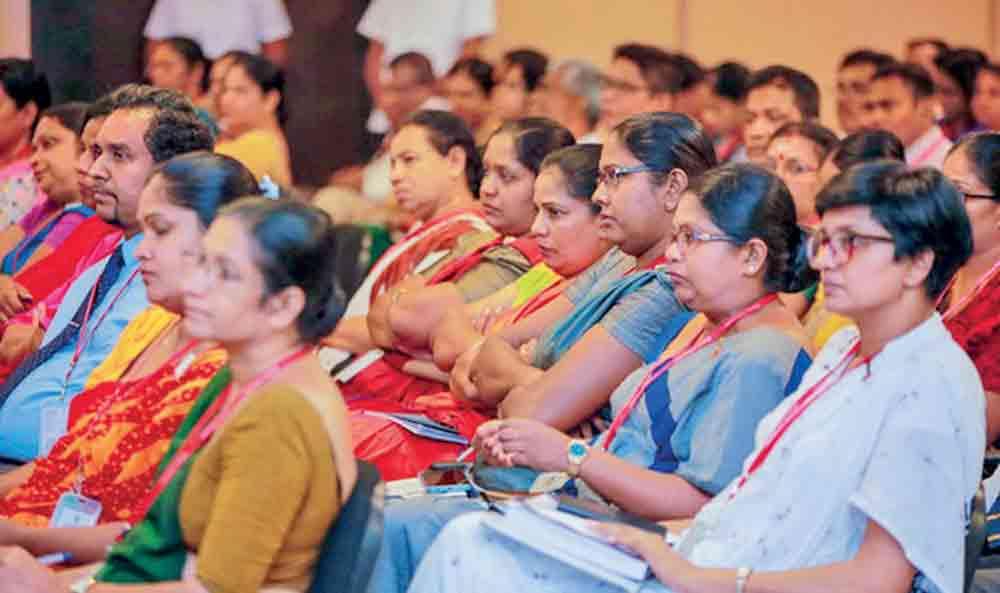
A seminar on ‘Financial Literacy’ was held recently at the Education Ministry, providing a platform for the stakeholders involved in the ongoing education sector reforms to contribute to the integration of financial literacy into the school curriculum.
The initiative was spearheaded by Labour Minister and Economic Development Deputy Minister Prof. Anil Jayantha Fernando and conducted by Securities and Exchange Commission of Sri Lanka (SEC) Chairman Senior Professor Hareendra Dissabandara. The event was held under the patronage of Prime Minister and Education, Higher Education and Vocational Education Minister Dr. Harini Amarasuriya.
Education, Higher Education and Vocational Education Ministry Secretary Nalaka Kaluwewa announced that financial literacy and entrepreneurship will be introduced as a compulsory subject carrying one credit from Grades 6 to 9 and would be offered as an optional subject at the GCE Ordinary Level, assessed at national level.
Citing the World Economic Forum’s report ‘New Vision for Education’, Senior Professor Dissabandara noted that financial literacy is one of the 16 core skills essential for students in the 21st century.
Out of the 14.41 million adults in Sri Lanka, only 5 percent hold Central Depository System (CDS) accounts and just 45,000 engage in one or two share transactions per month. Furthermore, out of nearly 200,000 registered companies, only 284 or 0.15 percent are listed on the CSE. Professor Dissabandara noted that this reflects a lack of financial literacy not just among individuals but also corporates.
Professor Dissabandara stressed the urgent need to embed financial education in schools, pointing out that the students are not taught how money works, how to manage personal finances or how to use money for self-development and emphasised that the curriculum reforms must bridge this gap by going beyond theory to include practical applications that foster real-world financial skills.
Dr. Amarasuriya highlighted the need to build economics and entrepreneurship on a foundation of human values, rather than solely monetary goals.
“True development must include ethical and spiritual growth,” she said.
“Wealth is not only about money. A developed society must be economically, spiritually and ethically sound.”
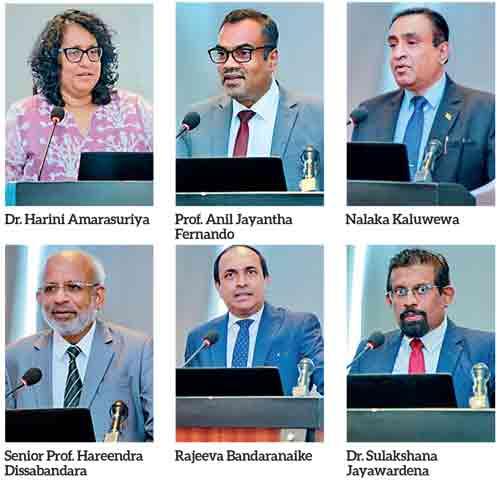
Prof. Fernando said, “Many people fall victim to financial scams such as pyramid schemes due to a lack of financial understanding. Ironically, financial fraud is often perpetrated by individuals who are financially literate—but ethically compromised. Along with financial knowledge, we must empower society with values to responsibly manage this knowledge.”
CSE Chief Executive Officer Rajeeva Bandaranaike highlighted the low level of investor participation in Sri Lanka, noting that only 700,000 individuals hold CDS accounts. Of these account holders, 80 percent are male and just 20 percent are female, while only one percent hold at least one share. Furthermore, 60 percent of investors are concentrated in the Western province, reflecting significant regional disparities in market participation.
Delivering the vote of thanks, Finance Ministry Director General Corporate Affairs Dr. Sulakshana Jayawardena said, “True financial literacy goes beyond facts and figures. It must foster a mindset that enables students to engage with markets confidently, ethically and responsibly.”
The event was also attended by Education and Higher Education Deputy Minister Dr. Madhura Senevirathne, CSE Charman Dimuthu Abeyesekera, SEC Director General Chinthaka Mendis, Colombo Stock Brokers’ Association President Gihan Cooray, Unit Trust Association of Sri Lanka President Christine Dias Bandaranaike and CFA Society of Sri Lanka President Rashmi Peiris Paranavitane.