Reply To:
Name - Reply Comment
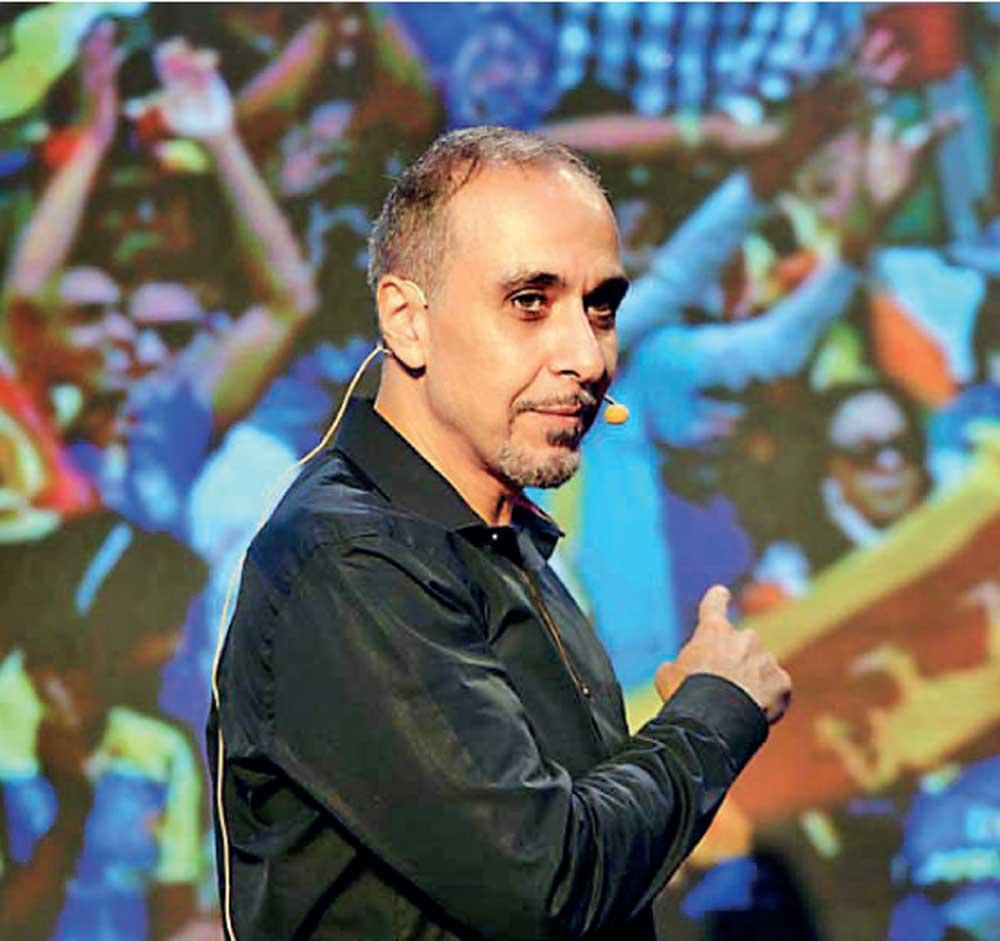
Gevorg Sargsyan
PIX BY PRADEEP PATHIRANA
By Nishel Fernando
The World Bank Group has unveiled a comprehensive economic roadmap for Sri Lanka, committing billions in funding and capital mobilisation over the coming years, to tackle a looming youth employment crisis and pivot the island nation from stabilisation to a sustainable, private-sector-led recovery.
Speaking at a national forum titled ‘Sri Lanka’s Next Chapter: Jobs, Growth and Opportunity’, held at Trace Expert City yesterday, World Bank Group Country Manager for Sri Lanka Gevorg Sargsyan laid bare the sheer scale of the challenge by invoking a vivid local comparison.
“Think about Premadasa Stadium. It’s huge. It holds 35,000 people. Now, imagine full 30 Premadasa Stadiums. This is the number of people that will be looking for jobs in Sri Lanka in the next 10 years,” Sargsyan told the audience, pointing to the one million young people poised to enter the labour market.
Under the current economic momentum, the stakes could not be higher. Sargsyan warned that the current trajectories indicate only a fraction of these new entrants would find adequate employment.
“With the current pace of the economy, only one-third of them are expected to get into formal, quality jobs,” he noted.
“In other words, it is a city like Colombo, with 700,000 people, will not have the same opportunities unless the direction changes, unless the trajectory changes.”
The newly designed strategy arrives as Sri Lanka continues to heal from the deep scars of its historic 2022 macroeconomic collapse. While the economy has clawed its way back from the brink of insolvency, the human toll remains stark. Sargsyan recalled the peak of the crisis as “the worst economic crisis that Sri Lanka and all of you have experienced in modern history”.
He detailed the swift erosion of household welfare that accompanied the crash.
“The poverty rate went up from 11 percent and almost tripled to 27.5 percent in just a year. And while it has retrieved a little bit, it’s still more than 20 percent,” he said, adding that the population had to weather inflation peaks of 70 percent, abrupt loss of half a million jobs and a destabilising “out-migration and loss of skills and loss of talent that unfortunately continues, although it has slowed down”.
While praising the island’s recent policy corrections, he was careful to draw a line between temporary equilibrium and deep-rooted economic health.
“There have been a remarkable couple of years for stabilisation,” Sargsyan observed.
“The country has done remarkably well in stabilisation but this is not a full recovery.”
To unlock genuine growth, the World Bank Group’s newly deployed Country Partnership Framework focuses on overturning decades of structural stagnation across four key systemic vulnerabilities: sluggish foreign direct investment, collapsing export shares, poor productivity and severe gender gaps in the workforce.
Sargsyan described Sri Lanka’s past performance in attracting foreign capital as “pretty meagre”, hovering at less than one percent of gross domestic product (GDP) for over two decades. Pointing to the regional competitors like Malaysia and Vietnam, which perform three to five times better relatively, he argued that foreign capital is about far more than just balancing books.
“Foreign direct investment is important not only because it’s money and it’s also foreign currency helping with stabilising the economy. It’s important because it does bring competition; it does bring creativity; it does bring access to other markets; it does bring knowledge.”
The decline of the island’s trade footprint was equally scrutinised, with the exports as a share of GDP contracting from 30 percent to 20 percent over the last 20 years—a painful slide for a nation that “for centuries was thriving on trade”.
Furthermore, structural inefficiencies and protectionist policies continue to sap domestic competitiveness. Sargsyan cited the inflated local costs of construction, which run “twice more than in any neighbouring country” and underwhelming agricultural yields.
“Take cinnamon; this is such a critical staple food but also such an important export item for Sri Lanka. Yet, the yield from an acre of—an acre of plantation in Sri Lanka is only a fraction—50 percent, 30 percent—of those of peer countries in the same sector.”
The framework also heavily targets the underutilisation of educated women, calling out a stark societal contradiction, where the highly educated young women remain excluded from the economy.
“Sri Lanka is probably the worst—one of the worst as far as the female workforce participation is concerned in the entire South Asia, with only 33 percent of women participating in the labour force; that’s compared to over 70 percent among men.”
To shift these dynamics, the World Bank Group is deploying a synchronised effort through its three core arms: the World Bank for public sector reforms, the International Finance Corporation for private enterprise and the Multilateral Investment Guarantee Agency to derisk external capital.
The strategy focuses heavily on logistics, energy sector transformations to lower commercial power tariffs, high-value tourism and transitioning agribusiness away from raw commodities to value-added exports.
“This in practice also will mean that the World Bank Group in the next few years will provide about US $ 2 billion of financing—public and private sector—to achieve these objectives,” Sargsyan announced.
He added that the group expects a “mobilisation of the private capital over US $ 1.2 billion and I hope these are conservative estimates. I hope that we’ll be able to do much more than this.”
In a follow-up discussion, Sargsyan explained that it would be pulled from a combined matrix of financing streams.
“There will be some part public finance; some part maybe private investors that will come in to contribute,” Sargsyan noted.
“So, we hope that through our strategy, we will help to unlock more than one billion in also private investment.”
When asked if the institution is prioritising the local balance sheets or foreign inflows, Sargsyan confirmed that the strategy targets both to build capacity, though no rigid quota split has been set.
This capital mobilisation will be bound to a strict five-year deliverable lifecycle. Sargsyan verified that progress would not be left to late audits but subjected to active tracking.
“We will be monitoring on an annual basis to see whether we are meeting this target,” Sargsyan stated, confirming the targets must be met within the five-year timeframe.
The multi-billion-dollar push will not operate in isolation. Sargsyan revealed that the World Bank Group has established direct operational touchpoints with major multilateral organisations, including the Asian Development Bank (ADB) and various United Nations (UN) bodies, to divide the responsibilities across the critical economic sectors.
The ADB is working alongside the World Bank to specifically untangle the logistics and trade bottlenecks.
“Yes, we have a number of partners like the ADB,” Sargsyan stated.
“For example, we’re working closely together with on the port—the port and logistics sector.”
The socioeconomic labour components are being coordinated through the UN system currently active on the ground.
“In other areas, we are coordinating very closely,” Sargsyan added.
“We have a lot of partners also that help on implementation. With the UN, we work as well, who else is here. So, yeah and a number of these partnerships – we have identified the areas already.”
Ultimately, the global development bank emphasised that international funding alone cannot substitute for an inclusive, domestic coalition. Delivering quality job creation requires synchronisation between state policy, private capital, civil society and the public.
“We can do it all only in partnership,” Sargsyan insisted.
“First of all, we will need the government to be in the driving seat; that’s how it goes. We will need the development partners to work with us hand in hand.”
Reiterating the limits of state-driven employment, he noted that the state must act purely as an enabler while the private sector acts as the primary engine.
“I believe that this can be only private-sector-led growth. The government is an enabler but it’s really the private sector that creates jobs and creates these opportunities,” he said, adding that constant engagement with civil society remains “critical to ensure that we get the feedback from the people of the country”.