Reply To:
Name - Reply Comment
Eranga Weeraratne
PIC BY KITHSIRI DE MEL
By Nishel Fernando
The government is set to issue a Request for Proposals (RFP) for the establishment of artificial intelligence (AI) data centres shortly, transitioning from a highly successful Request for Information (RFI) phase.
According to the industry reports, the initial RFI attracted at least eight responses from global suppliers and potential investors, underscoring a strong international appetite to build high-performance computing and AI infrastructure within the island nation.
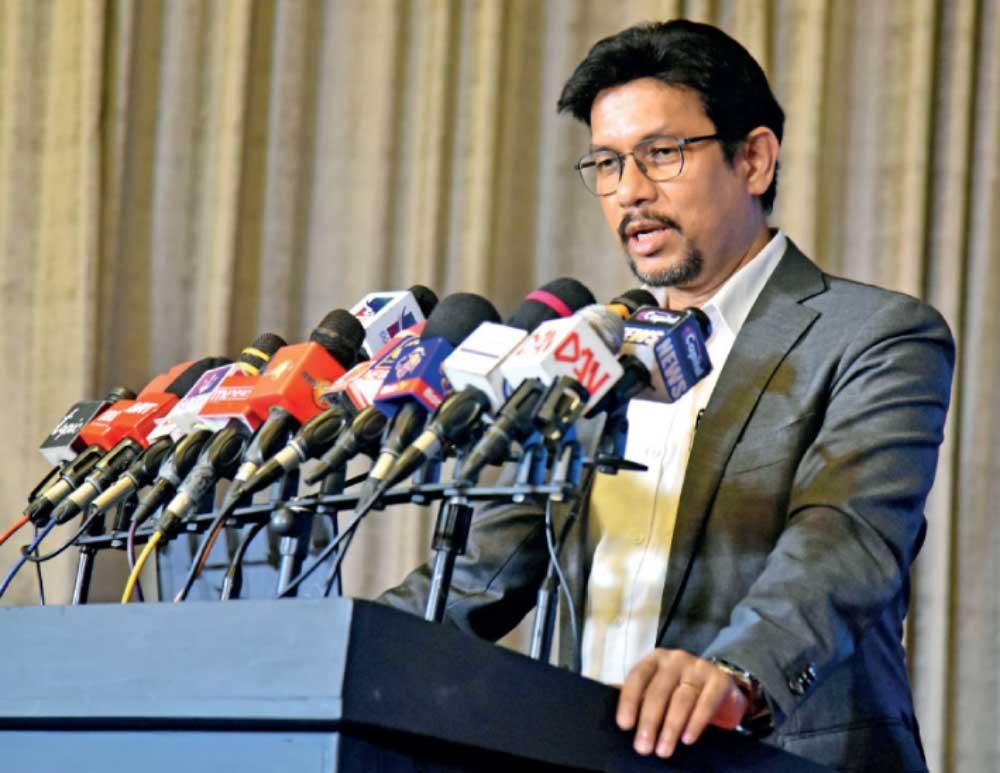
Speaking at a recent press briefing, Digital Economy Deputy Minister Eranga Weeraratne confirmed the strong demand from the interested parties during the evaluation stage.
Highlighting the ongoing geopolitical and security disruptions in the Middle East, SLT group CEO noted that tech investment opportunities are actively shifting toward the region.
“One of the reasons some Middle Eastern countries are facing disruptions is security. That shift actually moves opportunities toward East Asia and Sri Lanka is positioned as one of the best and safest places right now. Businesses are looking for safer environments and faster connectivity to the rest of the world,” he stated.
Speaking to Mirror Business following the briefing, SLT group chairman elaborated on the sheer scale of the upcoming AI projects. He noted that while the state already has functional data centres, this new initiative is strictly dedicated to attracting AI-focused investment partners.
“Yes, the RFP stage will come next. The government wants to see who the potential investors are to bring this to Sri Lanka,” the chairman said, confirming continuous discussions with several global suppliers, including prominent Japanese groups.
Emphasising that the primary hurdle for developers is not capital investment but immense energy consumption, he added, “More than the investment itself, the main challenge is power. You practically need a dedicated power plant to run and train an AI data centre of this scale. We estimate it will need a 50-megawatt power plant. We might also have to look into establishing wind power solutions alongside it to meet the demand.”
To help accelerate this development and mitigate operational hurdles, the government has allocated Rs.500 million in this year’s budget to subsidise data centre operations. The officials confirmed that this support is specifically targeted at AI facilities. Once established, the operators can draw from this subsidy fund to help cover the overhead costs if their required data rates surpass the standard institutional rates.
Meanwhile, as the government pushes for international AI partnerships, it has also solidified its domestic data infrastructure by heavily relying on SLT to manage the sensitive state information. Following comprehensive technical and commercial evaluations across the country’s three data centre operators, the state selected SLT to host critical information.
“We wanted to get the service from all three data centre operators in Sri Lanka to ensure a more reliable and affordable service. We conducted technical evaluations to assess the infrastructure currently in place among these operators. SLT came out on top in terms of technology, resolution and commercial pricing, which is how we selected the organisation,” Weeraratne explained.
Addressing the handling of public sector information, Weeraratne clarified that while the state does not impose rigid operator monopolies, it relies on stringent data classification guidelines to ensure digital sovereignty.
“There are no strict restrictions as such but we rely on a data classification guideline. Based on that classification, the respective institutions decide where the data falls. Some data can be hosted in the public cloud, while highly sensitive government data must be hosted locally within the government data centres,” he added.