Reply To:
Name - Reply Comment
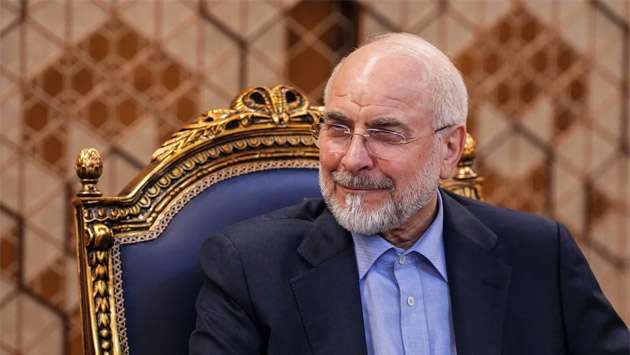
jns - Conditions in the Strait of Hormuz “will never go back to the way they were before the war,” Iranian Parliament Speaker Mohammad Bagher Ghalibaf vowed on Monday.
“Of course, international regulations will be observed, but Iran will administer the Strait of Hormuz,” Ghalibaf, who leads Tehran’s negotiating team with the United States, told Iranian media as he returned from talks with U.S. representatives in Switzerland.
“We must remain united under the leadership of Ayatollah Seyed Mojtaba Khamenei, and recognize that his word and directives are final,” Ghalibaf said, according to a translation by Iran’s Press TV outlet.
In March, in his first public statement since being wounded in Israel’s opening airstrike on Tehran on Feb. 28, Khamenei instructed that “the lever of blocking the Strait of Hormuz must certainly continue to be used.”
Ghalibaf told Iranian reporters on Monday that the June 17 signing of the Memorandum of Understanding with Washington and the subsequent talks in Lucerne were “a direct continuation of the battlefield.
“Our armed forces achieved a great victory with honor, power and courage,” he declared. “Ending the war and lifting the siege was achieved through dialogue, as a method of struggle, and by relying on the power of the field.”
If “problems” arise during the implementation stage, the Islamic regime “can respond both with missiles and through negotiations,” he warned.
While the MoU calls for the immediate reopening of the strait to commercial shipping, Tehran reopened the strategic waterway “according to its own terms and timeline,” the negotiator claimed.
“This is the power of the Islamic Republic,” Ghalibaf said. “We forced Trump to amend the tweet he had published. This is the result of combining our hard and soft power.”
Under the memorandum, Iran and the U.S. agreed to restore commercial traffic through the Strait of Hormuz. Iran pledged to facilitate the safe passage of commercial vessels, remove “technical and military obstacles,” including mines, and restore normal shipping within 30 days, while Washington agreed to begin lifting its naval blockade immediately.
The document also calls for discussions among Iran, Oman and other Gulf littoral states regarding the future administration of the Strait.
During the first round of talks in Switzerland, Iran and the U.S., with mediation from Qatar and Pakistan, agreed on procedures to keep the Strait of Hormuz open, including demining the shipping lane and managing maritime incidents to prevent escalation.
The talks had a rocky start on Sunday when Trump threatened to take over the Strait of Hormuz and “collect tolls” if diplomatic talks failed, speaking in a Fox News interview.
He also warned Tehran to rein in its proxies in Lebanon or face attack, in a Truth Social post on Sunday. “Iran must immediately stop their highly paid proxies in Lebanon from causing trouble,” Trump wrote. “If they don’t, we’ll hit Iran very hard again, just like we did last week, only harder!!!”
The threat angered Ghalibaf, who said, “We don’t take the Americans’ threats seriously at all. They had better watch their words carefully. Our armed forces are ready to give them a response in a different way. No matter how much they talk, it is we who take action.”