Reply To:
Name - Reply Comment
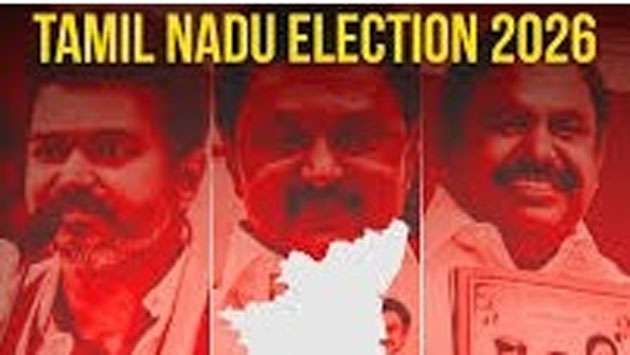
By Former Ambassador Kana V Kananathan
April 30 (Daily Mirror) - Tamil Nadu, long dominated by Dravidian parties, has historically relied on expansive welfare programs. However, there are indications that voters are beginning to scrutinize the financial viability of these schemes more closely. Questions around state debt, budget allocation, and economic efficiency are becoming central to political discourse.
A subtle but important shift is also visible in voter priorities—from identity-driven politics toward performance-based evaluation. Economic delivery, infrastructure investment, and job creation are emerging as key metrics for assessing political leadership.
SWOT Analysis of Key Candidates (Financial & Political Lens)
M. K. Stalin
(DMK)
Strengths
Strong welfare delivery network and governance continuity
Deep-rooted party machinery and loyal voter base
Weaknesses
Rising concerns over fiscal sustainability of welfare schemes
Pockets of anti-incumbency
Opportunities
Fragmented opposition vote improving electoral chances
Ability to leverage incumbency and administrative control
Threats
Increasing voter focus on economic performance (jobs, inflation)
Gradual erosion of traditional vote banks
Edappadi K. Palaniswami
(AIADMK)
Strengths
Governance experience and strong regional base
Perception as a stable administrator
Weaknesses
Internal party fragmentation
Lack of a unifying charismatic leadership
Opportunities
Anti-incumbency sentiment against ruling party
Scope for opposition consolidation
Threats
Vote splitting with emerging and national parties
Declining statewide
Vijay (actor)
TVK (new entrant)
Strengths
Huge fan following and youth appeal
Fresh, anti-establishment image
Ability to attract first-time voters
Weaknesses
No political experience
Weak organisational structure compared to established parties
Opportunities
Can disrupt traditional vote banks
Potential kingmaker in a hung assembly scenario
Threats
Risk of being seen as a vote splitter rather than winner
May unintentionally help other alliances by dividing votes
In the event if Vijay's fan base doesn't translate into votes most likely to happen , this one too is likely to disappear with the label of a 'cinema party', just like other actor parties from the film industry.
Possible Outcome: A Competitive Edge, Not a Landslide
The election is unlikely to be a one-sided contest. Instead, it reflects a transitional phase marked by economic concerns, evolving voter expectations, and fragmented political competition.
The ruling DMK under M. K. Stalin appears to retain a structural advantage due to:
Established welfare systems
Strong organizational framework
Consolidated core voter base
However, this advantage may be narrowing as economic scrutiny intensifies and opposition forces gain incremental ground.
Final Projection as we await the final Result on May 4
Most Probable Outcome:
Nature of Victory:
Key Trend:
Bottom Line
This election signals more than just a contest for power—it reflects a deeper shift in voter mindset. Economic governance, fiscal discipline, and performance metrics are becoming central to political evaluation.
Even if the incumbent retains power, the broader trend suggests a gradual transition toward a more competitive and accountability-driven political environment in Tamil Nadu.