Reply To:
Name - Reply Comment
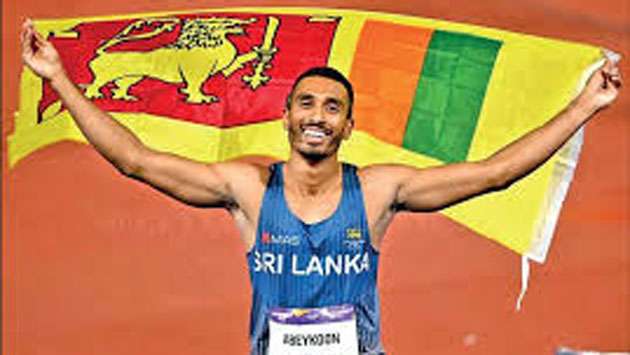
Colombo, July 21 (Daily Mirror) - Sri Lankan sprint star Yupun Abeykoon, the first South Asian athlete to break the 10-second barrier in the 100 metres, has announced his retirement from competitive athletics, bringing an end to one of the most remarkable careers in the region’s sprinting history.
In an emotional statement released on Tuesday, the 31-year-old athlete said he was leaving the sport with no regrets, declaring that he owed nothing to his country but remained deeply grateful for the support and opportunities he received throughout his journey.
Abeykoon reflected on the significance of his achievements, particularly after becoming the first Sri Lankan and South Asian sprinter to enter the elite sub-10-second club. He said his success was not an individual accomplishment alone, but a moment shared with the entire nation.
The sprinter paid tribute to his parents, former schools, the Sri Lanka Army’s Electrical and Mechanical Engineers (SLEME) Regiment, Sri Lanka Athletics, and his Italian coaching team led by Claudio Licciardello. He also thanked the millions of Sri Lankan supporters who followed his career and stood behind him throughout his international journey.
Abeykoon retires as one of Sri Lanka’s greatest track and field athletes. His defining moment came on July 3, 2022, when he clocked 9.96 seconds in the 100 metres at La Chaux-de-Fonds, Switzerland, becoming the first and only South Asian sprinter to run under the 10-second mark.
Later that year, he achieved another historic milestone by winning a bronze medal in the 100 metres at the 2022 Commonwealth Games in Birmingham, ending Sri Lanka’s long wait for a major athletics medal at the event.
He also represented Sri Lanka at the 2020 Tokyo Olympic Games, becoming the first South Asian male sprinter in 32 years to compete in the Olympic 100 metres event.
However, his retirement message also reflected concerns about the challenges faced by professional athletes in Sri Lanka. Abeykoon acknowledged that stepping away while he still had the ability to compete was a difficult decision and suggested that wider issues within the country's athletics system influenced his choice.
The sprinter said he would reveal more details about his experiences and the state of Sri Lankan athletics in the future.