Reply To:
Name - Reply Comment
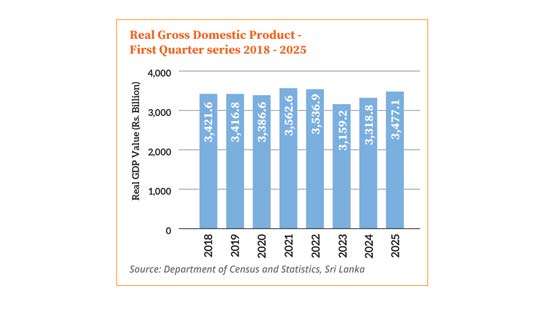
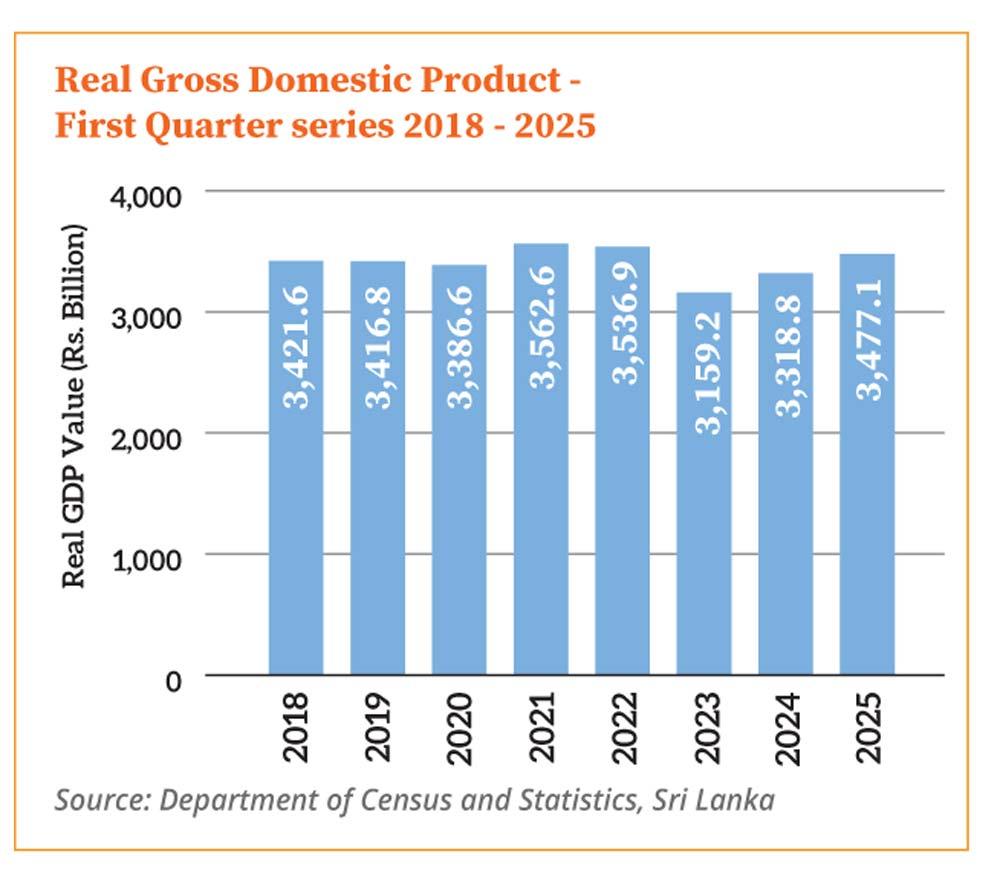
Sri Lanka’s economy expanded by 4.8 percent in the first quarter ended in March 2025, extending the recovery, which set off in the third quarter of 2023, the data released from the Census and Statistics Department showed.
While this reflects some easing from the 5.4 percent growth seen in the final quarter in 2024, the first quarter growth is still robust, given some seasonal factors at play between the two quarters.
The first quarter GDP is mainly supported by the industrial activities, which expanded by a robust 9.7 percent, followed by the services, which grew by 2.8 percent.
However, agriculture remained a sour spot, with such activities declining 0.7 percent. Meanwhile, the taxes less subsidies on products grew by 8.3 percent.
Agriculture activities contributed 7.6 percent to the overall economy while the industrial sector contributed 26.7 percent. The services usually contributed the most, with 57.4 percent.
Meanwhile, the taxes less subsidies on products accounted for a share or 8.3 percent for GDP in the first quarter.
The first quarter GDP growth was attributed to a few economic activities by the Census and Statistics Department.
“It is noteworthy that financial and insurance services, manufacturing industry, construction industry, mining and quarrying industry and accommodation services sat firmly behind this reported growth in the first quarter of 2025,” it said in a statement.
“The relatively stable exchange rate and low interest rate were seen as the main progressors of this growth and more importantly provided pathways to domestic credit to increase and imports of investment goods as well as intermediate goods to increase,” it added.
It is abundantly clear that the relaxed monetary policy, which enabled the flow of low-cost funds into the real economy, played a major role in helping support the growth in the economy since the current stretch of recovery in the economy began from the third quarter of 2023.
The data from the Central Bank showed that the pace of credit is accelerating while it is going into broader segments of the economy.
More leading economic indicators such as the Purchasing Managers’ Indices also showed this phenomenon, as the services sector activities were predominantly driven by the increased lending activities.
This was seen from the highest growth or 15.1 percent expansion seen in the financial and insurance activities in the quarter.
The construction activities also grew by a robust 10.7 percent from the same period a year ago.