 SHEAIN FERNANDOPULLE
 Reply To:
Name - Reply Comment
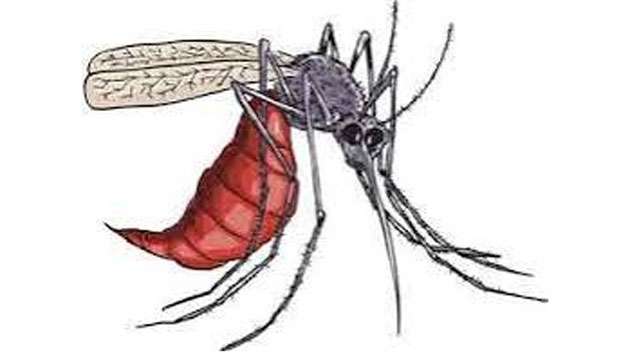
Colombo, July 16 (Daily Mirror) - Sri Lanka is once again fighting a familiar enemy. But this time, the warning signs are becoming harder to ignore. With reported dengue cases surpassing 70,000 and the death toll nearing 50, the country is edging closer to another major public health crisis. Hospitals in several districts are already under pressure, health workers are stretched, and experts warn that the coming weeks could determine whether Sri Lanka can contain the outbreak—or whether it will spiral into one of the worst in its history.
The question many are asking is simple: Could this become another 2017?
A painful reminder of 2017
Sri Lanka has experienced several severe dengue epidemics over the years, but none was worse than 2017.
That year, the country recorded 186,101 dengue cases and 440 deaths, making it the deadliest outbreak on record. Hospitals overflowed with patients, wards were converted to accommodate dengue victims, and doctors worked around the clock to save lives.
The outbreak exposed weaknesses in mosquito control, waste management and public awareness. It also demonstrated how quickly dengue can spread once weather conditions become favourable and preventive measures fail.
Nearly a decade later, Sri Lanka finds itself facing another worrying surge. Although current figures remain well below the 2017 record, the steady rise in infections has raised concerns that the country could be heading towards another large-scale epidemic if stronger action is not taken immediately.
Were the warning signs ignored?
Unlike many other infectious diseases, dengue rarely arrives without warning.
Health officials had repeatedly predicted that heavy rains followed by warm weather would create ideal breeding conditions for mosquitoes. Cases had already begun rising steadily in the early months of the year.
This raises an uncomfortable question: Were preventive measures implemented early enough?
Large-scale mosquito control campaigns often become highly visible only after cases begin climbing sharply. By then, mosquitoes have already multiplied and transmission is well underway. Public health experts have long argued that dengue prevention cannot be seasonal. It must continue throughout the year, especially in high-risk districts. According to the National Dengue Control Unit, a massive Dengue eradication drive covering 60 high-risk Dengue zones began a couple of weeks ago.
The missing link: Local government
Mosquitoes do not breed in hospitals. They breed in discarded plastic containers, clogged drains, neglected construction sites, blocked gutters, abandoned tyres and piles of garbage. This is where local government authorities play one of the most important roles.
Regular garbage collection, drain cleaning and enforcement against neglected premises are among the most effective dengue control measures. Yet residents in many parts of the country continue to complain about overflowing waste dumps, blocked waterways and poor maintenance of public spaces.
When local authorities fail to remove breeding sites on time, mosquito control becomes an uphill battle for health officials.
Dengue prevention is therefore not only a responsibility of the Health Ministry. It depends equally on municipal councils, urban councils, pradeshiya sabhas and the public working together.
Health workers are becoming patients
One of the most worrying signs of the current outbreak is that even those leading dengue control efforts are falling ill.
According to the Public Health Inspectors' Association, at least eight Public Health Inspectors (PHIs) attached to the Colombo District have contracted dengue while carrying out prevention activities.
PHI Union President K.P. Boralessa said more than 20 PHIs may have been affected, along with several other frontline health workers.
"If this situation continues, we will be placed in a difficult position when carrying out dengue prevention activities," he warned.
When the very officers responsible for controlling dengue become patients themselves, it highlights the intensity of transmission and places additional pressure on an already stretched health system.
The next two weeks could decide everything
Consultant Physician Dr. Ananda Wijewickrama has described the coming fortnight as critical. With intermittent rains continuing across much of the country, mosquito breeding is expected to increase further unless immediate action is taken.
"The coming two weeks are extremely critical. If the public and authorities fail to act now, we could see a sharp increase in dengue cases," he warned. His advice is straightforward. Every household, workplace, school and institution must eliminate stagnant water where mosquitoes breed.
In this context, the Government has instructed schools to allow students to wear clothing that covers their arms and legs to reduce mosquito bites—a practical step to protect children during school hours.
Can a vaccine change the future?
While prevention remains the first line of defence, experts believe Sri Lanka now has another powerful tool available.
Consultant Paediatrician and Founder Clinical Head of the Centre for Clinical Management of Dengue & Dengue Haemorrhagic Fever in Negombo, Dr. Lakkumar Fernando, says an internationally approved dengue vaccine could significantly reduce the burden of the disease.
He clarified that he was commenting after declaring a conflict of interest because he was among the researchers involved in developing the vaccine.
"We cannot eradicate dengue with a vaccine. The vaccine is not a complete solution, but it is definitely a way to reduce the burden of dengue in a major way," he said.
According to Dr. Fernando, the TAK-003 (Qdenga) vaccine has shown more than 90% effectiveness against dengue virus serotype 2 (DENV-2), the strain believed to account for about 80% of the current outbreak in Sri Lanka.
Because Sri Lanka is currently experiencing a DENV-2-dominated outbreak, the vaccine could substantially reduce infections, hospital admissions and pressure on hospitals.
Importantly, Sri Lanka already has experience with this vaccine. During the devastating 2017 epidemic, 2,100 children and adolescents in Colombo and Gampaha participated in a Phase III clinical trial. The study found that the vaccine reduced laboratory-confirmed dengue by 94.7% and dengue-related hospitalisations by 95.7%.
Even after around 4.5 years, follow-up research showed 84.4% protection against dengue infection and 87.9% protection against hospitalisation. Researchers also estimated that vaccinating around 65% of the target population could reduce dengue infections by about 69% and hospitalisations by 73%. The vaccine has already been approved in more than 40 countries, yet Sri Lanka has still not introduced it into the National Immunisation Programme.
Health Minister Dr. Nalinda Jayatissa has now announced that the Government is considering introducing the vaccine alongside the scientifically proven Wolbachia mosquito control programme, offering hope that Sri Lanka may finally expand its dengue prevention strategy beyond conventional mosquito control.
A race against time
Whether 2026 becomes another 2017 will depend largely on what happens over the next several weeks.
The numbers today are nowhere near the catastrophic levels seen nine years ago. However, dengue outbreaks can accelerate rapidly when weather conditions, mosquito populations and delayed interventions come together.
The country's response can no longer rely solely on emergency clean-up campaigns after cases surge. Sustained waste management, stronger local government action, continuous public participation, early vector control, adequate hospital preparedness and the careful introduction of proven scientific tools such as vaccines and Wolbachia may together offer the best chance of preventing another national tragedy.
Sri Lanka hailed for its best health practices, knows how devastating dengue can become. The challenge now is ensuring that the lessons of 2017 are remembered before history has the chance to repeat itself.