 YOHAN PERERA
 Reply To:
Name - Reply Comment
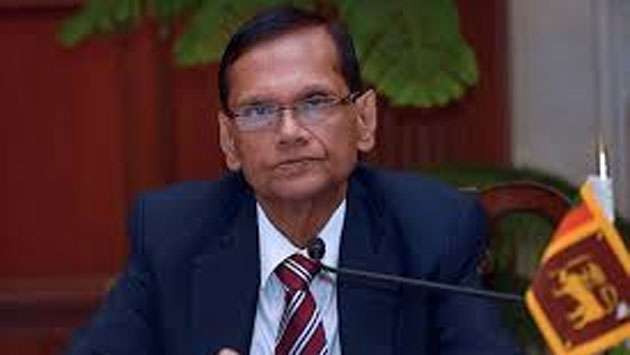
Colombo, July 21 (Daily Mirror) - Sri Lanka's military leaders risk being arrested and tried, in terms of the principle of universal jurisdiction, in the national courts of different countries as a result of the investigative mechanism established by the Office of the High Commissioner for Human Rights, the Joint Opposition raised alarm yesterday.
Making remarks during the weekly press conference, its convener, Prof. G.L. Peiris said yesterday that officials of this special investigative body had visited multiple countries and gathered evidence against Sri Lanka's military leaders over serious allegations. They are now processing such evidence, according to him.
"They have been able to gather 96,215 pieces of evidence from 470 sources. According to them, there are 220 witnesses and 250 institutions," he said.
Against the backdrop, he said, Sri Lankan military leaders stand the risk of being arrested, tried and imprisoned in different countries whenever they travel abroad for a holiday, medical purposes, or to attend to the educational needs of their children. He said the countries concerned would invoke the principle of universal jurisdiction.
He said the previous governments, which he represented, flatly rejected the involvement of foreign countries in hearing cases of Sri Lankans in this manner. He said that the then government ensured an internationally acclaimed judiciary in Sri Lanka.
"It was a source of strength for us. As such, we argued against the involvement of foreign courts," he said.
Referring to the government's plan for the extension of the retirement age of judges, he said it had been a move widely opposed by civil society, the Sri Lanka Bar Association, academia and others.
Commenting on the failure to fill vacancies in the higher courts, he said this had resulted in a delay in dispensing justice as a result of a backlog of cases. Earlier, the constitution was amended to increase the number of judges by the previous governments. However, vacancies are not filled today. Does the executive have a hidden agenda behind this move? It is the duty of the executive to fill these vacancies. This will damage the reputation of the Sri Lankan judiciary. The next sessions of the Office on the United Nations Human Rights Council will be held in September this year. Therefore, Sri Lanka could face adverse effects because of the government’s effort to fulfil its vested interests,” Prof. Peiris told a media briefing.
There is uncertainty on the part of the government with regard to the issue. It takes more than one and a half years to implement such a move. They present proposals to people and various groups and gather their ideas on them. There were 1,200 responses for such a move to extend the retirement age of judges within 18 months. We don’t see such a development in Sri Lanka. No one is aware of the government’s move.
Extension of retirement age cannot be confined to judges alone; it should be extended to others, including specialist doctors and academics. There are different ideas expressed on the issue. No idea has been expressed on one matter. It is on that matter which I am going to focus.