Reply To:
Name - Reply Comment

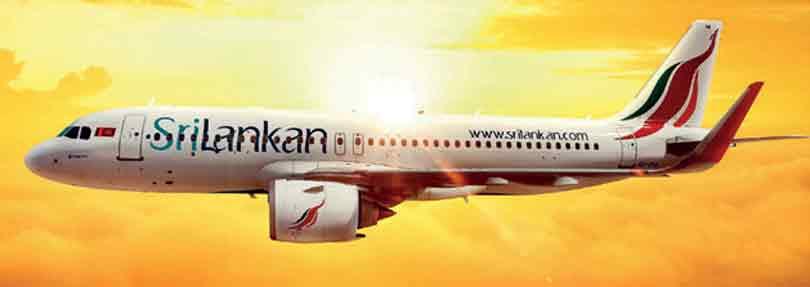
By Nishel Fernando
SriLankan Airlines’ new Chairman Dimal Arandara is drawing heavy scrutiny over an unconventional strategic proposal to balance the national carrier’s bloated staff-to-aircraft ratio by purchasing more aircraft instead of right-sizing the workforce.
Testifying before a recent parliamentary committee hearing, Arandara defended the push for fleet expansion as a statistical remedy for staffing imbalances.
“When you divide the number of staff by the 23 aircraft we have, the number of maintenance staff per aircraft is high. To address this, the fleet must definitely be increased,” Arandara told the committee.
The Chairman further attempted to justify the strategy by boasting about acquiring older aircraft at steeply discounted monthly lease rates. Pointing to large-scale savings on initial rentals, Arandara noted, “If we paid US$ 800,000 a month previously, from December we are paying US$ 43,000 for a wide body. resulting in a saving of US$ 370,000 per flight per month.”
He openly acknowledged the reliance on aging planes, stating, “Even when we lease, we are not leasing new aircraft; generally, we lease aircraft that are seven to eight years old,” which adds to a fleet with an average age of 12 years.
However, aviation analysts and critics argue this approach is fundamentally flawed and ignores the crippling reality of backend operational expenses. The strategy fails to take into account that the older the aircraft, the higher the maintenance costs. During the last financial year (FY26), while the airline’s total lease cost stood at US$ 78.6 million, maintenance costs skyrocketed to a staggering US$ 207.3 million for the year. Adding older planes to the fleet will only exacerbate this disproportionate maintenance burden, rapidly wiping out any operational savings made on the initial lease agreements.
Deploying additional aircraft without a corresponding surge in actual market demand also directly threatens the airline’s profitability. Industry experts caution that artificially adding capacity to a route negatively impacts yield and load factors, resulting in the dilution of route profits or, worse, a severe increase in existing route losses. This is a critical concern given the carrier’s bleak commercial performance.
According to a recently published business plan, 38 out of SriLankan Airlines’ 52 routes are already loss-making, a figure that notably includes all 15 of its routes to India.
The strategic direction championed by the current leadership has raised serious concerns regarding competency. Even the recently appointed expert restructuring committee, headed by Senior Presidential Advisor on Digital Economy Dr. Hans Wijayasuriya, has been criticised for lacking credible, dedicated aviation experts.
When questioned about strategic oversight, Arandara stated, “All these plans are studied by the expert committee appointed for restructuring... chaired by Dr. Hans,” yet observers note that neither the committee nor the Chairman himself possesses prior aviation expertise.
Further compounding the carrier’s commercial instability is the revelation that the airline has operated without a permanent Chief Executive Officer for over a year and four months. Despite receiving a vast number of applications—172 in the initial round and over 200 in the second—leadership indicated an inability to match the salary expectations of qualified foreign aviation executives, leaving the critical role vacant.
This leadership vacuum and the handling of the recruitment process drew sharp criticism from Chairman of the Sectoral Oversight Committee on Infrastructure and Strategic Development MP S. M. Marikkar, who questioned the ongoing delays and the board’s apparent disregard for local talent.
“It is a tragic situation that for about a year and four months we haven’t been able to find a CEO. We cannot find someone from within, nor can we find someone externally. It shows exactly where we stand as an airline,” Marikkar pointed out during the committee session.
Calling out the heavy reliance on international headhunting, he challenged the committee, asking, “Are there really no capable people in Sri Lanka for this?”
Addressing the recruitment panel’s stringent demands for comprehensive aviation experience, Marikkar argued that a successful business leader does not need to be a technical master of every single operational division. “A CEO doesn’t need to have expertise in every single area,” he stated. “That is why there are specialists and department heads. Ultimately, it is about how it is managed.”
Highlighting the untapped potential of domestic corporate leadership, he noted, “We have seen plenty of private sector companies where people who came up from within the organization run the companies better than these experts.”