Reply To:
Name - Reply Comment
By M. U. M. Ali Sabry, PC
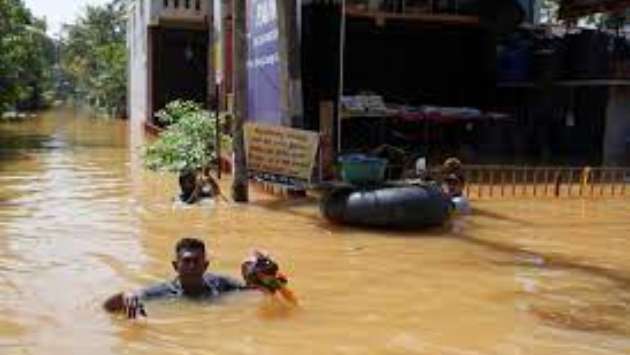
Colombo, Dec. 4 (Daily Mirror) - Climate change is no longer a distant concern, it is the harsh reality Sri Lanka is forced to confront again and again. Floods, tsunamis, droughts, economic crises, and once again floods, this vicious cycle keeps returning, each time with greater intensity. A small island like ours cannot endure this indefinitely, and we are not alone in this struggle. Many vulnerable nations are caught in the same storm, suffering the consequences of emissions we did not create.
The injustice is clear. Much of the infrastructure destroyed in recent weeks was built with borrowed funds from institutions such as the World Bank and the ADB. We borrowed to develop our country, climate change washed it away, and yet our repayment obligations remain unchanged. This is the core unfairness at the heart of the global climate crisis. Those who have contributed least are facing the harshest consequences, while those most responsible continue with lip service and voluntary commitments.
Lip service will not rebuild a single road or home. It is time to honour the commitments made, and time for those responsible to finally accept the legal and financial accountability they owe to nations like ours. Sri Lanka has stepped forward before, and we can do it again.
A Global System That Is Failing Us
At COP27 and COP28, the international community agreed in principle to establish a Loss and Damage Fund. But principles, without enforcement, are weak. They do not rebuild shattered bridges, compensate the displaced, or protect fragile economies. The voluntary nature of the current framework allows high-emission countries and corporations to contribute only when convenient, leaving climate-vulnerable nations to pick up the pieces on their own.
Sri Lanka cannot continue to borrow repeatedly to repair climate-caused destruction. It is unfair, unsustainable, and incompatible with the idea of global climate justice. Unless the world adopts a durable, rules-based system, we risk falling back into cycles similar to the one that led to the economic crisis of 2022.
A Climate Loss and Damage Framework That Works
If I could introduce one global law, it would be a comprehensive Climate Loss and Damage Liability Framework that defines responsibility, requires predictable contributions, and ensures fast access to support. Such a framework should include,
1. Mandatory contributions based on responsibility
High-emission countries and major polluting corporations must be legally obligated to fund global loss and damage, based on their historical emissions and their capacity to pay.
2. Direct and fast-tracked access for vulnerable countries
Sri Lanka, and others like us, should be able to access support immediately and transparently whenever disaster strikes.
3. Enforcement and Accountability
A specialised tribunal or arbitration mechanism must ensure that those responsible deliver on their commitments, without excuses or delay.
Reviving the International Climate Change University: A Vision Ahead of Its Time
Years ago, Sri Lanka proposed the International Climate Change University (ICCU). At the time, certain political voices mocked it, failing to grasp its purpose or its long-term significance. Today, as climate disasters grow more frequent and intense, the value of such an institution has become undeniable.
And importantly, we made real progress. A site for the university was identified in Kotmale, one of the most environmentally suitable and academically inspiring locations in the country. We initiated discussions with global partners and explored academic collaborations. The foundation has already been laid.
Sri Lanka must revive this initiative because,
1. Climate challenges require knowledge and innovation
No nation can confront this crisis without scientific research, climate modelling, adaptation technology, and policy expertise
2. Sri Lanka can become a regional climate hub
Our vulnerability gives us authenticity and moral authority to drive global discourse
3. We must shape global climate finance architecture, not merely follow it
With institutions like ICCU, Sri Lanka can lead negotiations with evidence, expertise, and credibility
A Call for Responsibility and Global Justice
Sri Lanka has endured more than its share of climate devastation. We cannot continue to rebuild alone, repay alone, and relive the same cycle alone. The world must hear our collective voice with clarity.
Sri Lanka must therefore, demand a rules-based Loss and Damage mechanism, build alliances with similarly vulnerable nations, revive the climate university initiative in Kotmale, and insist that major emitters honour their commitments in full.
Climate justice is not charity, it is responsibility. It is fairness. And for Sri Lanka, it is essential for our long-term survival and stability.
We owe it to our people, to future generations, and to all vulnerable nations to lead this effort with conviction and courage. Sri Lanka has done this before, and we can do it again.