Reply To:
Name - Reply Comment
Sri Lanka’s national consumer prices fell in July from a month ago on lower food prices which more than offset the rise in non-food prices in the same month, mainly over the higher electricity and fuel prices.
The consumer prices measured by the National Consumer Price Index slid 0.2 percent in July from the levels in June, compared to 0.6 percent increase in the month before.
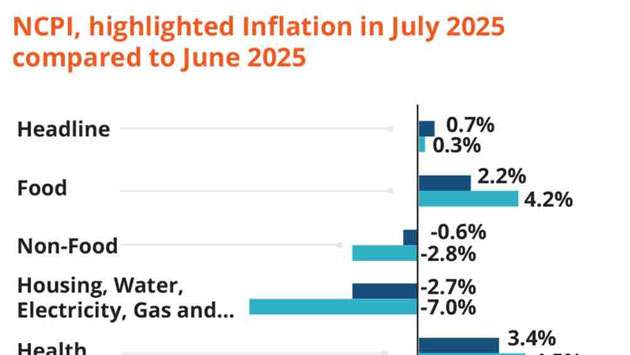
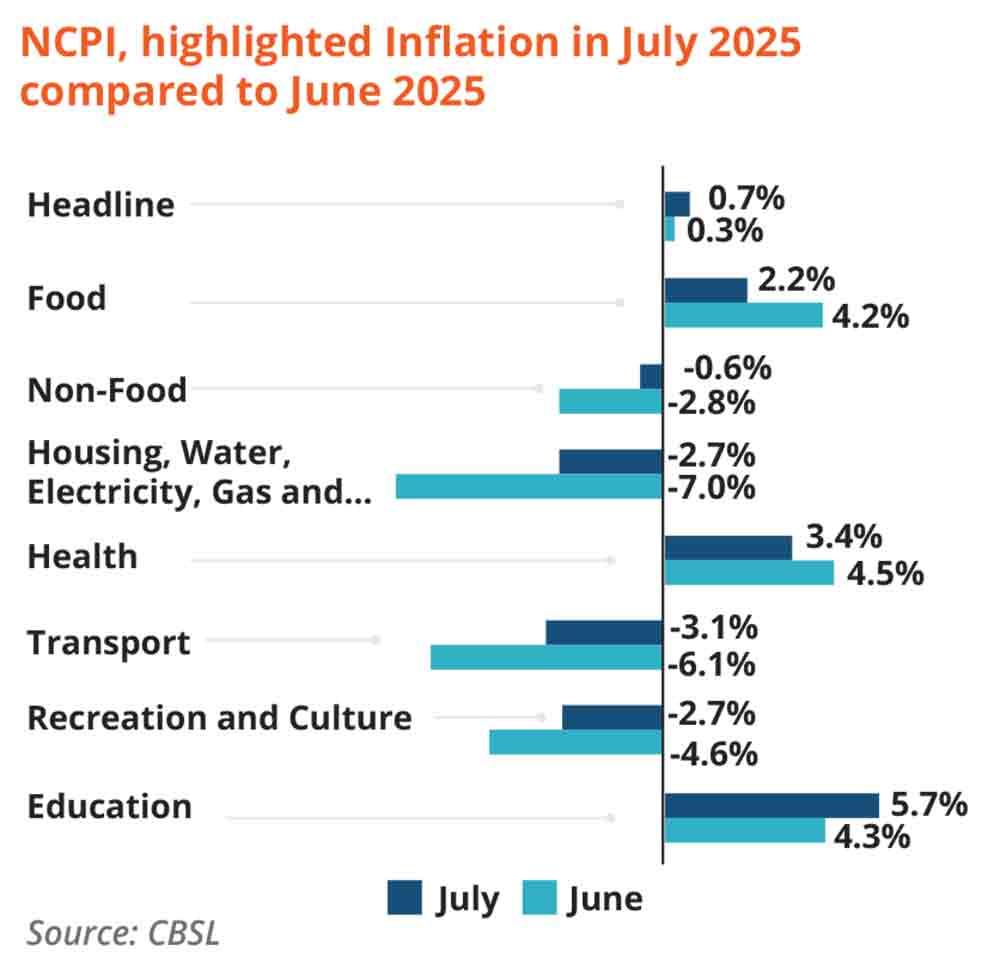
However, the prices measured annually or the point-to-point inflation rose by 0.7 percent through July from a year ago, accelerating from the 0.3 percent increase seen through June.
Monthly food prices fell by 1.4 percent in July from a 0.8 percent increase in June but the food prices measured annually rose by 2.2 percent from a year ago, decelerating from 4.2 percent through June.
This was because the prices of many commodities came down. For instance the prices of vegetables, coconuts, fresh fish, green chilies, rice, salt, limes, eggs and big onions came down during July from the levels in June.
The prices of chicken, dried fish, milk powder and fresh fruits rose during July from the June levels.
The monthly food prices declined as the decline in the food prices was more pronounced than the increase in the prices of other commodities during the month.
The non-food prices rose 0.8 percent in July from a 0.3 percent increase in June due to the lingering effects from June’s tariff hike on electricity and also the upward revision in prices of petrol and diesel at the start of the month.
The prices of house maintenance materials and house rent too rose in July.
Furthermore, tuition fees increased while the personal grooming cost too followed suit as the hair cutting and shaving charges rose in July from their June levels.
The non-food prices measured annually fell 0.6 percent through July, after falling from 2.8 percent through June as the annual prices have the impact of the previous cuts to the fuel and electricity prices.
The so-called core inflation measured barring the often volatile food, energy and transport rose by 0.9 percent in the year through July, rising from 0.6 percent increase seen through June.
The Central Bank expects the prices to gradually align with their medium term target of 5.0 percent by the middle of 2026 before slightly going above that level in the second half of next year before converging again at the target level, contingent on the absence of any supply shocks.
This forecast is however based on Central Bank’s preferred inflation gauge, the Colombo Consumer Price Index which fell by 0.3 percent on year in what could be the final negative inflation print in the current deflationary spell which began in September last year.