Reply To:
Name - Reply Comment
 |
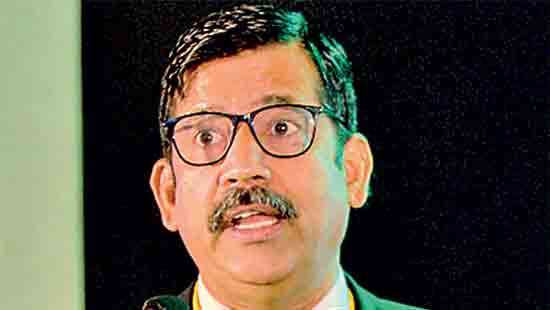
| K.S. Venkatagiri |
In a call that blended environmental urgency with economic opportunity, Global Ecolabelling Network (GEN) Chair K.S. Venkatagiri urged Sri Lanka’s industries to fast-track the adoption of Type I ecolabels.
According to him, such a move could cut national carbon emissions by up to 20 percent while opening new doors to export markets increasingly defined by sustainability.
Speaking at the third International Conference on Resource Efficiency and Circular Economy, organised by the National Cleaner Production Centre (NCPC) Sri Lanka, Venkatagiri stressed ecolabelling is now a matter of survival in global trade.
“Every ecolabelled product tells the world it consumes less carbon, less water and fewer resources. If Sri Lanka’s manufacturers adopt ecolabelling as a standard practice, nearly one-fifth of the country’s emission reduction targets for 2050 could be achieved through this single intervention,” he said while delivering the keynote at the conference.
Venkatagiri, who also heads the Environment Centre of the Confederation of Indian Industry, framed ecolabelling as the missing link between Sri Lanka’s manufacturing ambitions and its sustainability goals.
“As the country looks to increase its manufacturing contribution to 30 percent of GDP, it must recognise that production is resource-intensive. Type I ecolabels offer a practical way to make it cleaner, more circular and more profitable,” he said.
He warned that markets such as Europe and the UK, now governed by Carbon Border Adjustment Mechanisms and green procurement laws, would soon demand verifiable sustainability credentials from exporters.
He went on to assert that ecolabels are non-tariff passports, as they don’t merely get products across borders; they get the industry into the conversations that matter in tomorrow’s economy.
Drawing from the GEN studies conducted in Germany, Japan and India, Venkatagiri said ecolabelled products consistently deliver 15-20 percent lower environmental impact than conventional ones. Global buyers are now aligning procurement with verifiable ecolabel standards, making this a business imperative.
He praised NCPC Sri Lanka for its progress in developing a credible ecolabel, calling it “one of the youngest and most promising members” of the GEN’s 60-country network.
Venkatagiri also outlined opportunities for mutual recognition agreements between Sri Lanka and India, which could allow ecolabel-certified products to move more seamlessly across borders. The GEN, he said, is ready to extend its technical expertise and global network to strengthen Sri Lanka’s position as a green manufacturing hub in South Asia.
However, he noted that becoming environmentally sustainable is “not charity but smart economics”.