 CHATURANGA PRADEEP SAMARAWICKRAMA
 Reply To:
Name - Reply Comment
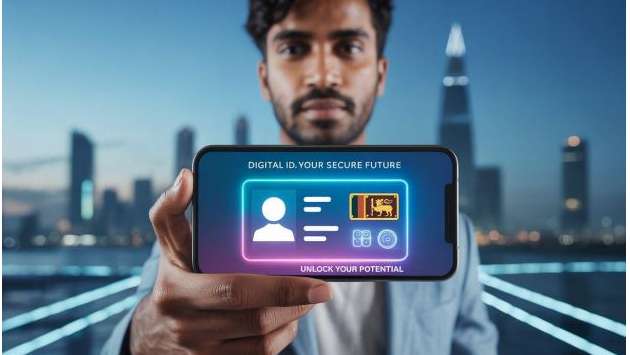
Colombo, July 31 (Daily Mirror) - The Digital Economy Ministry said that a National Digital Identity (Digital ID) system will be launched by April 2026, with strong emphasis on data privacy and citizen protection.
The announcement was made as part of a broader move to revolutionize access to public services and drive inclusive digital growth. The project is funded by a Rs. 10.4 billion grant from the Government of India, easing the financial burden on Sri Lanka.
“This initiative will minimize the financial strain on the Sri Lankan government,” the Ministry said.
The Digital ID is a key component of Sri Lanka’s Digital Economy Initiative, which aims to establish the country as a regional digital hub by 2030. The system is expected to simplify service delivery, improve transparency, and strengthen public trust in digital governance.
Sri Lanka’s current physical National Identity Card (NIC) has long served as the primary means of identification. However, with global trends moving toward secure, scalable digital identity solutions, the Ministry is now embracing a modern, tech-driven alternative.
The new system will use the Modular Open-Source Identity Platform (MOSIP) an internationally adopted, open-source digital ID framework already operational in countries like the Philippines, Morocco, Ethiopia, and Togo, and serving over 130 million users worldwide.
A certified Indian system integrator will adapt MOSIP for Sri Lanka, while local IT professionals will be trained to handle operations, maintenance, and future development.
Key security and privacy measures:
All data capture will be handled exclusively by the Department for Registration of Persons.
Biometric or personal data will only be collected once the system is fully under local control.
A full security audit will be conducted by Sri Lanka CERT before activation.
The system will be deployed using infrastructure owned and operated by the Sri Lankan Government.
Biometric data including facial, fingerprint, and iris scans will be encrypted with multiple layers of security during both storage and transmission, ensuring that personal data remains safe from unauthorized access.
The Digital ID will be accessible via a mobile app called “e-Locker”, offering biometric authentication, QR code scanning, and manual face verification. For those who prefer physical proof, a printable version will also be available.
Existing NIC cards will remain valid during a 3–5 year transition period, and each NIC will be digitally linked to the new system to guarantee uninterrupted access to services.
Officials stressed that the Digital ID is not just a technological upgrade but a foundation for inclusive, transparent, and efficient governance.
“This is a long-term investment in the nation’s future. It will simplify public service access, enable secure digital transactions, and strengthen data privacy. We urge the public and stakeholders to support the initiative based on facts, not fear,” the Ministry emphasized.