Reply To:
Name - Reply Comment
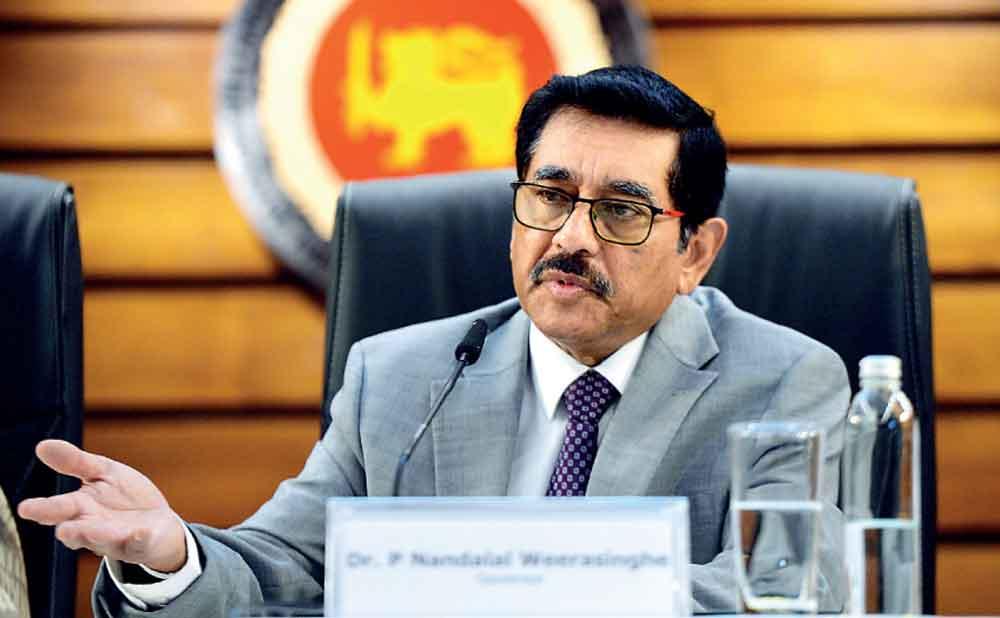
Dr. Nandalal Weerasinghe
PIC BY PRADEEP PATHIRANA
As widely expected, the Central Bank yesterday decided to keep the policy rate, the Overnight Policy Rate, unchanged at 7.75 percent at its sixth policy meeting and the final one for the year.
The Monetary Policy Board arrived at this decision considering that the current rates are appropriate to steer inflation towards their medium-term target of 5 percent by the second half of next year and also to help the economy to reach its full potential.
After nearly a year of deflation, inflation has been picking up in the last three months, with the Colombo Consumer Price Index coming in at 2.1 percent for October from a year ago.
Going into this week’s monetary policy meeting, it was largely a foregone conclusion that the Central Bank wouldn’t change its monetary policy stance, given where the prices are and also the robustness of the economy.
In fact, the Monetary Policy statement took note of the current spell of higher growth in private sector credit so far this year and said it expects the conditions to remain in the period ahead.
In the first nine months, the licensed commercial banks extended as much as Rs.1,365 billion in fresh credit to the private sector, at a robust 22.1 percent growth from a year earlier.
However, the Central Bank isn’t worried that it is too much, given the still low private sector credit to the gross domestic product ratio based on historical standards and also the very low state borrowings from the banking sector, given its improved financials.
Central Bank Governor Dr. Nandalal Weerasinghe, addressing some of those concerns, said he expects there is more room for private sector credit to grow.
The Central Bank reiterated its stance that the economy is doing well and it expects the economy to end up growing by close to 5.0 percent in 2025, resembling the growth in 2024.
Despite the increase in imports, which widened the trade deficit and also caused the current account of the balance of payment to come under some pressure in the final three months, the record high earnings from exports, remittances and relatively better earnings from tourism are expected to more than offset the import pressures.
Further, the Central Bank, addressing the vehicle imports, which in particular caused the imports to swell in 2025, said it sees a substantial slowdown in the opening of letters of credit for vehicles in November and also going into December, from the higher levels in July through September, due to the fizzling of the pent-up demand.
Hence, what was seen in 2025, in terms of vehicle imports, was unusual and the Central Bank expects a more normal situation for vehicles in 2026, now that the financing share has also been cut.
Responding to the jitters over the largely stable gross official reserves, amounting to around US $ 6.2 billion by end-October, compared to US $ 6.1 billion in December last year, Dr. Weerasinghe said this was due to the relatively higher debt service payments in 2025 compared to 2024, as the government started settling some of the loans while resuming payback under the debt restructuring.
However, he confided that the country is going to see the highest level of reserves by the end of the year since the crisis, with around US $ 750 million worth of inflows expected from the multilateral agencies in the next few weeks.
Dr. Weerasinghe expects the next or the sixth programme tranche of around US $ 347 million to come by December 15, 2025 from the International Monetary Fund and another budget support facility of around US $ 370 million from the Asian Development Bank in the same month.
Some other inflows are also expected from the World Bank as well.
This is besides the higher inflows from export conversions, which are going to be generally higher in December and also the record high remittances and higher earnings from tourism, as the peak season is underway.
The Central Bank said the next policy meeting, which is due probably in January, would be announced via an advance calendar when he unveils his medium-term monetary and financial sector policies in early January next year.