
Reply To:
Name - Reply Comment
By Shannine Daniel
|
Jean Bouquot |
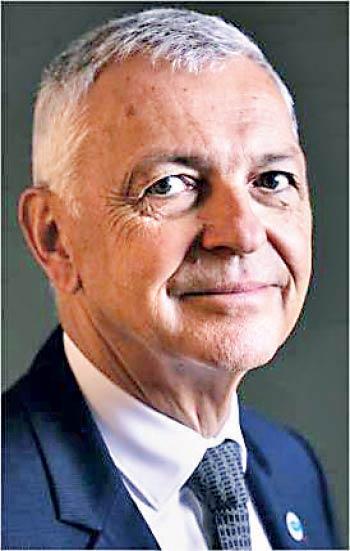
Financial markets need trust worthy, high quality information on sustainability related risks and opportunities so that investors and lenders can make efficient decisions, said International Federation of Accountants (IFAC) President Jean Bouquot during his recent visit to Sri Lanka.
“Decision takers inside of companies also need this information to make informed decisions about the company’s risks, opportunities and strategic direction,” Bouquot said, adding that accountants were in the best position to take the lead on broader corporate reporting.
Bouquot made these statements during the keynote speech at the Integrated reporting and Sustainability Accounting Standards Workshop organised by IFAC and the Institute of Certified Management Accountants (CMA) of Sri Lanka.
He noted that in recent years IFAC had been speaking to people in the global accountancy profession and also stakeholders and investors outside the profession, about the profession’s opportunities and public responsibility to enable changes happening in companies across the world, via broader corporate reporting.
“We have the technical skills to integrate technical and nonfinancial information, wherever we are in the value chains. We also have the skills transform high quality standards into high quality information,” Bouquot noted.
“Our reputation will build confidence in this information in the same way that we build confidence in traditional financial information and statements,” he added.
He stated that as a profession they are challenging those who are working in companies or providing advisory services to companies to view broader corporate disclosures not as a compliance exercise, but as empowering changes in the governance and decision-making processes of companies.
“For these broader corporate disclosures to be useful, no actor can be outside the reporting system, and this raises the importance of global standards,” Bouquot asserted.
“Ultimately we are on the same sustainability journey so we should embark on it together and avoid serious risks that come with regulatory fragmentation,” he added.
According to Bouquot these risks include the potential for difficulties in conducting business across borders and the potential that weak or poorly designed regulation could allow greenwashing.
“We believe the IFRS standards on accounting and sustainability are the right foundation for this global system and Sri Lanka has made great progress towards full adoption and implementation,” Bouquot remarked.
“We also believe that widespread adoption and implementation of the Diversity, Equity, and Inclusion in Accounting (DEI 5500) from the International Auditing and Assurance Standards Board (IAASB) will be crucial for ensuring that assurance of nonfinancial disclosures truly builds confidence in those disclosures.
Furthermore, Bouquot said CMA Sri Lanka is an important part of the South Asian and global accountancy profession, and over the years it has become a pillar of public interest and economic growth in Sri Lanka.