18 Mar 2026 - {{hitsCtrl.values.hits}}
Sri Lanka still possesses something that has become increasingly rare in many parts of the world: land in desirable locations.
At a time when residential plots in major global cities are scarce and prohibitively expensive, the island still offers opportunities to build spacious private homes on land that would be difficult to obtain elsewhere.
Sri Lanka welcomed more than 2.36 million tourists in 2025, generating approximately US$3.2 billion in tourism revenue, according to the Sri Lanka Tourism Development Authority. Remittances from Sri Lankans working abroad remain one of the country’s largest sources of foreign income, with a portion of that capital increasingly finding its way into land and residential construction.
As tourism recovers and more capital from Sri Lankans overseas returns to the country, many people are beginning to rethink not only where they build, but how they build.
The Land Advantage
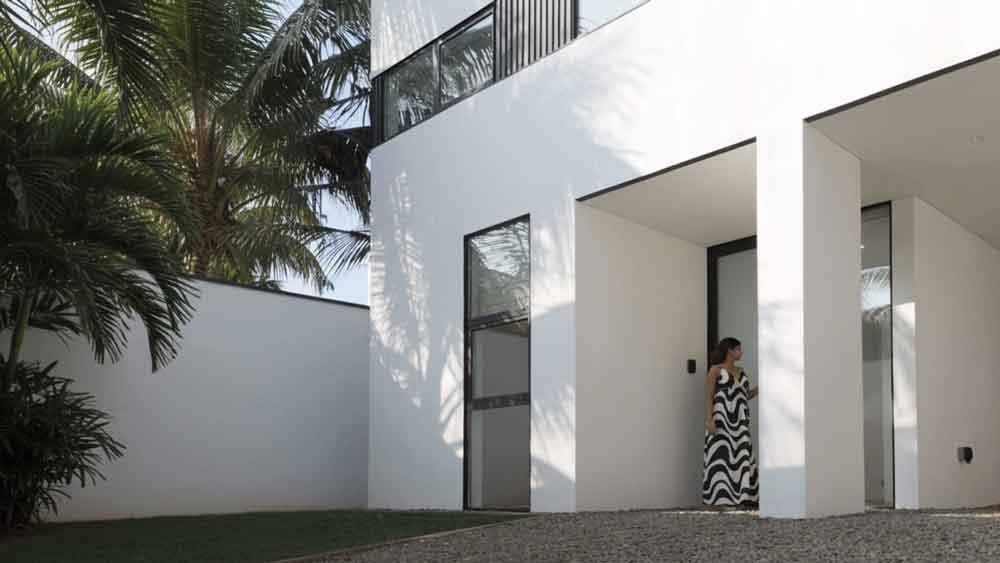
For many Sri Lankans, particularly those who already own land, the opportunity lies in building homes that would be hard to build in more densely populated parts of the world.
In cities such as Singapore and Hong Kong, residential land scarcity has pushed housing prices and construction costs among the highest in the world. Detached villas have become extremely rare, typically limited to a small number of ultra-high-net-worth buyers.
Sri Lanka presents a markedly different picture. Colombo’s suburbs, the southern coastline and the hill country still offer plots large enough to accommodate spacious private homes with gardens, views and oceanfront locations.
This availability of land places Sri Lanka in a position not unlike destinations such as Bali in Indonesia or Phuket in Thailand, where villa markets have expanded rapidly over the past decade.
Yet while Sri Lanka has long enjoyed this land advantage, the way homes are built is now beginning to change.
Why Conventional Construction Is Losing Appeal
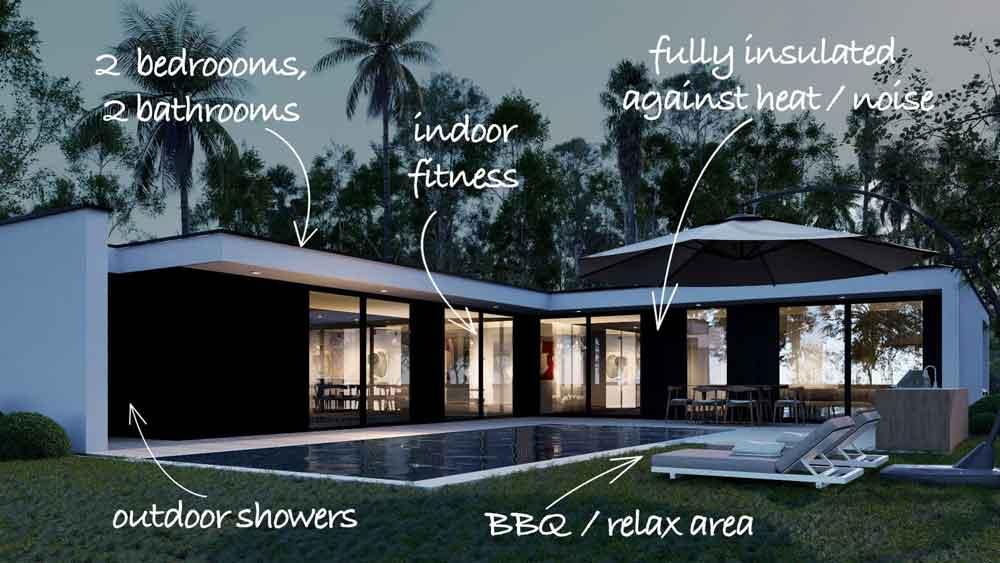
For decades, residential construction in Sri Lanka has largely followed conventional methods: masonry walls, limited insulation and a construction process often divided among multiple contractors working independently.
Increasingly, homeowners are questioning whether that model still makes sense. The issue is not merely architectural aesthetics or comfort. It is also about long-term cost, durability and the quality of living conditions inside the home.
Buildings account for roughly 40 percent of global energy consumption, much of it driven by heating and cooling. In tropical climates such as Sri Lanka’s, poorly insulated homes often rely heavily on air-conditioning to maintain indoor comfort.
Research on tropical building performance shows that improving insulation and the overall building envelope can significantly reduce cooling demand, often by more than 35 percent compared with conventional construction.
For homeowners, the implications are straightforward: lower electricity bills, more stable indoor temperatures and improved overall comfort. Well-designed homes can also reduce moisture problems, last longer and require fewer repairs over time.
A Changing Approach to Homebuilding
Sri Lankan consumers have shown little hesitation in adopting new technologies. Solar panels now appear on rooftops across the island, hybrid and electric vehicles are becoming more visible on Colombo’s roads, and modern appliances and automation systems are increasingly common in new homes. Housing may be the next sector to follow that pattern.
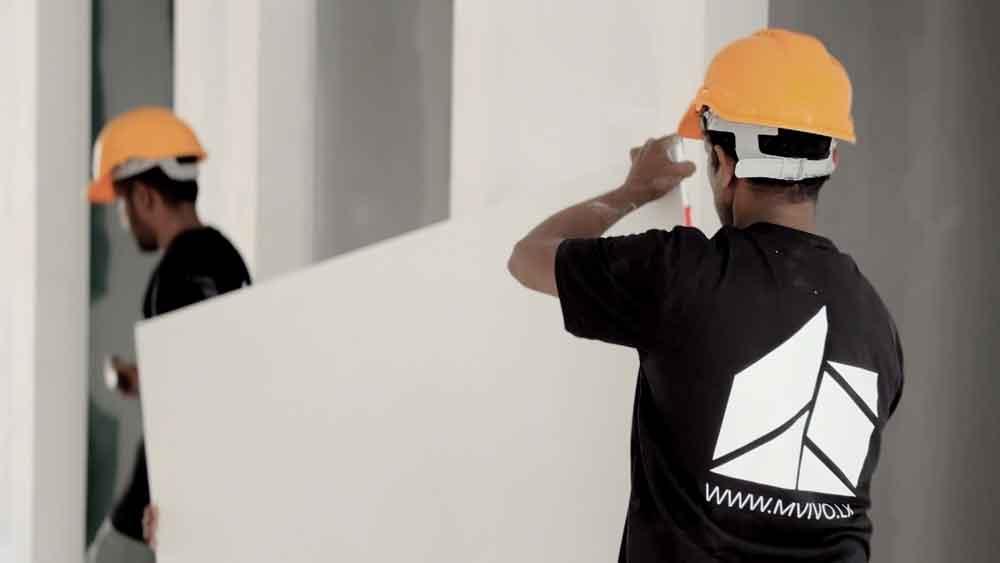
Modern construction approaches treat a house not as a collection of individual components but as a coordinated system. Insulated building envelopes, high-performance glazing, controlled ventilation and careful integration of structural and mechanical systems are becoming more familiar concepts among architects and homebuilders alike.
“Many people are surprised to discover that the same building solutions used overseas can be applied here,” says Eva Reubsaet of MVIVO, a company that focuses on high-performance residential construction. “When a home is properly engineered for the tropical climate, it can be far more comfortable while also reducing energy consumption over time.”
Unlike traditional construction processes, which often rely on loosely coordinated subcontractors, these newer approaches emphasise planning and integration from the earliest design stages.
A New Phase for Homebuilding
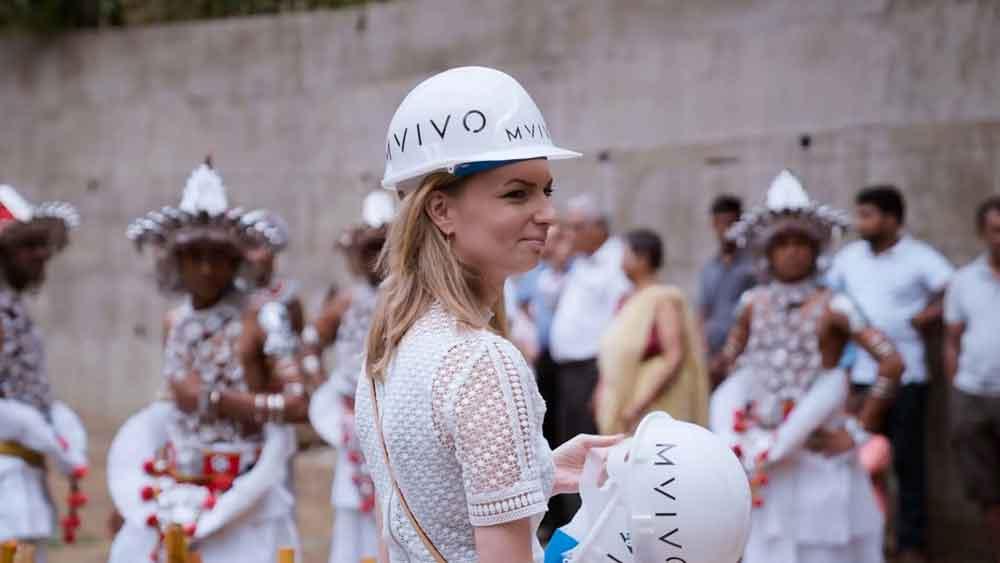
With tourism expanding and diaspora investment returning, Sri Lanka’s residential property market may be approaching an inflection point.
The island already possesses many of the ingredients that international buyers and property owners value: striking landscapes, coastline, cultural depth and a climate suited to outdoor living. What is now beginning to emerge is the possibility of combining those advantages with modern construction standards that respond more effectively to the realities of tropical environments.
For those who already own land, or are considering acquiring it, the opportunity may lie not only in building a house, but in building differently. If current trends continue, the next generation of homes in Sri Lanka could reflect a shift toward design, engineering and long-term performance that matches the island’s natural advantages.
In a world where land in desirable locations is becoming increasingly scarce, that combination may prove to be one of Sri Lanka’s most significant assets.
More information about MVIVO and the homes they build can be found at https://mvivo.lk /, or by contacting the MVIVO team directly via their hotline at 011 717 0000.
03 Jun 2026 03 Jun 2026
03 Jun 2026 03 Jun 2026
03 Jun 2026 03 Jun 2026
03 Jun 2026 03 Jun 2026
03 Jun 2026 03 Jun 2026