27 Apr 2026 - {{hitsCtrl.values.hits}}
As Australian businesses look offshore to manage labour shortages and rising costs, Sri Lanka is emerging as a serious talent destination. But the next question is not just whether outsourcing works. It is whether it is being done responsibly.

Melbourne’s Central District at Night
For many Australian businesses, outsourcing is no longer a fringe decision. It has become part of how firms manage labour shortages, wage pressure and the need to stay competitive in a high cost economy.
Across sectors such as accounting, legal services, technology, administration and customer support, companies are looking beyond local recruitment markets to build offshore teams. The commercial logic is clear. Hiring locally is difficult, wages remain elevated and many small to medium sized businesses are under pressure to deliver more with leaner teams.
According to Jobs and Skills Australia’s 2025 Occupation Shortage List, 29 per cent of assessed occupations were still in national shortage in 2025. The Australian Bureau of Statistics also reported annual wage growth of 3.4 per cent to the December quarter of 2025.
Those numbers explain why offshoring is attractive. But they do not answer the harder question: can Australian businesses offshore responsibly?
For years, outsourcing was mostly discussed in financial terms. Businesses looked offshore because labour was cheaper, roles could be scaled faster and local teams could focus on higher value work.
That logic still exists. But it is no longer enough. Australian companies now operate in an environment where supply chains, labour standards and offshore workforce practices are under greater scrutiny. Australia’s Modern Slavery Act 2018 already requires large businesses operating in Australia to report on modern slavery risks in their operations and supply chains.
While the Act applies to larger entities, the expectations are flowing through the broader business ecosystem. Smaller firms that supply corporates, tender for institutional work or work in professional services are increasingly expected to understand how their offshore teams are employed, managed and protected.
This is where ethical outsourcing becomes more than a reputational issue. It becomes a business risk question.
Sri Lanka has a strong case to make to Australian businesses.
The country has an English speaking professional workforce, a growing technology and business services sector, and a time zone that works well with Australia. The Board of Investment of Sri Lanka describes the country’s IT and business services sector as one of its fastest growing industries, with more than USD 1.5 billion in export revenue and more than 175,000 professionals.

Colombo’s central business district at night
For Australian firms in accounting, law, technology and administration, Sri Lanka offers more than cost savings. It offers educated talent, cultural familiarity, English capability and a growing professional services base.
But those advantages will only matter long term if Sri Lanka is positioned as a quality outsourcing destination, not simply a cheaper one.
The ethical question is not whether Australian businesses should offshore work. It is how they do it.
A responsible outsourcing model should be able to answer some simple questions. Are offshore staff paid fairly in their local market? Are they properly trained? Do they have clear contracts? Are they managed with respect? Do they have career pathways? Are working hours reasonable?
These questions matter because offshore workers are not just capacity. They are part of the business system.
A poorly managed offshore model can create short term savings but long term problems: high turnover, inconsistent quality, poor communication, reputational risk and client concern. A well managed model can do the opposite. It can give Australian firms access to skilled support while creating stable, meaningful professional roles in Sri Lanka.
For Australia based Sri Lankan business figure Arjuna Samarakoon, the outsourcing conversation is shifting.
|
“The strongest outsourcing model is not the one that simply reduces cost. It is the one that gives Australian businesses reliability while giving offshore workers dignity, training and a genuine career pathway,” Samarakoon says. |
Samarakoon believes Sri Lanka’s pitch to Australia should not be based only on price.
|
“Sri Lanka has the talent, language capability and professional culture to become a serious outsourcing partner for Australia. But the country’s advantage will be stronger if it is associated with quality, transparency and responsible employment.” |
That distinction matters. If Sri Lanka is viewed only as a low cost labour market, it risks being pulled into a race to the bottom. If it is viewed as a professional and ethical extension of Australian businesses, it has a stronger and more durable story.
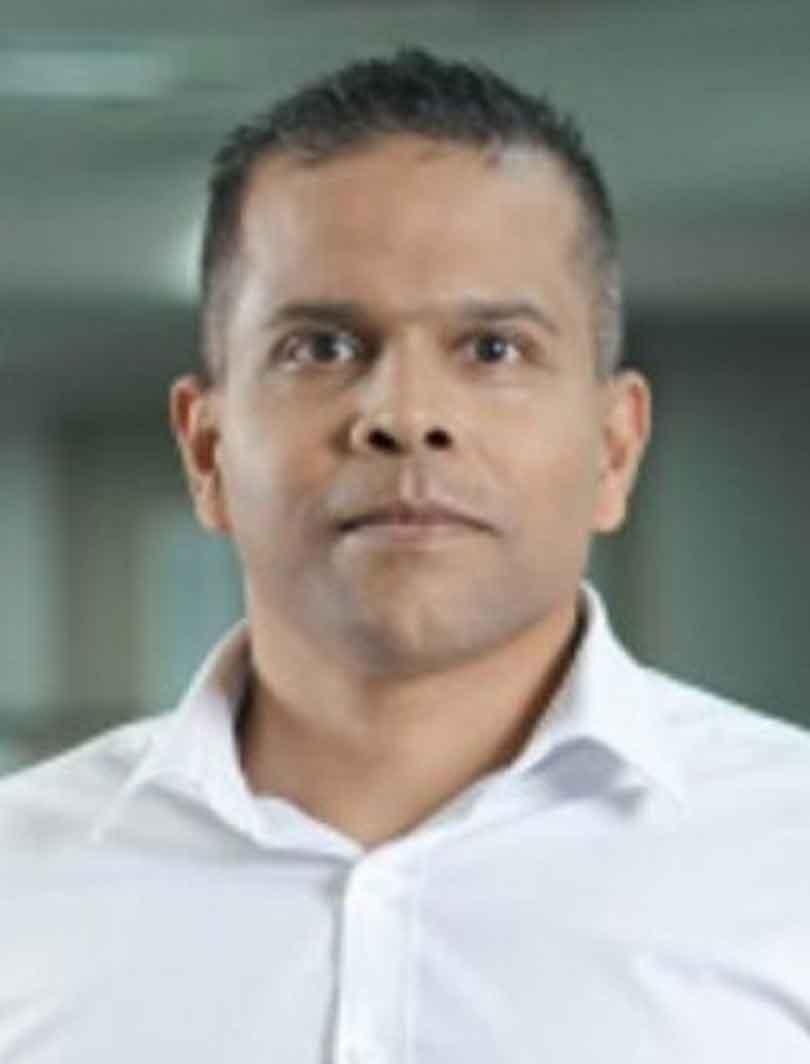
Australian Investor and Reform Advocate Arjuna Samarakoon also known as Arj Samarakoon
Responsible outsourcing does not mean removing the commercial benefit. It means building the model properly.
For Australian businesses, that means looking beyond hourly rates and asking about employment standards, training, supervision, data security, worker wellbeing and career progression. It also means choosing offshore partners that can show how staff are hired, supported and managed.
This is especially important in professional services, where offshore teams may handle sensitive, deadline driven or client related work. Trust, quality and accountability matter just as much as cost.
The outsourcing debate is often too simple. Critics frame it as a threat to local jobs. Supporters frame it as an easy way to cut costs. The reality is more complex.
Australian businesses will continue to look offshore because the pressures are real. Skills shortages, wage growth and service expectations are not going away. But the next stage of outsourcing will need to be more responsible, transparent and professionally managed.
For Sri Lanka, this is a significant opportunity. The country can compete not only as a lower cost destination, but as a trusted professional services partner for Australian businesses. For Australian firms, the business case is equally clear. Ethical outsourcing can reduce pressure, improve capacity and protect reputation.
The future of outsourcing between Australia and Sri Lanka should not be defined by the cheapest hourly rate. It should be defined by whether the model is fair, productive and sustainable.
In that sense, ethical outsourcing is not a constraint on growth. Increasingly, it may be what makes the growth defensible.
03 Jun 2026 03 Jun 2026
03 Jun 2026 03 Jun 2026
03 Jun 2026 03 Jun 2026
03 Jun 2026 03 Jun 2026
03 Jun 2026 03 Jun 2026