10 Feb 2025 - {{hitsCtrl.values.hits}}
World Kidney Day was established in 2006 by the International Society of Nephrology and the International Federation of Kidney Foundations
The theme for World Kidney Day in 2025 is “Are Your Kidneys OK? Detect early, protect kidney health”
It is estimated that 40 percent of Diabetics will suffer from kidney disease in their lifetime
 This year, The National Institute for Nephrology Dialysis and Transplantation (NINDT) has planned a series of events to mark this significant day, aligning perfectly with the principles of awareness, education, and community engagement.
Starting off the awareness campaign Dr. Rajeev Menon spoke with Dr. Sachith C. Wijesiriwardena, Acting Consultant Physician of The National Institute for Nephrology Dialysis and Transplantation about one of the most common problems encountered by the medical professionals, Diabetic Kidney Disease.
Diabetic Kidney Disease (Diabetic Nephropathy) and how to prevent it

 How common is kidney disease in Diabetic patients?
A. It is estimated that 40 percent of Diabetics will suffer from kidney disease in their lifetime. It is also interesting to note that Diabetes is the leading cause of Chronic Kidney Disease which requires Dialysis or Kidney transplantation worldwide.
Whom to screen and when?
A. Type 1 Diabetics (Insulin Dependent Diabetes Mellitus) should be screened 5 years after the diagnosis
Type 2 Diabetics should be screened as soon as they are diagnosed and then yearly after that.
Why does Diabetic Nephropathy occur?
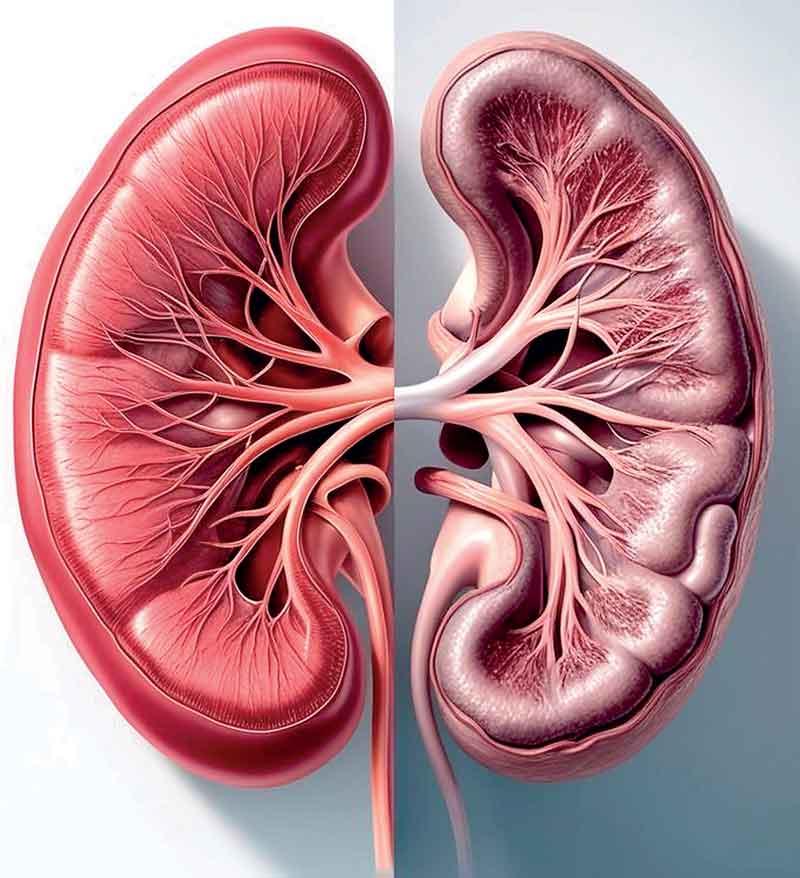
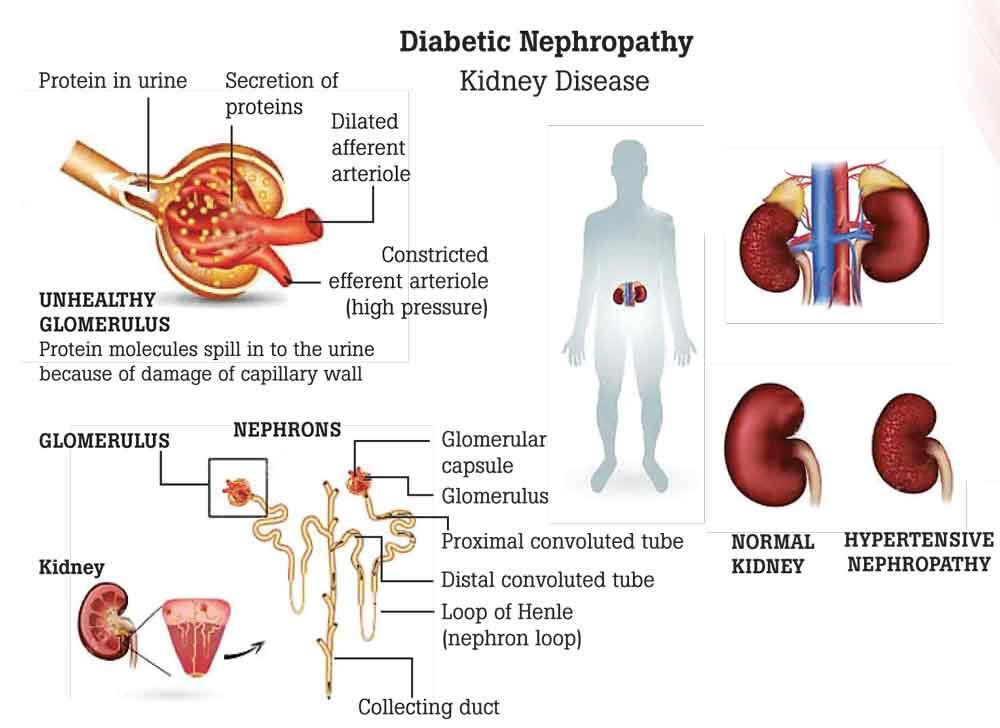
A. There are a few factors that contribute, but one of the main reasons is persistently high blood sugars which in turn damage the kidney cells (Glomeruli) which in turn start filtering more protein that is needed for the body.
Poor management of blood pressure could be another important factor in the accelerated worsening of a Diabetic Kidney.
|
|
|
|
How do we confirm a diagnosis of Diabetic Kidney disease or Diabetic Nephropathy?
A. For this we need to do an Urine Albumin Creatinine Ratio (U.ACR) and depending on the quantification of protein filtered through the kidney we classify as either Microalbuminuria (30-300mg/g) or Macroalbuminuria (>300mg/g).
This also needs to be repeated and confirmed in 3 months ideally.
Confirmation can be obtained with an Ultrasound scan of the Kidneys.
How do you categorise the severity of Diabetic Nephropathy?
A. Blood tests for Serum Creatinine and eGFR (estimated Glomerular Filtration Rate) needs to be assessed and depending on these findings your doctor will categorise into separate entities to assess risk and how to manage forward.
The most commonly used classification is the KDIGO (Kidney Disease Improving Global Outcomes) classification, where there are 5 stages of Chronic Kidney Disease with Stage 5 being End Stage Kidney Disease which requires Dialysis or Kidney Transplantation.
Will these patients have symptoms? What are the warning signs?
A. The worst part of this is that the patients would be completely asymptomatic until the final stages of the process. This is why it is paramount to always screen for kidney disease and listen to your doctor. It is recommended that patients with Diabetes and complications meet their Doctor every three monthly for frequent reviews and blood/urine assessment.
Warning signs when end stage nears are Loss of Appetite, Lethargy, Nausea and Muscle cramps to name a few.
There could also be some swelling of the legs and around the eyes. Skin may appear darker and dry.
Blood tests for Serum Creatinine and eGFR (estimated Glomerular Filtration Rate) needs to be assessed and depending on these findings your doctor will categorise into separate entities to assess risk and how to manage forward. The most commonly used classification is the KDIGO (Kidney Disease Improving Global Outcomes) classification, where there are 5 stages of Chronic Kidney Disease with Stage 5 being End Stage Kidney Disease which requires Dialysis or Kidney Transplantation
|
Dr. Rajeev Menon |
|
Dr Sachith C. Wijesiriwardena |
What are the risk factors for Diabetic Kidney Disease?
A. There are a few risk factors,
1. Old age
2. Female sex
3. Low socio-economic status
4. Obesity
5. Smoking
6. Poor control of Diabetes and Blood Pressure
What are the common barriers to managing Diabetic Kidney disease?
A. These are,
1. Lack of awareness of kidney disease in Diabetes and the fact that most patients are asymptomatic until the disease is severe.
2. Complexity of treatment and the difficulties which arise when adhering to them.
3. Low awareness and recognition of guideline-based management has also hindered the treatment process in general.
How to prevent Diabetic Nephropathy?
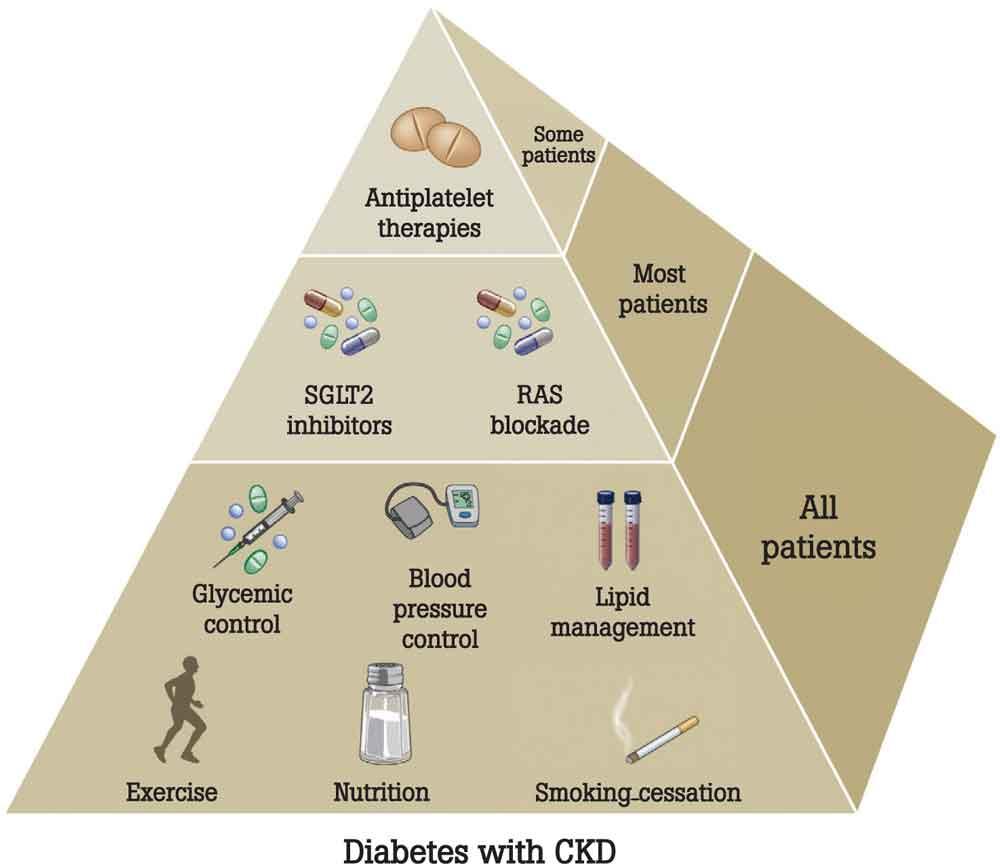
A. The simple answer to this would be to control your blood sugars. Life- style modifications are the cornerstone of treatment. Leading a healthy lifestyle by exercising, having a diabetic diet, controlling your weight and quitting smoking. These are non-negotiable and are compulsory in the management.
Above methods would help you to control your blood sugars but most patients would need to start medications to bring it back to normal if the sugar levels are very high.
The safest margins to keep is a Fasting Blood Sugar of less than 100mg/dl and a HbA1c level which is less than 7% (Ideally less than 6.5%)
Unless the patient is elderly or has frequent hypoglycemic (low sugar) attacks then these targets should be as above.
What medications help to decrease proteinuria in Diabetic Nephropathy?
A. There a few medications which help to control proteinuria in a diabetic kidney a few examples are Enalapril, Ramipril, Losartan, Telmisartan and Valsartan to name a few common ones. Most diabetic patients with proteinuria would be on one of the above drugs if there are no contraindications to start them. These need to be titrated according to S. Creatinine and the Serum Potassium levels by checking them regularly. The advice would be if you are on these medications to visit your clinic or private doctor 3 monthly.
Is Metformin safe in Diabetic Kidney disease?
A. It is completely safe in early stages of Diabetic Nephropathy and only should be stopped by the treating doctor when the kidney function is impaired to a significant degree. This is quite important in treating Diabetes and is a mainstay medication which needs to continue until the treating physician deems it necessary to stop it, according to guidelines or patient factors. Do not stop Metformin on your own as its benefits outweigh the risks most of the time in Diabetic patients. If you are having side effects like bloating, nausea or vomiting consult your doctor and then stop.
What are the newer medications which are available that help in treating Diabetic Kidney Disease?
A. SGLT2 Inhibitors (Sodium-Glucose co-transporter 2) like Empagliflozin and Dapagliflozin are relatively new drugs and are freely available in Sri Lanka now. These medications have been recommended to be started after Metformin or coinciding with it to give the best results to prevent Diabetic Kidney Disease.
GLP1 (Glucagon like peptide-1) agonists are a new class of drugs which are also available in the private sector as Injections or oral medications which have shown benefit in treating Diabetic Kidney Disease. Exenatide and Semaglutide are the known drugs in this class.
What can the Diabetic patients do by themselves to prevent them progressing to Diabetic Kidney Disease?
A. Make it a habit to visit your doctor/clinic every 3 to 6 monthly at least and review medications and investigations to keep track of disease process and progression. Do not take medications on your own or take medications from pharmacy with old prescriptions. Make sure to do timely reviews.
Eat well, Sleep well, Keep yourself active and keep your diet balanced and light.
Exercise in any way you can, some activity is better than no activity.
If smoking, then stop immediately.
Control your Blood pressure which needs to be below 130/80 (Restrict your salt)
Keep your cholesterol in check, especially your LDL and Triglycerides
Refrain from Alcohol
(ENDS)
Information about the authors:
(Dr Sachith C. Wijesiriwardena, Consultant Physician (Acting) National Institute for Nephrology, Dialysis and Transplantation Maligawatte, Colombo 10)
(Dr. Rajeev Menon, Medical Officer Anesthesia and Intensive Care National Institute for Nephrology, Dialysis and Transplantation Maligawatte, Colombo 10)
03 Jun 2026 03 Jun 2026
03 Jun 2026 03 Jun 2026
03 Jun 2026 03 Jun 2026
03 Jun 2026 03 Jun 2026
03 Jun 2026 03 Jun 2026