01 Jun 2026 - {{hitsCtrl.values.hits}}
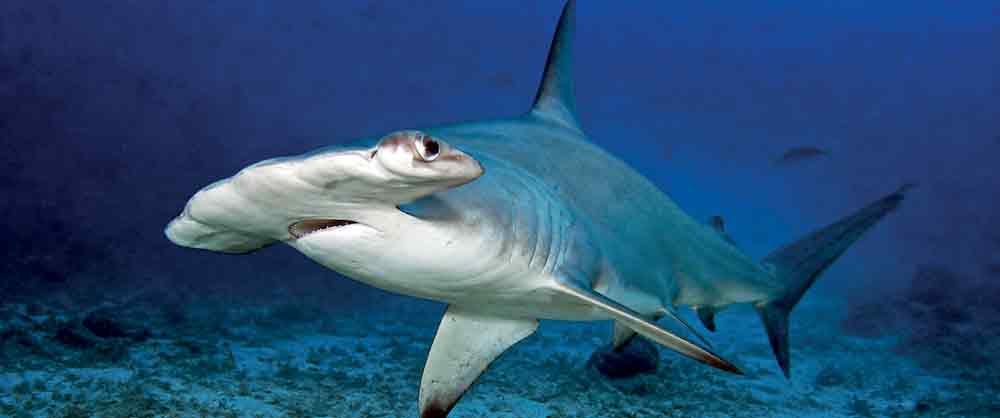 The Scalloped Hammerhead Shark has become more than a marine curiosity
 At the time of writing, the Scalloped Hammerhead is assessed as Critically Endangered on the IUCN Red List
The Scalloped Hammerhead sits inside a wider fishing system involving tuna, billfish, gillnets, longlines and other gear
When a Scalloped Hammerhead appears in a Sri Lankan landing, is Sri Lanka an important part of its life?
 The Scalloped Hammerhead’s head is famous, of course. Wide, scalloped and unmistakable, it looks as if the design brief was handed to a committee of sensor engineers, navigators and dinner-tray manufacturers. But the more important question is not why the shark looks so unusual
By Anik Jayasekara
 The Scalloped Hammerhead is not simply a strange-looking shark. It is a test of how well Sri Lanka can see what moves through its seas, fisheries, markets and public records.
At a fish harbour, morning does not wait for perfect identification.
Boats come in. Boxes move. Fish are sorted, weighed, recorded, priced and sent onward before the heat settles properly into the day. A shark, if it appears, is not always a headline. Sometimes it is just another shape among many: a fin, a body, a number, a decision made quickly before the next load arrives.
By the time seafood reaches a market, restaurant, hotel kitchen or export pathway, the story can become harder to read. A fish has a name. A product may not. A shark, once processed, does not politely carry a label explaining where it came from, how it was caught or which species it belonged to.
This is where the Scalloped Hammerhead Shark, Sphyrna lewini, becomes more than a marine curiosity.
Its head is famous, of course. Wide, scalloped and unmistakable, it looks as if the design brief was handed to a committee of sensor engineers, navigators and dinner-tray manufacturers. But the more important question is not why the shark looks so unusual.
It is whether Sri Lanka can see it clearly enough.
This is not just a story about a strange-looking shark. It is a test of visibility.
Why this situation is unusual
At the time of writing, the Scalloped Hammerhead is assessed as Critically Endangered on the IUCN Red List, with its population trend listed as decreasing. More than 80% over three generations. This does not tell us exactly what is happening in Sri Lankan waters, but it explains why every reliable record matters.
Many sharks are lost because they are caught in fishing operations, whether as target catch or as bycatch. This is the main pressure.
In Sri Lanka, this matters because the Scalloped Hammerhead sits inside a wider fishing system involving tuna, billfish, gillnets, longlines and other gear. A gillnet is a wall of netting in the water. A longline is a long line carrying many baited hooks. These are ordinary fishing methods used by ordinary people trying to make a living.
But ordinary systems can still catch extraordinary species. Any useful improvement would need to be designed with fishers and fisheries practitioners, not simply handed down to them from outside.
Where the shark becomes harder to see
The simplest version of this story would be, “A rare shark needs protection.”
That is not wrong. It is just not enough.
The public story becomes harder when the shark stops being seen as a recognisable animal and starts moving through the system as a record, a landing, a product or a broad category called “shark”.
A species can be difficult to identify once products are processed. A whole Scalloped Hammerhead is one kind of evidence. A piece of shark meat, dried fin or “karawala” is another.
Sri Lankan Customs has reported dried-fin seizures involving sharks listed under CITES, the international agreement that regulates trade in threatened wild species. It is not glamorous. It is paperwork, permits and species names. But sometimes that is exactly where conservation has to happen.
In one reported case, the seized fins included hammerhead-group material. That does not prove Scalloped Hammerheads were involved. But it shows why species-level identification matters once a shark becomes a product.
This is not bureaucracy for its own sake. Species-level recording is the difference between recognising a Critically Endangered species and losing it inside a broad category called “shark”.
That is not a failure of the story. That is the story.
The expert tension zone
The Scalloped Hammerhead does not fit neatly into one discipline. It is at once a fisheries question, a trade-control question, a science question and a livelihood question.
When a Scalloped Hammerhead appears in a Sri Lankan landing, is Sri Lanka an important part of its life, part of its fishing risk or just one visible point in a much larger Indian Ocean journey?
And how clearly do Sri Lanka’s shark-management pieces, from landing records and logbooks to product identification, trade controls and public education, connect at species level?
For a general reader, the question is simpler: how well can a country protect a species if, too often, it stops being a species and becomes only “shark”?
These questions are raised not to assign fault, but to reflect the complexity practitioners encounter when ecological systems intersect with human planning.
Why this matters beyond one shark
The Scalloped Hammerhead story opens a wider national conversation about how Sri Lanka records marine life that moves across invisible borders, and how fisheries data, market identification, export rules and public education can support one another. It also asks whether people outside marine science can ask better seafood questions without shaming those who fish, sell, cook or serve it.
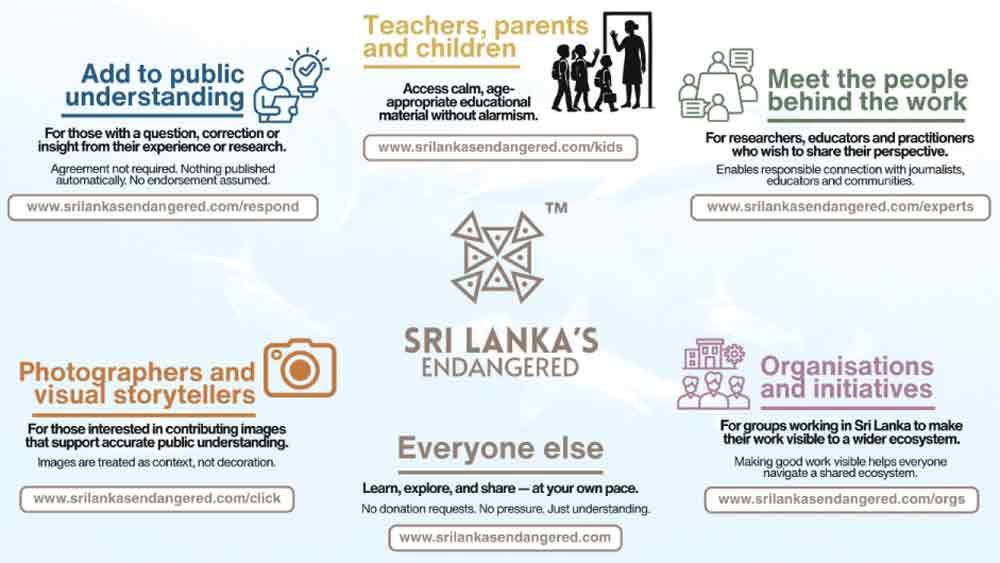
Most people will never meet a Scalloped Hammerhead in the sea. But many will meet the wider seafood system at a market, restaurant, hotel buffet, family meal or event. What we choose to eat is often connected to what was caught alongside it, how it was caught and what information was lost along the way. A calm question such as “what fish is this?” or “do you know how it was caught?” will not solve the Scalloped Hammerhead’s future. But repeated across a society, such questions can make species names, catch methods and responsible choices feel more normal in seafood conversations.
For readers who want a practical starting point, SriLankasEndangered.com/fish-buying-guides will feature the responsible seafood guide developed by the Lanka Environment Fund and Club Ceylon, including work by Mehak Sangani and technical advisory by Liz Norris.
This does not require everyone to become a marine biologist by Thursday. It simply makes invisibility a little harder.
This story is still being written
There are still important questions about how Scalloped Hammerheads use Sri Lankan waters. That incompleteness is not a weakness if handled honestly. It is a reason to invite the people who know more. Sri Lanka’s updated National Plan of Action for Sharks, Rays and Chimaeras 2025–2030 matters because it brings research, management, awareness, compliance and enforcement into the same conversation.
This article is part of a public-interest initiative, SriLankasEndangered.com, which works with scientists, educators, photographers and communities to improve public understanding of Sri Lanka’s ecosystems, one story at a time. The project publishes open, evolving features designed to invite expert input rather than close debate, and operates independently of political parties and electoral agendas.
Expert corrections, field context, trade-offs and practical insights can be shared through SriLankasEndangered.com/respond.
A quieter kind of navigation
The Scalloped Hammerhead does not move through the ocean according to our labels. It does not know where one management area ends and another begins. It does not know whether a record was filled correctly, a product was identified accurately or a species name was lost along the way.
The shark already carries its own strange instrument across the sea.
The least we can do is not let its name vanish when it enters our records, markets and stories.
(The writer is the current platform steward for www.SriLankasEndangered.com)
04 Jun 2026 2 hours ago
04 Jun 2026 3 hours ago
04 Jun 2026 3 hours ago
04 Jun 2026 4 hours ago
04 Jun 2026 4 hours ago