25 Mar 2025 - {{hitsCtrl.values.hits}}
By Prageeth Sampath Karunathilaka and Sudharika Gurusinghe
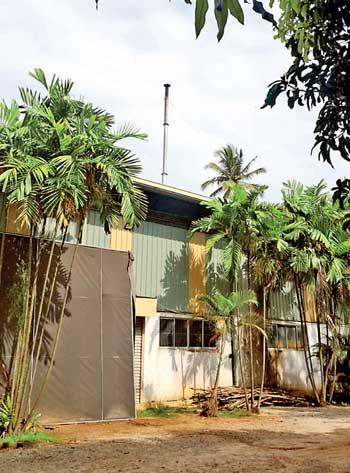 |
| The factory’s ventilation systems have now been installed at a height of over 108 feet |
In an article published in the Daily Mirror on February 27, 2025, we revealed that heavy metals from a copper and brass extracting company were being discharged into the Kelani River, the primary water source for Labugama and Kalatuwa. Following the article titled ‘Pethiyagoda Copper, Brass Factory a Threat to the Kelani River’, the factory confirmed that they are operating in an environmentally friendly manner.
This copper and brass extracting company, located in the Pethiyagoda area of Kelaniya, had begun producing copper through an electrolysis process. According to local residents, gases such as sulphur oxide, nitrogen oxide, and carbon dioxide are being released into the Kelani River, along with toxic emissions into the environment. They claimed that the company’s ventilation systems are releasing harmful gases into the open air, causing breathing difficulties for members of the community. Additionally, residents said that copper sulphate and sulphuric acid used in the electrolysis process are contaminating the groundwater, soil, and Kelani River.
However, the director of this copper factory, responding to the story carried by this newspaper, stated that there were deficiencies in the factory as of 2023, which created obstacles in obtaining a licence to operate in 2024. As a result, the Ministry of Environment and the Central Environmental Authority provided guidelines for obtaining the necessary licence. Additionally, during the COVID-19 pandemic, licences were issued for industrial operations without field inspections.
During this period, several modifications were made to the factory’s machinery. However, the Central Environmental Authority wasn’t informed about the required licence or the changes implemented. The factory director added that despite these modifications, no clause of the granted licence had been violated.
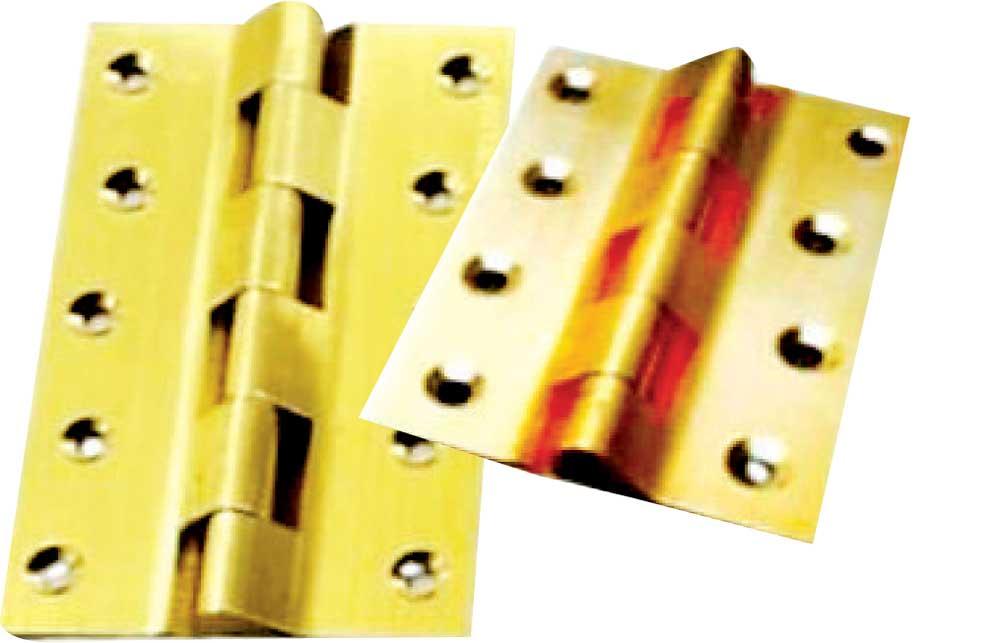
Products made of copper
Delay in obtaining licence
Another reason for the delay in obtaining the 2024 licence was the storage of over 60 tons of copper sulphate left over from the copper extracting process. During an inspection, officials observed this stockpile and inquired about its storage. They later instructed the factory to remove it. As a result, the copper sulphate was sent to Karnataka Agro Chemicals in India on three occasions: 21,600 tons on 25.03.2024, 20,800 tons on 02.05.2024, and another 20,800 tons on 09.05.2024. Additionally, 21,600 tons collected during copper extracting were shipped to the company on 13.06.2024, followed by another 20,400 tons sold to India on 17.07.2024. The factory director stated that no copper sulphate is currently stored at the facility.
Due to the storage of copper sulphate and the failure to comply with environmental regulations, the Central Environmental Authority denied the factory a licence to operate in 2024. However, as a remedy, officials from the Central Environmental Authority and the Ministry of Environment advised the factory director to submit an appeal.
Following this, an appeal was filed in March 2024 to obtain the licence again. In May 2024, a committee, led by the Secretary to the Ministry of Environment, was appointed to review the appeal. As part of this process, a collective field investigation was conducted.
According to the factory director, a group of people, including certain government officials, attempted to halt the joint investigation and prevent the field inspection at the factory. Their aim was to delay the issuance of the necessary operating licence. However, the director stated that they were working to establish the legal framework required for the factory’s operation. In doing so, they faced opposition from some individuals who argued that Sri Lanka did not need Indian investments.
Indian company director warns to file complaint
The factory director has stated that some government officials and individuals actively opposed the renewal of their licence. However, officials who carefully reviewed the situation provided guidance to resolve the issues. Based on these instructions, all necessary changes were implemented, ensuring that the factory no longer causes an environmental risk. By the end of 2023, all modifications had been completed according to the directives of the Central Environmental Authority, allowing the factory to operate in an environmentally friendly manner. Despite this, certain government officials continue to pressure the factory to cease its copper extraction process, insisting that an Indian company cannot be permitted to run the facility. The director added that if these obstacles persist, he would file a complaint with the Indian High Commissioner.
The factory’s ventilation systems have now been installed at a height of over 108 feet. Additionally, a mandatory test must be conducted every six months through the NERD Centre, with a report obtained on the gases released into the atmosphere. The company’s director stated that a certificate has also been issued confirming that emissions do not contaminate the Kelani River or groundwater. The maximum allowable level of SO₂ is 800 mg/Nm³, but the factory emits only 52 mg. For NOx, the limit is 500 mg/Nm³, while the factory emits 61 mg. The permitted level of particulate matter is 150 mg, whereas the factory emits just 19 mg. Moreover, while the required gas emission level is 20%, the factory emits only 3%. Based on the NERD Centre’s report issued on June 24, 2024, no environmental damage has been noted as a result of the factory’s operations, according to its director.
The Central Environmental Authority granted a temporary monthly licence to operate the factory from October 14, 2024, to November 1, 2024. This was based on a decision made following a collective field inspection conducted after the appeal. The Authority then approved an annual licence from November 2, 2024, to November 1, 2025, to continue operating the factory. The director further stated that his company holds all the necessary permits and licences to operate the business.
This company, a major copper producer, supplies its products to many leading companies in Sri Lanka, eliminating the need for copper imports, according to the director. He further stated that the factory’s operations have made it harder for those seeking to collect and export copper to find sufficient supply, resulting in strong opposition from such groups. The factory collects and processes copper from across Sri Lanka, contributing significantly to the national economy. So far, an investment of approximately 50–60 million rupees has been made in the facility. The director questioned why such a substantial investment is being threatened. He also stated that while working to obtain licences to operate the factory in an environmentally friendly manner, certain government officials and groups have been influencing the process and causing delays. Additionally, he pointed out that these groups continuously interfere even in the issuance of licences and certificates that can be easily obtained.
The factory owners in the country used to export large amounts of copper daily. However, the director added that their factory focuses on collecting discarded copper to produce new copper, which has allowed them to supply many copper-related industries in Sri Lanka.
The director further explained that reports have confirmed the factory does not harm any water sources supplying drinking water from the Kelani River. He added that the factory is more than 15 kilometres away from these water sources. Given the distance between the factory and the Kelani River, the director believes that no waste is added to the river, and no waste is discharged into it. Additionally, the factory is surrounded by wells, and the water from these wells, which is consumed by local residents, is regularly tested and certified as safe for consumption. There is a conspiracy to close the factory due to anti-Indian sentiment. If these pressures continue, the factory, which has been operating for 16 years, may have to be shut down and relocated to India, the director affirmed.
After the above mentioned news article was published two weeks ago, state and environmental institutions have re-examined the operation of the factory. While investigations are still continuing, maintenance work is being carried out at the factory under the guidance of the Central Environmental Authority and the Industrial Development Authority. Investigations carried out by this newspaper revealed that this maintenance work is being done using modern technology, ensuring that it does not harm the environment. A new technical method has also been implemented, enabling copper sulphate to be reused without being released as waste into the environment.
The factory director pointed out that there is strong opposition to Indian companies running this type of business. He also highlighted reports suggesting that certain individuals and government officials are involved in conspiratorial activities. It is the responsibility of both state and semi-state institutions to investigate these matters and create a suitable environment to ensure the factory’s continued operation.
Conclusion- In our initial article, this newspaper reported the allegations made by local residents claiming that the factory was causing environmental damage. In this article, we have largely presented the factory’s response, which addresses issues regarding the impacts on its operations to the environment and also being targeted due to its status as an Indian company. In its response, the Indian company asserts that it is fully compliant with environmental laws of Sri Lanka. This newspaper therefore emphasises that it is the responsibility of the relevant institutions to investigate the matter and deliver justice.
This newspaper contacted the Secretary of the Ministry of Environment, K. P. Uduwawala, to inquire further about this issue. However, an official informed us that he was at a meeting. The official also mentioned that the Secretary was unaware of the factory or any potential damage being caused to the Kelani River. According to the official, the Secretary had not been informed by the Ministry’s media division or about the information published in the newspapers.
Director General of the Central Environmental Authority, Padmasiri Moonamale, provided the following response regarding the actions taken by the Central Environmental Authority after the publication of the article.
“We have neither heard of anyone attempting to force the company (which is an Indian company) to leave Sri Lanka, nor is there any external influence. If such an attempt was made, we would not allow that. Currently, a formal investigation is being conducted by the Central Environmental Authority’s investigation division regarding the relevant factory. Plans are underway to make a decision based on the allegations made against the company and the results of the ongoing investigation,” said Moonamale.
03 Jun 2026 03 Jun 2026
03 Jun 2026 03 Jun 2026
03 Jun 2026 03 Jun 2026
03 Jun 2026 03 Jun 2026
03 Jun 2026 03 Jun 2026