10 Nov 2025 - {{hitsCtrl.values.hits}}
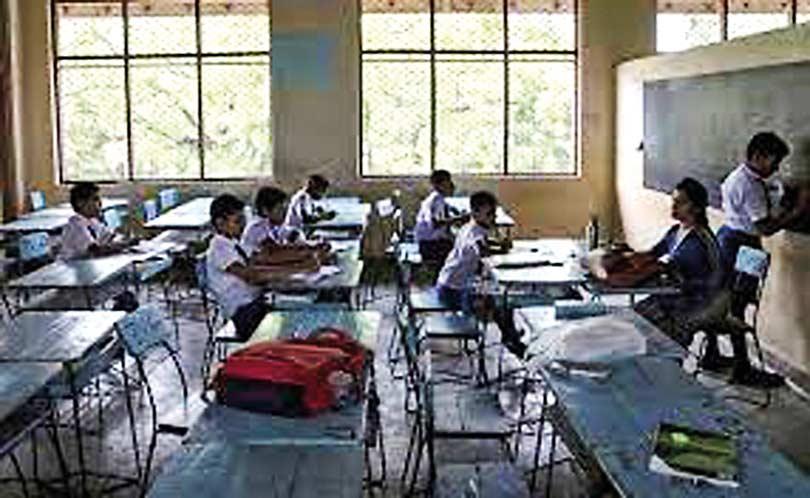
Classrooms would be radically transformed if proposed reforms are carried out (NDTV)
 Education trade unions nationwide have joined forces against the reforms. The only unions not opposing the changes are those linked to a particular political party, ironically, the very organisations with decades-long records of blocking educational progress. The ministry’s promises have not calmed the situation. Union leaders refuse to back down. “If the government keeps ignoring our concerns,” one union leader warned, “we will bring together every teacher and principal across the country for a complete nationwide strike.”
Strangely, the unions oppose changes that would help every child succeed. The new system removes the fear of failure and gives all students ways to reach higher education. This creates a relaxed learning environment where young people can follow their interests and get proper career advice.
The government will overhaul Sri Lanka’s old education system with a revolutionary dual-pathway approach. From secondary school onwards, every student can choose between academic studies or hands-on skills training. Prime Minister and Education Minister Dr. Harini Amarasuriya has made clear that no schools will close. She outlined these reforms, which tackle the nation’s critical skills gap and align education with real job market demands.
However, schools with fewer than 50 students show worrying problems. These schools have become comfortable positions for some principals and teachers. Daily attendance drops to just 20-30 students. During harvest time, classrooms are completely empty. Most troubling, investigations show that staff at some small schools have been involved in illegal business activities, including drug dealing: a school principal is already in custody.
Reform Goals
The reforms aim for several connected goals: making lessons more useful and up-to-date; helping students learn better; and getting more young people into science and technology. The plan includes teaching about sustainable development and good citizenship while making sure everyone has equal access. Strengthening school-community connections and developing entrepreneurial mindsets are also central elements. Changes will happen step by step, with input from experts, teachers, parents, and communities. Sri Lanka’s goal is simple: combine our cultural values with modern teaching methods, preparing students who can compete globally while staying true to their heritage and national unity.
What is childhood for if not learning to be good citizens—learning tolerance, strength, care for others, and compassion? Brain science shows that children’s brains develop most from birth to age five or six, when they build the skills needed for communication. Understanding this, many European countries focus on teaching multiple languages during these early years. Denmark and the Netherlands teach four to five languages, creating people with strong language skills.
Exams and Assessment:
Older students learn mainly through projects and assignments, with competitive exams only for O-Levels and A-Levels. This change focuses on real understanding rather than memorisation. Students will have many routes to higher education, not just exam results. This opens doors for those who struggle with traditional tests but do well in other ways.
European and US schools run from 8:30 AM to 2.00 or 3:30 PM, with a one-hour lunch break for students. Teachers work until 5.00 to 5:30 PM, like other government workers. Some stay to run after-school clubs for children whose parents are working, while others handle preparation, marking, and other tasks. But here’s the critical distinction: they are properly compensated. Meanwhile, the Dissanayake government’s second budget conspicuously failed to address teacher salaries.
Breaking with the past, the government is bringing in private companies to help with education. The plan includes company-run skills training, industry-guided job training programmes, and technology companies sharing their knowledge. This approach copies successful models from other countries where business needs shape what students learn, making sure graduates have skills employers actually want. The plan will also use Sri Lanka’s large community of professionals living abroad and former students worldwide, turning an unused resource into a source of expertise, guidance, and funding.
Teaching history is the biggest challenge. History can free minds by teaching critical thinking, or trap them with divisive stories that serve politics, not education. Look at America, where history is required in schools, they teach their 250-year story with all its complexities and contradictions, proving that countries grow stronger when they face their complete history honestly.
Our classrooms have taught stories that, while exciting, have created division across generations. They promote ideas of ethnic superiority, keep alive old hatreds, and create an “us versus them” thinking that doesn’t fit the inclusive country we need to build together.No baby is born with labels like Buddhist or Hindu, rich or poor, children are born as natural creators with open minds. Our job is to protect this gift, not destroy it through social pressure.
Sadly, this natural wealth often gets crushed. Not from lack of chances, but from harmful ideas that society teaches young minds. From early on, many children learn to see the world not with wonder, but through narrow boxes, their ethnic group, their religion, their caste, their family’s money. These learned divisions don’t just split communities; they kill imagination and silence creative voices.
Science confirms what fair societies recognise: every child is born with the same creative potential. This isn’t just an idea, it’s a fact about how brains work. All human brains, regardless of race, religion, or economic status, have equal ability to imagine, invent, and create. The genius we see in great artists and inventors lives in every young person, needing only the right environment to grow.
Religious teaching, meant to provide moral guidance, often stops critical thinking by making other traditions seem wrong or inferior. Instead of encouraging children to explore the big questions all humans share, about meaning, purpose, and how to live well—rigid religious instruction creates walls between different spiritual paths. Children learn to dismiss wisdom from other traditions simply because it comes from a different source, closing their minds to the rich variety of human spiritual experience.
Conclusion:
The Prime Minister must move carefully. A powerful private tuition business, protected by important ruling party members, is ready to fight back. Just months ago, when she took action against a serious offender, a deputy minister intervened and she had to back down—the offenders won. This time, she cannot give up.
This is not just about policy; it is a moral duty. Every time we put prejudice into a child’s mind, we damage their creative ability. We destroy future inventions, leave problems unsolved, and erase beauty the world will never see.
Each silenced imagination is a loss not just to that person, but to all humanity.Children are not born divided. They are not Sinhala or Tamil, Buddhist or Hindu, rich or poor. They are born simply as creators, unlimited, curious, and full of potential. Our job is not to put them into categories, but to protect the creative inheritance they all share.Now is the time to act. Each day of delay loses a generation’s potential to the poisons of past divisions. Honoring our children means honoring their right to be fully creative, freely expressive, and completely human.
Though vested interests mobilise against change, Prime Minister Amarasuriya must stay the course. Our children’s creative potential and Sri Lanka’s future hang in balance.
19 Jun 2026 7 minute ago
19 Jun 2026 3 hours ago
19 Jun 2026 5 hours ago
18 Jun 2026 9 hours ago
18 Jun 2026 18 Jun 2026