08 Dec 2025 - {{hitsCtrl.values.hits}}
The recent floods have made one fact painfully clear: true recovery cannot be measured solely in rebuilt bridges or cleared roads. It must also be reflected in the wellbeing of older adults — their mobility, their mental stability, and their dignity
 For Sri Lanka’s elderly medical instability, emotional strain, and loss of independence are issues that must be considered seriously
Older persons face a unique set of challenges during disasters, and many of them are rooted in the biology of ageing
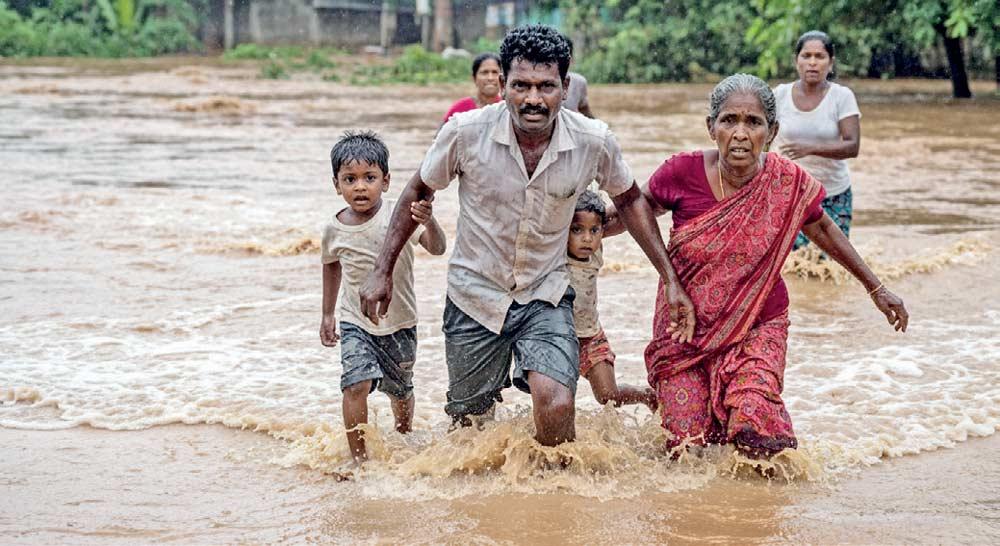
 When Cyclone Ditwah swept across Sri Lanka in late November 2025, the force of nature felt almost unreal. Hundreds of people died, thousands remain unaccounted for, and more than 147,000 were pushed from the places they once called home. Beneath this stark physical destruction, another emergency has unfolded more quietly, and it may take much longer to heal- the toll on older adults.
To Sri Lanka’s elderly, the immediate danger of floods and landslides is just the first blow. Medical instability, emotional strain, and loss of independence follow in its wake. This is the slower crisis that can continue long after the waters have gone. As climate-driven disasters become more frequent, it is no longer optional to understand these risks. It is central to protecting a growing and vulnerable segment of our population.
Layers of vulnerability
Older persons face a unique set of challenges during disasters, and many of them are rooted in the biology of ageing. Reduced balance, weaker bones, and limited mobility mean that when evacuation orders are issued, some people simply cannot move fast enough. In one tragic example, eleven residents of a long-term care home in Pannala died because the rising waters encircled the building before rescue teams could reach them. A sad example of disability taking over lives.
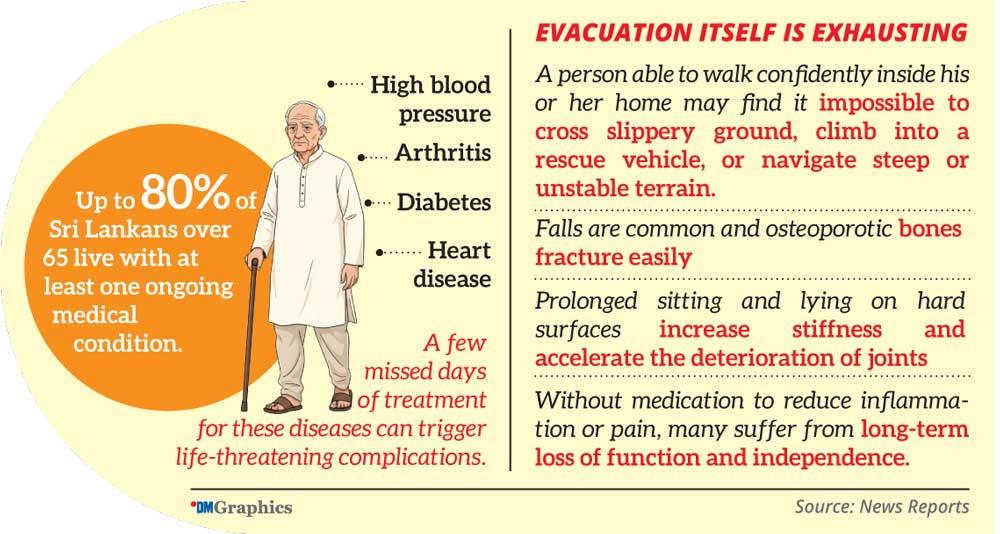
Chronic illness magnifies this fragility. Up to 80% of Sri Lankans over 65 live with at least one ongoing medical condition; among the most common are high blood pressure, arthritis, diabetes, and heart disease. Disasters disrupt everything that keeps these conditions stable: medications, follow-up, even access to medical records. A few missed days of treatment for these diseases can trigger life-threatening complications.
And for those who survive the initial crisis, displacement takes many of them to crowded temporary shelters, with limited sanitation, poor nutrition, and little privacy. For people with suppressed immunity or chronic disease, such living conditions become steady sources of medical and psychological risk.
Arthritis and Mobility
In Sri Lankans, musculoskeletal disorders, mainly osteoarthritis, top the causes of disability. Symptoms of stiffness and pain are managed on an ordinary day through routine habits, appropriate medication, and access to mobility supports. Disasters disrupt all of that.
Evacuation itself is exhausting. A person able to walk confidently inside his or her home may find it unthinkable to cross a slippery ground, climb into a rescue vehicle, or navigate steep or unstable terrain. Falls are common and osteoporotic bones fracture easily. Others simply stay where they are, trapped because every step is painful.
In shelters, prolonged sitting and lying on hard surfaces increase stiffness and accelerate the deterioration of joints. Without medication to reduce inflammation or pain, many suffer from long-term loss of function and independence.
Infectious disease
Where the torrents have passed, infection awaits. Floodwaters pollute wells and sanitation systems, creating ideal conditions for gut infections, and leptospirosis to take hold. The latter-most of these, which is spread through floodwater contaminated with rodent urine, is particularly dangerous; in older adults with limited kidney or liver reserve, leptospirosis can rapidly culminate in multi-organ failure.
Very heavy rainfalls also fuel outbreaks of dengue, especially in disease prone districts like Gampaha. Stagnant water becomes a mosquito breeding haven, while transmission is facilitated in crowded shelters. Elderly persons with pre-existing heart or kidney disease are at higher risk of dying from severe infection.
Other common infections include respiratory and skin infections. Poor ventilation, coupled with damp environments, easily leads to lung infections, whereas dermatological infections result from poor hygiene. Any one of these conditions is more complicated to treat in the elderly, and delays in treatment often prove fatal.
When multiple
conditions collide
Disasters transform this intersecting combination of ageing, disability, and chronic illness into a complex medical emergency. Consider one typical scenario: an elderly woman with arthritis, high blood pressure, and heart disease loses her medications when her home is flooded. Pain and stiffness preclude her from getting to sanitation facilities. She becomes infected with a waterborne infection, dehydrated, and deteriorates rapidly. Such stories are distressingly common in an overcrowded shelter with limited monitoring -and often avoidable.
Psychological and emotional strain
The psychological impact of disasters on elderly people seldom gets front-page attention, yet it can be deepest and most profound. Most elderly survivors have spent their whole lives in the same house; the destruction of a home symbolises nothing less than lost memory, identity, and belonging. Anxiety, depression, and post-traumatic stress were high among members of this age group, as studies conducted after previous flooding and tsunami events in Sri Lanka showed.
Displacement fractures family support networks. In relief centres, silence, isolation, and unfamiliarity can leave seniors unable to express their needs. For people who have spent a lifetime caring for others, depending on strangers for basic help can be profoundly unsettling. This emotional fragility influences physical health, too: poor sleep, reduced appetite, and impaired immunity become part of a cycle that makes recovery harder.
The Road to Recovery: Often Long and Incomplete
Even when disaster waters recede, older survivors face a steep climb back to health. Pharmacies and clinics could be damaged for months, while hospitals have to cope with power cuts, staffing, and equipment losses for extended periods. Rehabilitation services, which are needed to help patients regain physical mobility after fractures or prolonged periods of immobility, are scarce.
For many older adults, this means incomplete recovery, permanent disability, or progressive frailty. Financial strain adds yet another layer. Pension payments may be delayed. Families lose income. The result is predictable: reduced food intake, skipped medical reviews, and worsening nutritional and metabolic health.
Preparing for the Future
If Sri Lanka is to protect its ageing population, disaster plans must recognize and respond to specific needs of older adults. Some key steps include:
Conclusion
The recent floods have made one fact painfully clear: true recovery cannot be measured solely in rebuilt bridges or cleared roads. It must also be reflected in the wellbeing of older adults — their mobility, their mental stability, and their dignity.
Unless disaster planning deliberately accounts for age-related vulnerability, the same tragedies will repeat, each time leaving those least able to endure at the greatest risk. With better coordination across the health sector, age-sensitive relief infrastructure, and a commitment to long-term follow-up, Sri Lanka can make sure that its elders do not bear the heaviest burden of climate-driven disasters.
Natural disasters are inevitable. Turning them into lifelong health tragedies does not have to be.
(The writer has an MBBS(Col) MD FRCP(Edin) Fellow of American College of Rheumatology and a consultant in Joint Disease)
19 Jun 2026 18 minute ago
19 Jun 2026 39 minute ago
19 Jun 2026 50 minute ago
19 Jun 2026 55 minute ago
19 Jun 2026 58 minute ago