18 Feb 2025 - {{hitsCtrl.values.hits}}
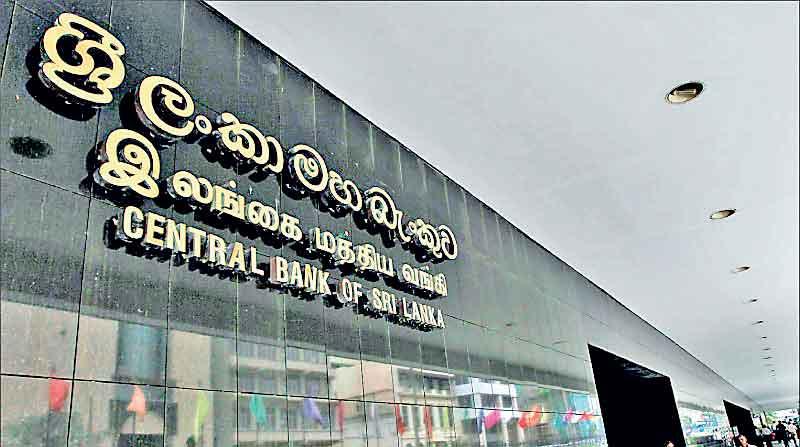
One of the most perplexing aspects of the scandal was the Central Bank’s decision to accept bids amounting to nearly ten times the originally announced figure
 A national betrayal was orchestrated in 2015/16 under the guise of good governance, executed by the Yahapalana administration led by Maithripala Sirisena’s SLFP and Ranil Wickremesinghe’s UNP—with its present-day offshoot, the SJB, also bearing responsibility. This was not merely an act of financial misconduct but a deliberate and systematic scheme that inflicted long-term damage on the country’s economy. The fraudulent bond transactions, carried out under their watch, exposed the hollowness of their governance promises, as those entrusted with public funds facilitated an unprecedented act of economic exploitation. The repercussions of this grand-scale financial deception continue to haunt the nation, underscoring the urgent need for accountability and vigilance against such betrayals in the future.
The month of February serves as a stark reminder of the so-called ‘professionals’—well-dressed and seemingly respectable—who meticulously orchestrated and executed a massive fraud, ensuring its success through calculated deceit. It also highlights the extraordinary efforts to suppress the truth, mislead the public, and shield those responsible, ultimately paving the way for a recurrence just a year later. Commemorating February 27 is not merely about recalling a financial crime but about recognizing its lasting impact on the country’s economic stability and the erosion of public trust in its institutions.
The corporate sector workers contributed 8% of their salary to Big Bank’s EPF for long years, trusting they would retire with his savings, an added 12% from the employer, and accrued interest. However, in early 2015, their confidence was shattered by shocking revelations. The once-trusted system appeared compromised by dubious dealings. Further reports—though unconfirmed—suggested collusion at the highest levels.
A particularly alarming detail was the Yahapalana ruling party’s chairman—an outsider to State’s monetary matters, gaining access to a secret meeting at the Central Bank’s Singaporean governor’s office just a day before the infamous “Black Day.” Present at the meeting were Finance Minister, Highways Minister Kabir Hashim, and the Treasury Secretary. There, they reportedly agreed on the government’s urgent need to raise Rs. 15 billion—triggering far-reaching consequences.
The presence of an unqualified outsider in such a high-level discussion was not only unprecedented but also deeply troubling. It defied all conventional norms of financial governance and best practices, leaving seasoned professionals in fiscal authorities across the globe utterly bewildered. The magnitude of this anomaly became even more apparent in the following weeks as statements made in Parliament by the then Prime Minister and other key figures only deepened the confusion. Some sought to downplay the incident, others attempted to shift the blame, while certain individuals even went so far as to write books and compile ‘footnotes’ that conveniently absolved the primary architects of this unfolding drama.
As more details emerged, the scandal took on an almost theatrical quality, with the real-life implications being anything but entertaining. For those who had entrusted their lifelong savings to the system in good faith, it was not just a breach of trust but a direct assault on their financial well-being. The aftershocks of this betrayal continue to be felt, serving as a grim reminder of the fragility of institutional integrity in the face of political and economic manipulation.
The repercussions of this financial debacle rippled through the entire economy, triggering a series of adverse effects that pushed the country into a downward spiral. The rupee depreciated significantly, eroding the purchasing power of ordinary citizens and making imports more expensive. Inflation surged past the single-digit threshold, placing an unbearable strain on household budgets as the cost of essential goods and services skyrocketed.
Perpetual Treasuries Ltd (PTL), the primary dealer headed by the governor’s son-in-law, secured a Rs.13 billion loan from the Bank of Ceylon within minutes, enabling it to bid for more than half the total value of bonds sold. Adding to the controversy, the day before the second major scam on March 29, 2016, then-Finance Minister—according to forensic audit reports—summoned the Chairmen of Bank of Ceylon, People’s Bank, and National Savings Bank for an urgent meeting. At this meeting, he allegedly advised them to bid at low yield rates at the next day’s auction, assuring them that the Central Bank would reject higher-yield bids, further deepening the suspicions surrounding the scandal.
Simultaneously, public debt ballooned to alarming levels, forcing policymakers to adopt stringent monetary measures in an attempt to restore stability. Interest rates had to be raised, further tightening liquidity and stifling investment. With borrowing costs rising and economic uncertainty prevailing, businesses struggled to expand, leading to sluggish growth and a sharp decline in investor confidence.
Allegations of insider dealings have cast a long shadow over the entire episode, fuelling suspicions that the process was manipulated for the benefit of a select few. The government’s slow and seemingly indifferent approach to addressing these concerns has only intensified doubts regarding its commitment to transparency and accountability. One of the most perplexing aspects of the scandal was the Central Bank’s decision to accept bids amounting to nearly ten times the originally announced figure. Primary Dealers (PDs), who participated in the auction, had been informed that bonds worth Rs.1 billion would be on offer, yet the CB inexplicably accepted Rs.10 billion more than this amount, raising suspicions of irregularities in the process.
As a result, the nation’s GDP index plunged below 3%, signalling a severe economic slowdown. The once-promising trajectory of progress was abruptly reversed, pushing the country back by decades. The hard-won economic stability of previous years crumbled under the weight of mismanagement, corruption, and policy failures, leaving future generations to bear the burden of these reckless financial decisions. The specific intricacies of this controversy are too vast and complex to be adequately addressed within the limited space of a newspaper article. However, several glaring questions continue to baffle financial experts and the public alike.
Equally puzzling was the necessity—or lack thereof—of issuing 30-year bonds instead of shorter-term securities. Given the prevailing economic conditions, many experts argue that a shorter maturity period would have been more prudent. The rationale behind this move remains unclear, adding to the growing list of unanswered questions surrounding the transaction.
Further deepening the controversy, it later emerged that an advertisement published on February 25, 2015, invited bids for bonds valued at Rs.1 billion. However, an internal request from the Treasury to the Public Debt Department of the Central Bank—dated just two days earlier, on February 23—had in fact sought funding of Rs.13 billion. This stark discrepancy suggests that critical decisions may have been made behind closed doors, without adequate disclosure to market participants.
These inconsistencies, coupled with the broader economic fallout that followed, have made it evident that this was no ordinary bond auction. The implications of these decisions have had far-reaching consequences, shaking public confidence in the country’s financial institutions and raising serious concerns about governance at the highest levels. [To be continued…]
Next- Cover-Ups, and Lasting Consequences
The writer can be contacted at [email protected]
03 Jun 2026 03 Jun 2026
03 Jun 2026 03 Jun 2026
03 Jun 2026 03 Jun 2026
03 Jun 2026 03 Jun 2026
03 Jun 2026 03 Jun 2026