22 Oct 2025 - {{hitsCtrl.values.hits}}
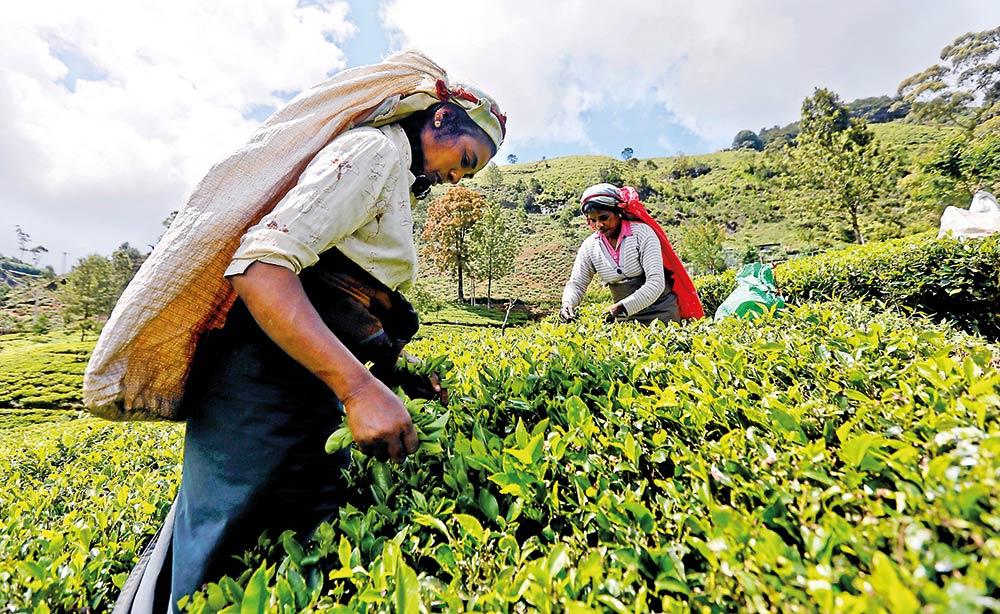
Tea estate workers: a community whose economic struggles persist despite contributing significantly to Sri Lanka’s export earnings
 Estate workers have lived ‘one day at a time’ for over 200 years, thinking long-term for them means simply getting through the month
Estate management has weaponised identity itself, keeping workers controllable by denying them proper documentation and social standingEstate management has weaponised identity itself, keeping workers controllable by denying them proper documentation and social standing
The plantation sector contributes US$2.62 billion annually to the national economy, yet its workers remain among society’s most vulnerable

When you earn a daily wage you simply plan your life around the concept ‘one day at a time’. Thinking long-term for them would mean getting through the 30 days of the month. That’s how the plantation sector workers in Sri Lanka have lived their lives. And they have lived their lives in this manner for over 200 years. What they have done is not impossible, but unthinkable.
Just the other day, President Anura Kumara Dissanayake, at an event in Bandarawela, promised the estate sector workers that they would get a daily wage of Rs 1750 before the year ends. Now that’s a bold statement because the tea estate management claims that wages like the ones proposed would tax the coffers of the tea business. In other words, a wage hike right now would cripple the industry.
Remember that President Dissanayake isn’t alone in the mission of raising the economic and social standard of estate workers. He has the support of the Indian Government. The Government of India has pledged its support to build 10,000 houses in the estate sector where the workers are mostly from the Malayagam community. The Malayagam Community has its roots in South India.
Each home will receive Indian Government funding worth 2.8 million, and the state’s contribution for infrastructure facilities will be Rs 400,000. When the president was in Bandarawela, he handed over deeds to 2000 beneficiaries.
It’s good that the present government wishes to show some respect to Tamil estate workers and solve their housing problem. But the government must understand that the estate management wishes to keep the worker under its tight grip. It’s easy to control estate Tamil labourers when they don’t have a proper identity (also consider the fact that their NIC doesn’t give a proper home address). “Who are you and what right do you have to complain?” is the manthra that the estate management has been chanting with much success.
A clan of workers with roots in India have worked here under appalling conditions. These Indian Tamils aren’t troublemakers. They haven’t asked for a separate state. They want a decent wage and proper housing with sanitary facilities. These workers have endured the weight of the boots of estate superintendents on their shoulders for far too long. And now they see a new “thalaivar” –the name given by Tamils to their leader- in the form of President Dissanayake, who is working for their cause.
The president told them in Bandarawela that the estate sector Tamils should be happy that their neighbours and relatives were elected to parliament from the last General Elections. The president doesn’t wish to see a divide in society. But the sad truth is that Tamils are divided. If it’s not caste, the dividing is done by those who are ambitious to trample those who are not. History has shown that the ambitious have often betrayed the community. This they have done by joining the side that represents the higher echelons of society. For the latter, President Dissanayake can be a thorn in the flesh.
Another stumbling block in raising the social status of estate Tamils is the absence of proper education. My late father, who was a tea planter, related some fascinating stories within the estate community. Once an estate worker had broken into his bungalow, opened the safe that contained cash and taken a lot of money. He had had a field day shopping in town. The last item that he purchased was a sack of rice. Bringing the sack of rice in the bus that passed the estate, he got down near the road that led to the line-rooms.
After disembarking from the bus, he had given a labourer Rs 100 and told him to take the sack to his line-room. Now that was strange because Rs 100 was quite a lot of money during that time. The incident took place in 1990. Another labourer who was witness to this incident sneaked the news to my dad. The estate worker who was dishonest was caught red-handed. He paid the penalty for being so foolish and leaving a telltale sign.
In another incident, an estate worker who had received his provident fund on a Monday had started spending lavishly. He had partied for three consecutive days with friends. After the party period was over, he had settled the outstanding amount he had to his name in the estate grocery. He was back at work and had bought groceries on credit the next evening. This is why many estate owners and superintendents of estates maintain that these estate workers can never be refined. Also, these estate workers don’t cultivate the urge to make money. Just consider members of the Vedda (Aborigines) community posing for pictures on one condition that either visitors to the jungle buy their items put on sale or pay them a fee for posing for pictures. But do we see the estate tea pluckers posing for photographs taken for commercial purposes, demanding remuneration?
Despite all those truths and facts, the government has a duty to ensure the economic and social rights of the plantation community. This government will try to raise the living conditions of everyone, and the estate community won’t be left out. In this context, it’s important to note that Plantations and Community Infrastructure Minister Samantha Vidyaratne has said that when referring to the estate worker, those employed in the tea and rubber industries must both be taken into account. He has said that these two sectors contribute US$2.62 billion annually to the national economy.
Members of the estate sector must understand that they are part of an equation where the Central Government of India has to keep the Tamil Nadu Government happy. Sri Lankan estate workers might not have the education to see that far because most of them are illiterate. The problem with them might be even worse. Even when all the governments are making them think of fighting for a decent daily wage, their needs are, in a hypothetical sense, cut and packed into a neat envelope that bears the writing “this is all what you get”.
04 Jun 2026 6 hours ago
04 Jun 2026 6 hours ago
04 Jun 2026 7 hours ago
04 Jun 2026 7 hours ago
04 Jun 2026 7 hours ago