21 Apr 2025 - {{hitsCtrl.values.hits}}
 One of the primary sources of frustration lies in the perceived lack of transparency and the selective disclosure of information
A critical aspect of the delayed justice to a great extent pertains to the alleged negligence and dereliction of duty by state officials
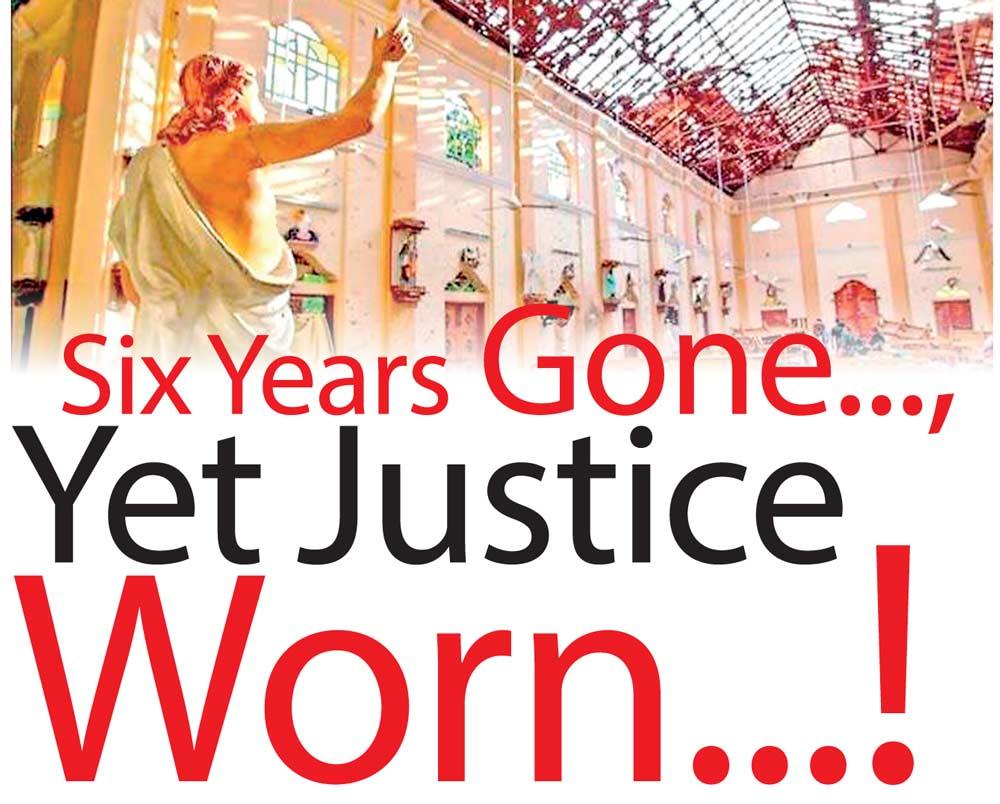
Six years have elapsed since the horrific Easter Sunday carnage on April 21, 2019, that ripped through churches and luxury hotels in Sri Lanka, leaving a trail of devastation and loss. The echoes of the explosions still reverberate through the nation, not just in the collective memory of the nearly 270 lives lost and hundreds more injured, but in the agonizingly slow pace towards justice for the victims and their families. The principle of “justice delayed is justice denied” has become a haunting reality for those who continue to grapple with the aftermath of this national tragedy, as the full truth remains elusive and uncompromised accountability seems out of reach until now!
The immediate aftermath of the attack saw a nation in shock and mourning. Promises of swift and thorough investigations were made at the highest levels. Yet, as the years have rolled by, these promises have largely remained unfulfilled, breeding frustration, suspicion, and a deep sense of disappointment among the Catholic Church, the affected, and the wider public at large. The investigations that have been conducted, the reports that have been compiled, and the path of the ongoing legal proceedings have raised certain concerns due to seeming inconsistencies, alongside challenges in identifying and prosecuting all individuals involved, not excluding those suspected of orchestrating the tragic and devastating event.
One of the primary sources of frustration lies in the perceived lack of transparency and the selective disclosure of information. Presidential Commissions of Inquiry (PCoI) were appointed, tasked with unearthing the truth and recommending action. While these commissions produced voluminous reports with numerous findings and recommendations, the implementation of these recommendations has been sluggish and incomplete. Crucially, key sections of these reports have allegedly been withheld or redacted, fueling speculation about hidden agendas and the protection of individuals with potential culpability. The families of the victims and religious leaders, most notably His Eminence Malcolm Ranjith, the Cardinal-Archbishop of Colombo, have repeatedly called for the full disclosure of these reports and the unhindered prosecution of all those implicated, regardless of their position or influence.
The legal proceedings against those arrested in connection with the attack have also been fraught with delays and complexities. While a number of individuals have been indicted, the pace of the trials has been glacial, leaving the victims and their families in a ‘state of perpetual limbo’ until now. Also, it seems that mishandling of certain pieces of evidence and recurrent delays in the procedure have further eroded public confidence in the status quo.
Beyond the individuals directly involved in the planning and execution of the attack, a critical aspect of the delayed justice to a great extent pertains to the alleged negligence and dereliction of duty by state officials. The PCoI reports highlighted significant intelligence failures and communication breakdowns within the security apparatus prior to the attack. There had been credible warnings of an impending threat, yet these warnings were seemingly ignored or not acted upon with due urgency they demanded. Identifying and holding accountable all those within the state system who failed to prevent the attack, despite having prior knowledge, is a crucial element of achieving true justice. However, progress in this area has been conspicuously slow, raising reasonable concerns about a lack of political will to confront potential systemic failures.
The persistent delays and the perceived obstruction of justice have had a profound impact on the victims and their families. The trauma of the attack is compounded by the ongoing struggle for answers and accountability. The emotional and psychological wounds remain open, hindering the healing process. The lack of closure prevents them from moving forward with their lives, trapped in a cycle of grief and unanswered questions. The financial and social hardships faced by many victims and their families have also been exacerbated by the protracted legal battles and the absence of substantial support mechanisms, adding insult to injury.
Furthermore, the failure to deliver swift and comprehensive justice has broader implications for Sri Lankan society. It risks undermining public trust in state institutions, eroding the rule of law, and potentially fueling even social divisions. The Easter Sunday attack exposed vulnerabilities within the nation’s security and governance structures. Addressing these vulnerabilities and ensuring that such a tragedy would never happen again requires a commitment to truth, accountability, and justice. The continued delay in achieving these goals sends a worrying message about the state’s capacity and willingness to confront difficult truths and hold powerful individuals accountable.
The international community has also voiced its concerns regarding the slow progress in the investigations and legal proceedings. Calls for greater transparency and accountability have been made by various international organizations and human rights bodies. The Easter Sunday attack was not just a national tragedy; it was a brutal act of terrorism with global ramifications, and the pursuit of justice thus becomes also a matter of international concern.
Today, six years after the Easter Sunday attack, the cry for justice remains a powerful and poignant one. The principle that “justice delayed is justice denied” has become a stark reality for the victims, their families, and a nation yearning for closure. The hidden truths surrounding the attack, particularly the identities of the masterminds behind it and the extent of any systemic failures, continue to cast a long shadow. The slow pace of investigations, the alleged withholding of crucial information, and the protracted legal proceedings have all eroded public trust and hindered the healing process. True justice requires not only the prosecution of those directly involved but also the accountability of any individual or entity that may have perhaps facilitated the happening or failed to prevent the attack.
Thus, until and unless the full truth is revealed and all those responsible are held to account, the many wounds of Easter Sunday 2019 will continue to fester, and the promise of justice will remain tragically unfulfilled. The time for decisive action, transparency, and an unwavering commitment to justice is long overdue, lest the denial of justice become an enduring scar on the collective conscience of the nation.
“To err is human, and to forgive is Divine.” But as Catholics and Christians of this country, we must discern who is truly deserving of forgiveness. Therefore, it is high time for those who are hiding to step out from their mask of anonymity, acknowledging their wrongs, so that true reconciliation can surely take place in the social realm and also, the sacred virtue of forgiveness which is at the heart of Christianity can be undoubtedly upheld in the spiritual realm.
As the South African Anglican Archbishop Desmond Tutu of Cape Town (1986-1996), a key figure in the fight against apartheid who became well-known for his advocacy for peace, justice, and reconciliation said, “You can put the truth in the grave, but it will never remain there” – justice should be meted out and truth must come to light before genuine forgiveness can be a reality…!
04 Jun 2026 04 Jun 2026
04 Jun 2026 04 Jun 2026
04 Jun 2026 04 Jun 2026
04 Jun 2026 04 Jun 2026
04 Jun 2026 04 Jun 2026