29 Mar 2025 - {{hitsCtrl.values.hits}}
|
|
 |
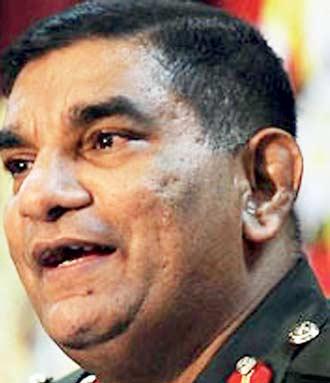 |
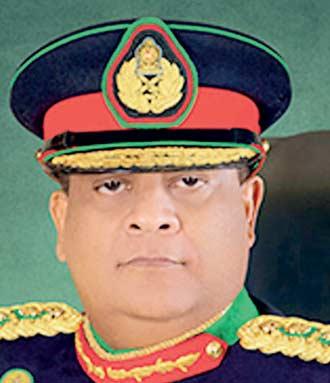
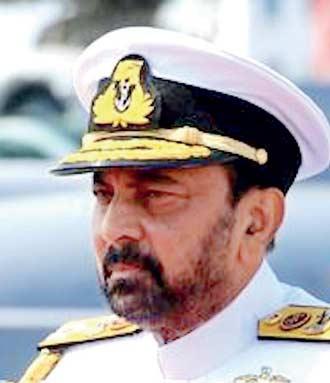
The National People’s Power (NPP) government has cautiously responded to the British government’s sanctions against three retired commanders of the military, namely former Commanders of Army Shavendra Silva and Jagath Jayasuriya, and former Navy Commander Wasantha Karannagoda announced on Monday (March 24) for serious human rights violations and abuses during the separatist war.
The former special commander of the Liberation Tigers of Tamil Eelam (LTTE) for Ampara and Batticaloa Districts, Vinayagamoorthy Muralitharan, popularly known as Karuna Amman has also been imposed the same sanctions through the same announcement.
Explaining his government’s sanctions, Secretary of State for Foreign, Commonwealth and Development Affairs of the United Kingdom, David Lammy said in a statement on Monday that the measures, which include UK travel bans and asset freezes, target individuals responsible for a range of violations and abuses such as extrajudicial killings, during the civil war.
Despite the Opposition parties here in Sri Lanka wanting the government’s response to the UK government’s action immediately, the Foreign Affairs Ministry issued a statement two days later claiming that, “Such unilateral actions by countries do not assist but serve to complicate the national reconciliation process underway in Sri Lanka.”
The position of the Government was conveyed by Foreign Minister Vijitha Herath to the British High Commissioner to Sri Lanka, Andrew Patrick as well, at the Ministry
Although Karuna was designated in this British announcement which described him as “former military commander of the terrorist group, the Liberation Tigers of Tamil Eelam,” he seems to have been penalized for his role after his defection to the government in 2004 and not for his actions during his tenure as a LTTE commander when he was accused of executing over 600 police personnel who had surrendered to his group in 1990, among other brutal acts.
Lammy while explaining the background of the individuals subjected to sanctions in his statement says Karuna Amman “subsequently created and led the paramilitary Karuna Group, which worked on behalf of the Sri Lankan Army, indicating that the latter had been included in the list of sanctioned individuals for his role as a paramilitary leader. Karuna as a leader of a paramilitary group supportive of the armed forces, rather than a commander of the LTTE has been under criticism by many international human rights organisations, for a long time.
The British action comes as no surprise in the light of the developments in the accountability process imposed on Sri Lanka by the UN Human Rights Council (UNHRC). It also involves personal politics of certain British politicians.
The UNHRC, after exerting pressure over a decade on Sri Lanka for the creation of a credible domestic mechanism to ensure accountability over human rights violations during the war, passed an important resolution in 2021 on Sri Lanka.
A mechanism was created under this resolution by the Office of the High Commissioner for Human Rights “to collect, consolidate, analyse and preserve information and evidence and to develop possible strategies for future accountability processes for gross violations of human rights or serious violations of international humanitarian law in Sri Lanka, to advocate for victims and survivors, and to support relevant judicial and other proceedings, including Member States, with competent jurisdiction.”
In January the same year, the UN High Commissioner for Human Rights Michelle Bachelet, while referring to this mechanism stated in her report, “States can consider targeted sanctions, such as asset freezes and travel bans against credibly alleged perpetrators of grave human rights violations and abuses.”
Subsequent to this report and the resolution, questions were raised as to whether individual states would take legal action in their countries against those who are accused of human rights violations or war crimes in Sri Lanka and as to who was going to lodge complaints. The Amnesty International also said following the passage of the resolution, “While the resolution was an important first step, the real impact will rely on UN member states using it as a basis for concrete action.” However, with the British sanctions being announced on Monday, those questions have been somewhat answered.
In December, International Truth and Justice Project (ITJP) said it had “submitted more than 60 sanctions and visa ban requests against Sri Lankan public and security officials to date as well as a series of universal jurisdiction cases” to the Governments of the US, UK, Australia, Canada and the EU as well as the UN, covering gross violations of human rights and interestingly “significant corruption.”
The ITJP is a South Africa based human rights organisation that focuses on accountability for war crimes, crimes against humanity, and human rights violations, particularly in Sri Lanka. It is led by Yasmin Sooka, a South African human rights lawyer and one of the three members of the famous Darusman Panel of experts on Sri Lanka appointed by the former UN Secretary General Ban Ki-moon, in 2010.
Indicating the involvement of personal political interests of British politicians in this week’s British sanctions against commanders of Sri Lankan armed forces and the rebels, David Lammy stated in his Monday’s press release “I made a commitment during the election campaign to ensure those responsible are not allowed impunity. This decision ensures that those responsible for past human rights violations and abuses are held accountable.
It is clear that Lammy was giving this commitment to the Tamil voters in his electorate and not to the local British voters. Sri Lankan foreign ministry, in its statement on Wednesday had referred to this sentence which had exposed the motive of the latest sanctions.
This is not the first time Western countries have imposed targeted sanctions against Sri Lankans over human rights and corruption. In February, 2020, the United States imposed sanctions against Sri Lankan military chief Shavendra Silva. Canada had imposed targeted sanctions on four Sri Lankans including former Presidents Mahinda Rajapaksa and Gotabaya Rajapaksa in January 2023. In December last year, the US State Department imposed travel bans on Sri Lanka’s ex-envoy to Russia, Udayanga Weeratunga and former Sri Lankan Airlines chief executive Kapila Chandrasena among 14, over corruption.
However, actions by Western countries are being tainted by their own politics, within their countries as well as in the outside world. Their unwavering support to Israel when the latter has been committing gruesome genocide against the Palestinians questions their integrity and commitment towards protecting human rights in other parts of the world.
Nevertheless, their pressure on countries like Sri Lanka including allegations of human rights violations and punitive actions are a reality and cannot be denied by exposing their hypocrisy alone. The government has to find ways to mitigate the effects of their actions by engaging with them.
04 Jun 2026 5 hours ago
04 Jun 2026 5 hours ago
04 Jun 2026 6 hours ago
04 Jun 2026 6 hours ago
04 Jun 2026 6 hours ago