31 Mar 2025 - {{hitsCtrl.values.hits}}
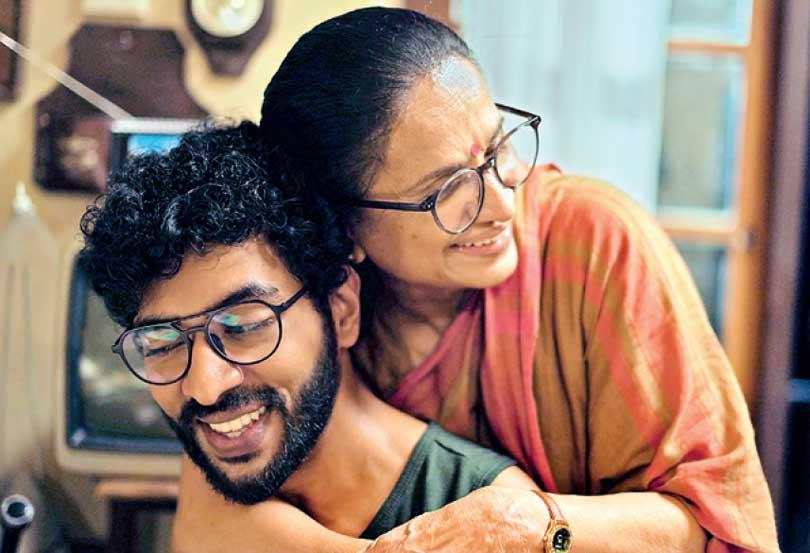
‘Rani’, while being a work of fiction, forces audiences to reckon with the grim realities of extrajudicial killings, censorship, and the systematic silencing of dissent
His death remains a subject of intense debate, particularly regarding allegations of his ties to the Janatha Vimukthi Peramuna (JVP) and the true motivations behind his murder. Over the years, competing narratives have emerged—some portraying him as a victim of state repression, while others suggest a more complex picture of his political affiliations
 Asoka Handagama’s film ‘Rani’ has reignited controversy over Richard de Zoysa’s murder, elevating the debate to new heights. Even film critiques have shifted their focus from the movie’s artistic merits to its political undertones. Though fictionalised, the film draws unmistakable parallels to de Zoysa’s fate, compelling audiences to confront the harsh realities of state violence and censorship. Recently, an English writers’ group devoted a significant portion of their programme to discuss the exceptional talent of Richard as a poet and unique ability to capture the complexities of human emotion, often weaving together themes of love, loss, and social injustice. His works resonated with readers on a profound level, offering both beauty and contemplation.
Armed men abducted 32-year-old Richard from his Colombo home on February 18, 1990. The following evening, his lifeless body was washed ashore on Moratuwa Beach; he was shot in the head, bearing burn marks and showing clear signs of torture. A television newsreader, journalist, poet, and human rights activist and a prominent actor in English theatre, Richard also made significant contributions to Sinhala cinema and produced popular radio programmes. In a desperate attempt to deflect blame and justify his murder, state operatives sought to exploit his sexuality. Richard was intelligent, charismatic, and fiercely articulate. Politically, he was a humanitarian with strong socialist convictions, yet he remained independent of party dogma.
His death remains a subject of intense debate, particularly regarding allegations of his ties to the Janatha Vimukthi Peramuna (JVP) and the true motivations behind his murder. Over the years, competing narratives have emerged—some portraying him as a victim of state repression, while others suggest a more complex picture of his political affiliations. ‘Rani’, while being a work of fiction, forces audiences to reckon with the grim realities of extrajudicial killings, censorship, and the systematic silencing of dissent.
By bringing Richard de Zoysa’s story back into public discourse, Handagama’s film underscores the unresolved nature of his case and the persistent culture of impunity. The renewed attention suggests that Richard’s death is not merely a past injustice but a continuing symbol of Sri Lanka’s struggle for truth and accountability. Richard was a prominent journalist known for his outspoken criticism of the government. As a correspondent for Inter Press Service (IPS), a global news agency, he wrote extensively on human rights violations during the violent late 1980s. His eloquence and fearless exposure of state brutality made him a target of the ruling United National Party (UNP) government under President Ranasinghe Premadasa.
During this period, Sri Lanka was engulfed in a violent insurrection led by JVP, a Marxist-Leninist party that opposed the Indo-Sri Lanka Accord. The JVP waged an armed struggle, assassinating UNP supporters and the families of police and military personnel. The state responded with ruthless counterinsurgency tactics, leading to thousands of disappearances and extrajudicial killings.
Martyr, rebel or political pawn
In the years following Richard’s murder, an alternative narrative emerged, suggesting that he was not merely a journalist, but had active ties with the JVP. This claim gained prominence through the late Victor Ivan, Editor of Ravaya. A former JVP revolutionary himself, Ivan alleged that Richard was deeply involved with the party and had even operated a safe house for its leaders. He claimed that Richard had harboured Somawansa Amarasinghe, a key JVP figure, who later fled the country. Ivan’s claims surfaced 11 years after Richard’s death, raising suspicions about their timing and underlying motives. The then-opposition dismissed these allegations as politically driven attempts to whitewash the UNP’s role in Richards’s murder. Batty Weerakoon, who represented Richards’s mother, Manorani Saravanamuttu, before the Disappearances Commission, refuted Ivan’s assertion that no inquiry had been held. He pointed out that Saravanamuttu had actively testified and pursued justice for her son. The UNP government was keen on framing its counterinsurgency campaign as a necessary battle against terrorism. By branding Richard a JVP supporter posthumously, it sought to justify his killing and deflect responsibility from state actors. Notably, these allegations emerged over a decade after his death—just as renewed public scrutiny was turning toward the state’s role in extrajudicial killings, particularly with the 2001 exhibition of JVP atrocities.
C.A. Chandraprema, who authored a book on the JVP insurrection, claimed that he was unaware of Richard’s alleged ties with the JVP until Ivan’s ‘bombshell’ revelation. This assertion has been met with skepticism. Given Chandraprema’s extensive knowledge of the JVP’s activities, it seems unlikely that he only learned of these alleged connections so late. His sudden endorsement of Ivan’s claims raises questions about a possible political agenda—one aimed at rehabilitating the UNP’s image by shifting the focus from state terror to JVP violence.
State and JVP terror
The controversy surrounding Richard’s alleged JVP links extended to the Free Media Movement (FMM) and other advocacy groups. Victor Ivan, in his defense, claimed that he had refrained from publishing his allegations earlier out of respect for Richard’s mother. However, critics argue that his decade-long silence raises doubts—was it a fabrication, or a politically timed disclosure? If Richard had indeed been a JVP activist, as Ivan alleged, why had intelligence sources not revealed this information at the height of the insurrection? Despite these claims, overwhelming evidence suggests that Richard was a victim of state-orchestrated terror. His abduction bore the hallmarks of government death squads, which targeted journalists, activists, and suspected JVP sympathizers. The group responsible for his murder was reportedly led by Ronnie Gunasinghe, a police officer with known links to the Premadasa regime.
The abduction was executed with military precision. Richard was taken from his home, in the presence of his mother Manorani Saravanamuttu—a level of brazenness characteristic of state-backed hit squads operating with impunity. Eyewitness accounts, including those of his mother, pointed to the involvement of uniformed men, reinforcing the theory that his killing was not a random act of violence but a deliberate elimination of a dissenting voice.
Richard’s murder was a defining moment in Sri Lanka’s human rights history. His mother’s relentless campaign for justice brought international attention to the country’s entrenched culture of impunity. Yet, decades later, the case remains unresolved, with no one held accountable despite strong indications of state involvement.
Whether or not he had sympathies for the JVP, the fundamental issue remains: he was abducted and murdered extra judicially. His death was not the result of battlefield combat or insurgent activity but a state-sponsored assassination designed to silence dissent.
Conclusion
The controversy surrounding Richard’s death embodies the broader struggles in Sri Lanka’s political and journalistic landscape. The UNP’s role in his assassination, the belated allegations of JVP connections, and the media’s complicity in shaping public perceptions all reflect the deep entanglement of politics and violence in the country.
While some have sought to tarnish Richard’s legacy by branding him a terrorist, the undeniable fact remains: he was a journalist and activist who paid the ultimate price for his work. His killing was part of a broader pattern of repression targeting anyone who dared to challenge the state. The attempt to rewrite history should be seen for what it is—a cynical effort to absolve the perpetrators of one of Sri Lanka’s most infamous political murders.
(The writer can be reached at [email protected])
14 Jun 2026 28 minute ago
14 Jun 2026 3 hours ago
14 Jun 2026 5 hours ago
14 Jun 2026 7 hours ago
14 Jun 2026 8 hours ago