15 Jan 2026 - {{hitsCtrl.values.hits}}
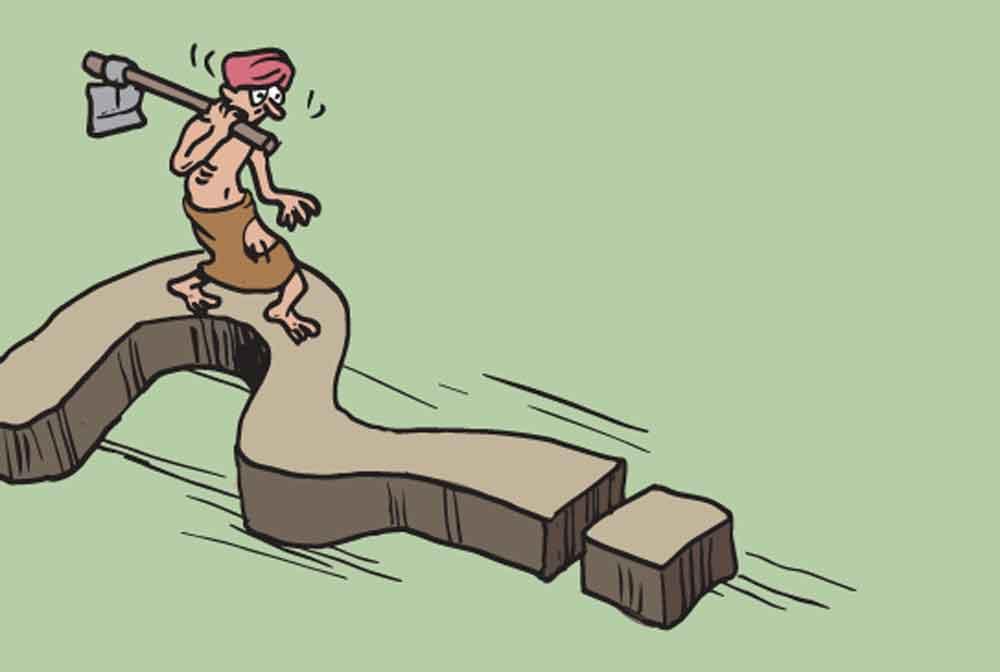
Even though rice is the staple diet for most Sri Lankans, purchasing a few measures of rice has become a luxury today. Enjoying a meal of premium rice varieties such as keeri samba or basmati has now become next to impossible. With rice becoming the staple food of the country, the paddy business became politicised over the years. Today, it is a known fact that several large scale rice mill owners are directly or indirectly involved in manipulating the wholesale price of several varieties of rice despite its quality, pushing small scale paddy farmers and consumers into a dilemma.
Paddy farmers faced numerous challenges over the recent past, from the fertiliser ban to crop damage due to the human-elephant conflict and market dominance by paddy millers to natural disasters such as Cyclone Ditwah. Each one of these challenges resulted in low yields, high costs, loss of income and reliance on costly imports. Farmers struggle with rising input costs (fertiliser, fuel), volatile prices and limited credit, forcing many to abandon farming or become part-time paddy farmers, while the government grapples with balancing import needs, subsidies, and market control.
The Sri Lankan rice market is described as an oligopoly, where a small number of large-scale rice millers control about 35% of the market due to their potential to influence price and production to significant market share. Studies indicate that historically, large scale millers have exploited their dominance through anti-competitive practices; using their storage capacity and purchasing power, they manipulate prices by flooding the market during harvests to lower paddy prices and then create artificial scarcities to keep rice prices high. With limited storage and credit, farmers are forced to sell during harvests, enabling this cycle.
In December 2024, the Consumer Affairs Authority introduced wholesale and retail price caps for rice. Simultaneously, a Rs. 65/kg import tariff has made imported rice 50% more expensive. Sri Lanka first imposed this Special Commodity Levy (SCL) of Rs. 65/kg all the way back in October of 2021. However, at present there is a debate within the government on whether to remove this levy.
As a result of government’s price controls and alleged hoarding by large-scale mill owners, a black market was created for the sale of paddy varieties such as keeri samba. Today, a kilo of keeri samba in the black market is priced at around Rs. 360, way above the government’s price controls. While authorities continue to raid retailers who issue rice at exorbitant rates, there are limited interventions that could be made in this regard.
Price controls and tariffs ultimately affect consumers due to shortages that are being created. As a result, many are unable to purchase rice or substitutes such as wheat if these substitutes are also being taxed, worsening the food security crisis. Economic analysts blame protectionist policies for making paddy farmers poorer and for increasing inefficiencies within the market. Statistics indicate that Sri Lanka has around one million paddy farmers which is about 12% of the labor force. But due to an oversupply of labour in the industry, millions are trapped in an eternal cycle of poverty. What needs to be done instead is to liberalise the paddy sector and encourage farmers with little hope about the paddy sector to switch to more productive sectors of the economy.
The government yesterday increased the minimum purchasing price of Samba and Keeri Samba from Rs. 125 to Rs. 130 and from Rs. 132 to Rs. 140 per kilogramme respectively. But these are temporary interventions given the darker clouds that keep hovering over the paddy sector.
But while many paddy farmers are trying to see the light at the end of the tunnel, a large scale paddy mill owner recently purchased a limited edition Rolls Royce Phantom, showing disparities in financial distribution and power imbalance within the paddy sector.
The government should work with a vision to end the persistence of poverty within the paddy sector, and make paddy farmers richer while encouraging the younger generation to continue in this sector. Paddy farmers may not be able to purchase super luxury vehicles, but the market should be liberalised to help them dream big and achieve their desired goals in this lifetime.
‘Your Thought’ is a space, a right of the readers to support or contradict and discuss the issues highlighted in the editorial and other articles in the editorial and op-ed pages. Designed as the reader’s editorial; our readers can send in their writings, with a word count not exceeding 200, to ‘Your Thought’, Daily Mirror Political Features Desk, No 8, Hunupitiya Cross Road, Colombo 2 or email to [email protected]
14 Jun 2026 22 minute ago
14 Jun 2026 3 hours ago
14 Jun 2026 5 hours ago
14 Jun 2026 7 hours ago
14 Jun 2026 8 hours ago