15 Sep 2025 - {{hitsCtrl.values.hits}}
Mahaweli development and agriculture head the list of failed World Bank programmes in Sri Lanka
 In terms of recovering to the GDP levels in 2018 after massive contraction amounting to a depression, we have lost a decade. And when it comes to the broader social concerns including poverty, income streams, livelihoods and youth employment, we have possibly lost two decades. However, with the IMF and World Bank, whose priority is merely to ensure repayment to creditors like themselves and the global financiers, Sri Lanka is touted as a success story of economic recovery
The Trump regime, having more or less shut down the WTO and its free trade order through tariff wars, may also turn its eyes on the World Bank. Countries like ours that had blindly followed the World Bank will then have no choice but to consider alternative development pathways. Regardless of the manoeuvres of the powerful interests in Washington amidst an unravelling global order, is it not high time we reconsidered our priorities and have a vision and a plan to develop our country free of the World Bank?
 Last week, the World Bank released two documents on Sri Lanka: A report titled, ‘Sri Lanka Public Finance Review’ addressing Sri Lanka’s painful fiscal adjustment over the last few years, and an appraisal document for a USD 100 million loan for its new ‘Integrated Rurban Development and Climate Resilience Project’. These two documents highlight the failed vision of the World Bank for the development of our country, and a wake-up call for a different people-centred economic trajectory.
Over the last five decades, the IMF and the World Bank have worked hand in glove to restructure countries in the Global South towards vast extraction of wealth and resources for global capital. This was enabled through Structural Adjustment Programmes, and eventually with a consolidated vision called the Washington Consensus towards creating free market economies. This included the push for commercialised debt to restructure our food systems solely for the export market. These loans for development come with high interest costs that lead to further indebtedness of countries like ours. In this column, I draw on the World Bank documents to illustrate that this Washington-centred economic “recovery” path has led to lost decades for Sri Lanka and that its disastrous agricultural projects will undermine our food system.
Contraction and poverty
While Sri Lanka’s debt crisis was caused by a current account deficit, where we ran out of dollars to repay our debt and pay for imports, the multilateral agencies framed it as a problem to be solved by creating a budget surplus. The World Bank report congratulates Sri Lanka for globally unprecedented levels of fiscal consolidation, particularly in terms of the net primary budget deficit and surplus (revenues minus expenditure excluding debt payments). Since the IMF program in 2023, the net change is 6% of GDP, and since 2021 just before Sri Lanka began implementing the pre-conditions of the IMF programme, it is 8% of GDP. If we include the cuts to subsidies of electricity and other services with the market pricing of energy required by the IMF programme, we can probably look at an additional 2% of GDP. This supposedly best performance by Sri Lanka compared to other countries since the 1980s, is one of really extreme austerity which the Wickremesinghe-Rajapakse regime imposed on the citizenry in overzealously following the IMF and World Bank.
The World Bank report itself states:“Real GDP,despite rebounding in 2024 from a low base, is not expected to return to its 2018 level until 2026. … The fiscal adjustment has also disproportionately impacted the poor, who continue to grapple with job and income losses and higher taxes. Food prices remain more than double their pre-crisis levels and real wages are yet to recover. In response to macroeconomic conditions, many households have scaled back spending on human capital, particularly on nutrition, healthcare, and education.” (Page 16) And when it comes to poverty which now affects close to a third of the population: “At this baseline growth rate, the poverty level is projected to return to pre-crisis levels (12.9 percent) only in 2034 (Page 29).
What does this mean for our people and the country? In terms of recovering to the GDP levels in 2018 after massive contraction amounting to a depression, we have lost a decade. And when it comes to the broader social concerns including poverty, income streams, livelihoods and youth employment, we have possibly lost two decades. However, with the IMF and World Bank, whose priority is merely to ensure repayment to creditors like themselves and the global financiers, Sri Lanka is touted as a success story of economic recovery.
Flawed development programmes
The problem is not just the flawed macroeconomic policies pushed by the IMF and World Bank, including support to railroad sixty odd legislations by the illegitimate Wickremesinghe-Rajapaksa government. For example, the Public Finance Management Act – locking future governments into austere budgeting –was passed in August 2024, just a month before the presidential elections.
In this context, the Aswesuma social protection programme designed by the World Bank is a disaster. To change a social protection programme in the middle of an economic depression without proper data, consultation, and analysis was bound to fail, but it was shoved down in a high-handed manner. The World Bank now acknowledges: “Living conditions have changed dramatically since 2019, when the previous household survey was carried out.
For instance, poverty is estimated to have more than doubled between 2019 and 2023. The lack of recent household survey data to inform Aswesuma’s design undermines its poverty-targeting performance.” (Page 83)
Many of us argued at the outset that Aswesuma was going to fail. With close to two thirds of the population in the informal sector and over half the population multi-dimensionally vulnerable, targeted social protection will not work, and universal measures are necessary to address such a deep crisis. However, the World Bank and many of our local neoliberal pandits were splitting hairs about better targetting, mainly to deflect attention from the meagre allocation of 0.6% of GDP for social protection in the IMF program. And even today, their focus is on better targetting, as they avoid the structural problem of socio-economic exclusion with technical solutions of targetting without adequate financing.
There is the long history of the World Bank’s failed vision for Sri Lanka, particularly in relation to agriculture. From World Bank membership exactly 75 years ago in 1950 and its first high powered mission in 1951, to its massive Accelerated Mahaweli Project, Sri Lanka has had a series of failed World Bank programmes that have done considerable damage to our economy. The latest so-called Rurban project, again seeks to modernise agriculture and address climate change. Significantly, the World Bank in its project appraisal refuses to recognise the utter failure of the predecessor Agriculture Sector Modernisation Project (ASMP), costing a USD 125 million loan to Sri Lanka, and recently concluded in December 2024.
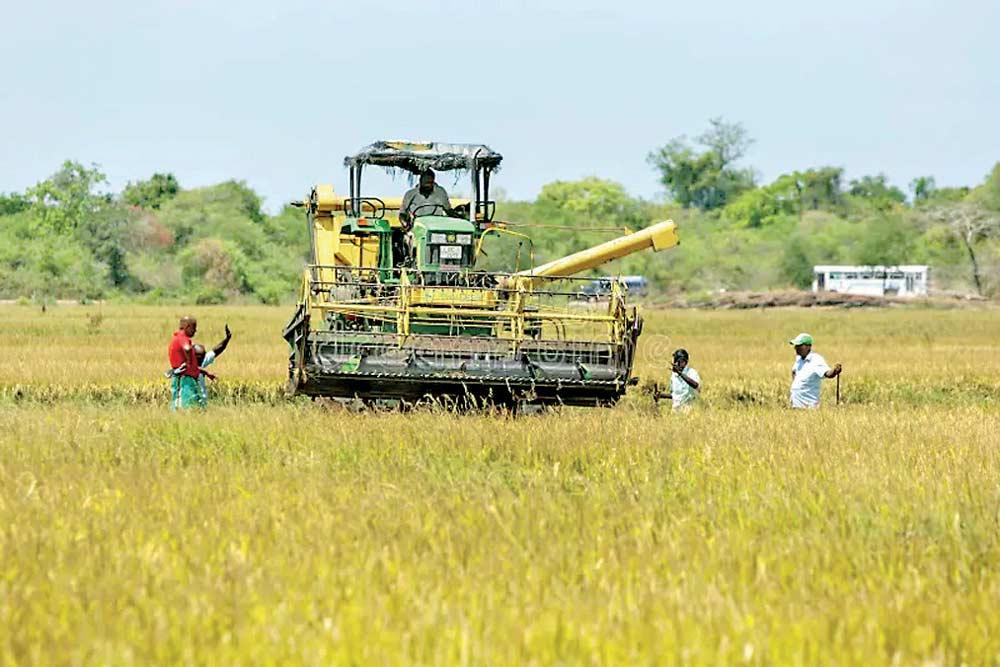
The ASMP ignored the existing system of farmer organisations and agricultural co-operatives, and decided to create Public Unlisted Companies (PUC). They chose the “strongest” farmers in each region and involved them in single crops for exports. Not only did the World Bank’s technical support fail in terms of production and for that matter exports, it also created a so-called Board of Directors with farmers for its PUC to try to implement a corporatised vision. That costly project now stands the risk of lost assets including machinery that may rot, particularly given the limited management capacity and lack of broader farmer participation.
Indeed, only morons sitting in Washington never having set foot into a farm, except perhaps on occasional jet setting visits to the Global South, will come up with such a corporate idea for farmers. While most agricultural officers I have met will agree that ASMP is a complete failure, they will not criticise it publicly. The Emperor from Washington with his new clothes, whether it be the completed ASMP or the upcoming Rurban, comes with a gravy train of an expensive Project Management Unit and large allowances, which also makes seconded officers and retired bureaucrats complicit in the project, and thus unwilling to jeopardise their perks by criticising the project.
Infantilising developing countries
Rather than infantilise countries in the Global South with strict conditionalities on fiscal management and implementation of its loan programmes, the World Bank needs to take a look at its own legacy of repeated failed development initiatives. The IMF debt restructuring process, clearly one that entails a conflict of interest as an arbiter and creditor, has also trapped Sri Lanka into taking loans from the World Bank and Asian Development Bank. While the IMF loan over four years amounts to USD 3 billion, the two multilateral banks co-finance it with an additional USD 3.9 billion. Furthermore, the fungible flows of finance means that all three multilateral agencies gain from returning Sri Lanka to the wolf’s den of bondholder debt, where Sri Lanka is expected to borrow 1.5% of GDP in sovereign bonds every yearafter the end of the IMF programme. In effect, Sri Lanka will be borrowing from bondholders in part to repay multilateral debt, where the latter will never be restructured even if Sri Lanka defaults again.
The Trump regime, having more or less shut down the WTO and its free trade order through tariff wars, may also turn its eyes on the World Bank. Countries like ours that had blindly followed the World Bank will then have no choice but to consider alternative development pathways. Regardless of the manoeuvres of the powerful interests in Washington amidst an unravelling global order, is it not high time we reconsidered our priorities and have a vision and a plan to develop our country free of the World Bank?
04 Jun 2026 4 hours ago
04 Jun 2026 5 hours ago
04 Jun 2026 5 hours ago
04 Jun 2026 6 hours ago
04 Jun 2026 6 hours ago